
THE INGREDIENTS · NO. 06
A single grain.
A gathering
of stories.
A grass. A grain. A shared meal that holds more than one history.
Follow the rice01 / A CLOSER LOOK
Look closely
at the everyday.
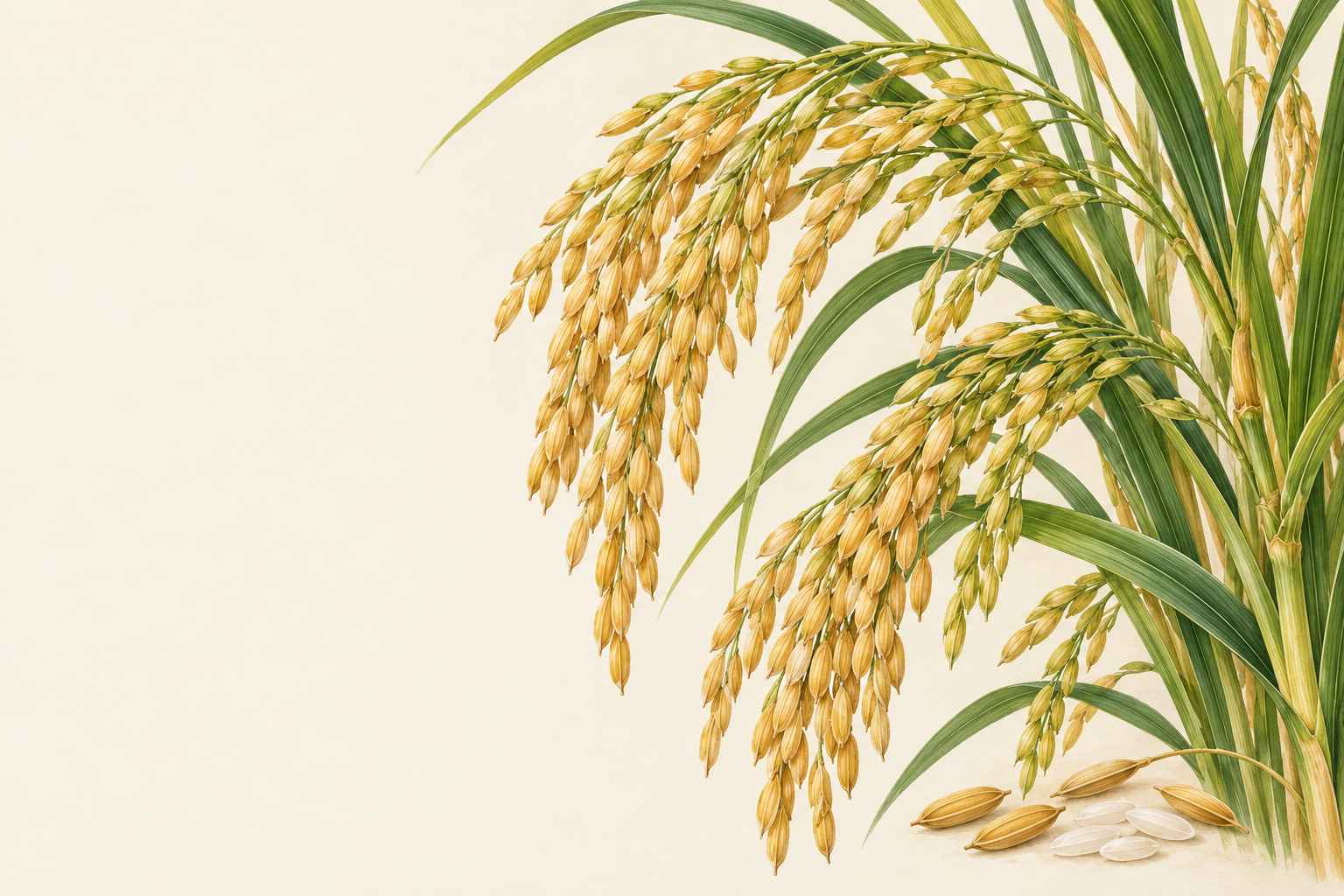
The rice in a bowl began as a grass. Its familiar name encompasses two domesticated species: Asian rice, Oryza sativa, and African rice, Oryza glaberrima.
That distinction matters. A meal in West Africa does not automatically use African rice, and the words “broken rice” describe grain form rather than species.
- CULTIVATED SPECIES
- O. sativa · O. glaberrima
- PART WE EAT
- The grain
- PLANT FAMILY
- Poaceae · grasses
- A CULINARY QUESTION
- Which variety, form and method?
02 / THE ATLAS
Every place tells
a different story.
Botanical ancestry, the movement of goods, a living kitchen. Each layer tells a different story.
The map could not load. All locations and stories remain available below.
Selected regions, not a single point of domestication.
How to read this atlas
Rice has independent Asian and African domestication histories. Exact locations and pathways remain research questions. The Asian and West African markers are deliberately regional; Senegal’s dish is a separate culinary layer. The Origins map uses one representative place per ingredient; the rice marker focuses on Asian rice. The independent West African history remains in the Journey chapter and its sources.
03 / FROM THE FIELD
The field is a beginning.
The meal is another.
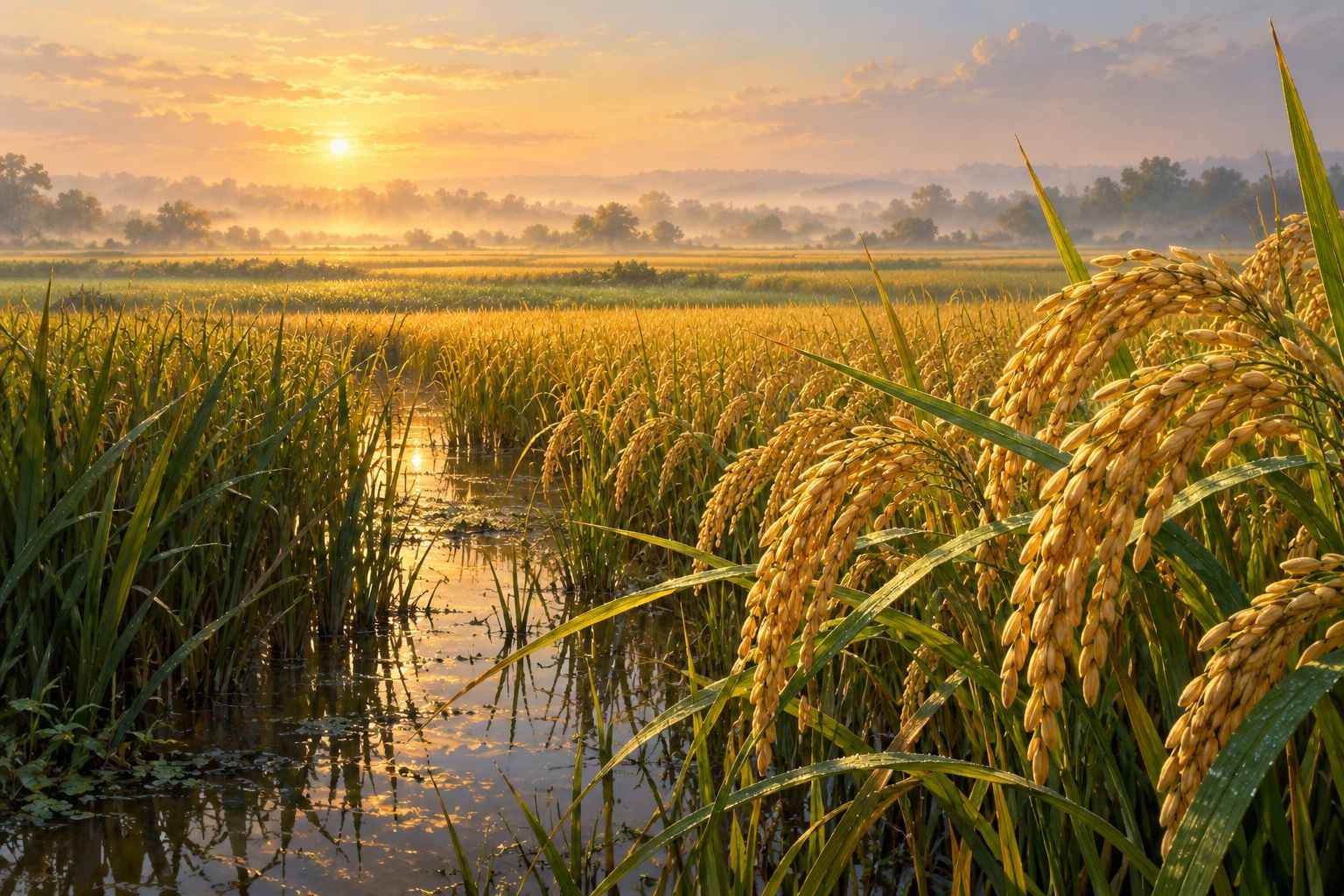
Rice grows in varied environments; a flooded field is one scene, not a definition of the crop.
Move from the sweep of plants to the handful of grain. Variety, milling and the cook’s method help shape what reaches the table.
04 / THE TRANSFORMATION TABLE
Keep the grain
in the picture.
Whole, milled and broken describe different material states. None is a complete description of how a rice will cook.
Harvest → Dehusk → Keep bran
Dehusk → Mill → Sort
Mill → Separate → Cook
05 / A HUMAN HISTORY
Two crops.
Many landscapes.
ASIA & WEST AFRICA · DISTINCT CROP HISTORIES
Domesticated rice species.
A distinction worth keeping.
Oryza sativa and Oryza glaberrima preserve distinct histories of selection by people in Asia and Africa. Independent domestication matters to how we tell the crop’s story.
Their later movements, cultivation and culinary uses are larger than this small atlas. Here, a broad botanical view leads to one Senegalese dish without suggesting a single direct route from the first field to the present plate.
LOOK A LITTLE CLOSER
The broken grain is not a broken story.
“Broken” names the kernel’s physical state. It does not tell us which cultivated species supplied it, how it travelled or what value a cook gives it.
06 / A LIVING TRADITION
A platter at
the centre.
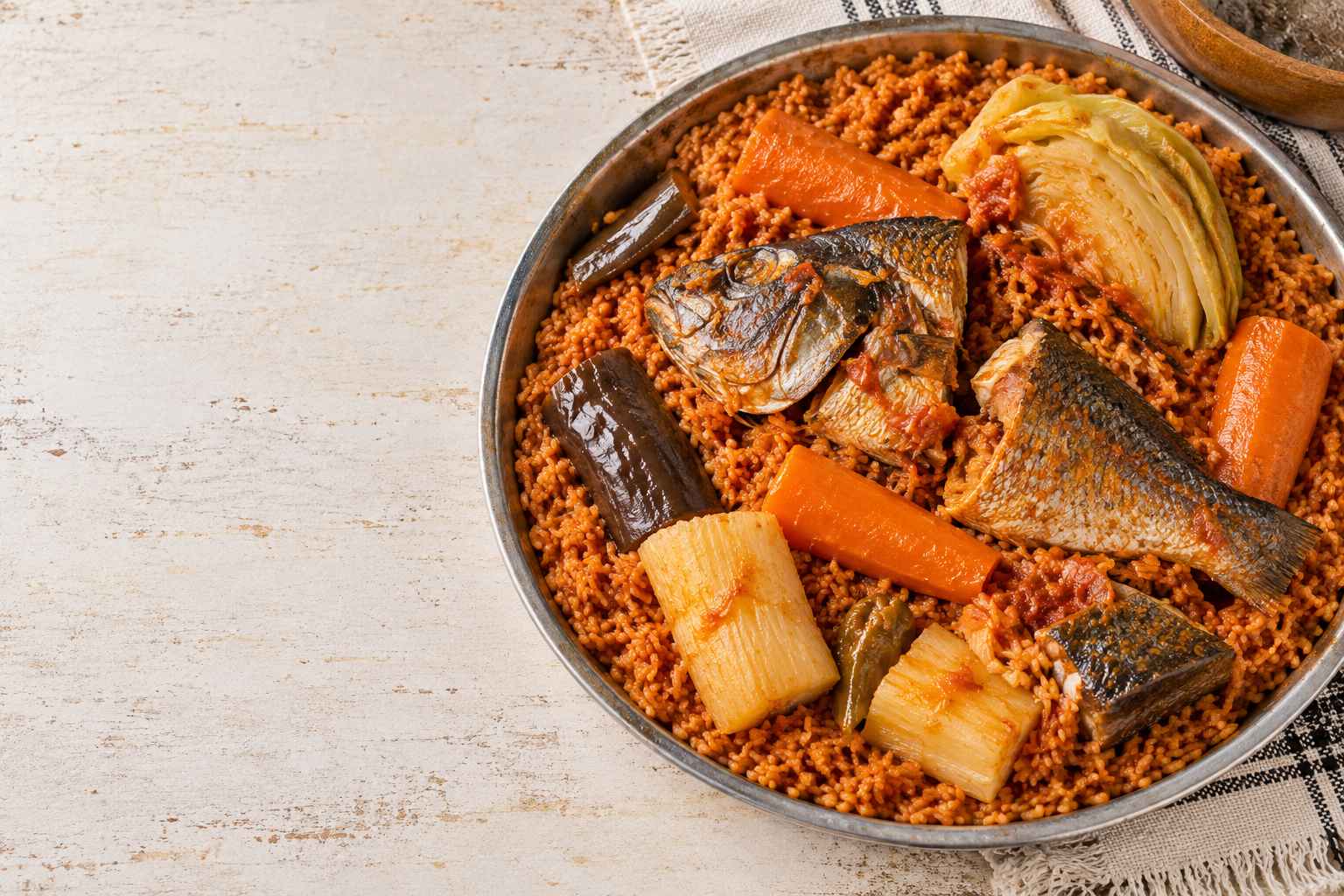
Ceebu Jën makes room for rice, fish, vegetables and the knowledge of sharing a meal.
One platter.
Many hands
of knowledge.
SAINT-LOUIS & SENEGAL · CEEBU JËN
A culinary art, carried between generations.
UNESCO documents ceebu jën as a Senegalese fish-and-rice preparation associated with the fishing communities of Saint-Louis. Broken rice and seasonal vegetables appear in the account.
The record also holds social knowledge: learning the dish and gathering around it. Ingredients are part of the exhibition; the relationships around the platter belong here too.
Explore the community heritage record ↗AN INTERACTIVE TASTING LENS
Beyond a plain bowl.
Original editorial prompts. These are invitations to observe, not universal sensory scores.
KEEP FOLLOWING THE THREAD
One flavour opens
another door.
Black pepper ↗
A climbing vine, an ocean traveller, a familiar turn of the mill.
EXHIBITION 02Chilli ↗
A fruit with many forms. A seed carried across oceans. A heat made at home.
EXHIBITION 03Vanilla ↗
An orchid, a fleeting flower, and an aroma made through time and skilled hands.
EXHIBITION 04Tamarind ↗
A brittle shell. A sticky centre. A sourness that finds a home in many kitchens.
EXHIBITION 05Cacao ↗
A pod on a trunk. A seed transformed. A cup with a long human history.
EXHIBITION 07Sesame ↗
A tiny seed. A capsule opening. A bread ring covered in a thousand small encounters.
EXHIBITION 08Saffron ↗
A purple flower. A few red threads. A small gesture that changes the whole pan.
EXHIBITION 09Maize ↗
A grass transformed by people. A grain transformed by water, lime and the work of hands.
A CONNECTING STORYA grain becomes a meal ↗
Rice and maize. Three dishes shaped by technique and tradition.
THE RESEARCH ROOM
Every story leaves
a paper trail.
Explore the evidence and the limits of this edition.