
THE LIVING TABLE · NO. 04
SENEGAL · RICE, FISH & A SHARED TABLE
A grain.
A meal
to share.
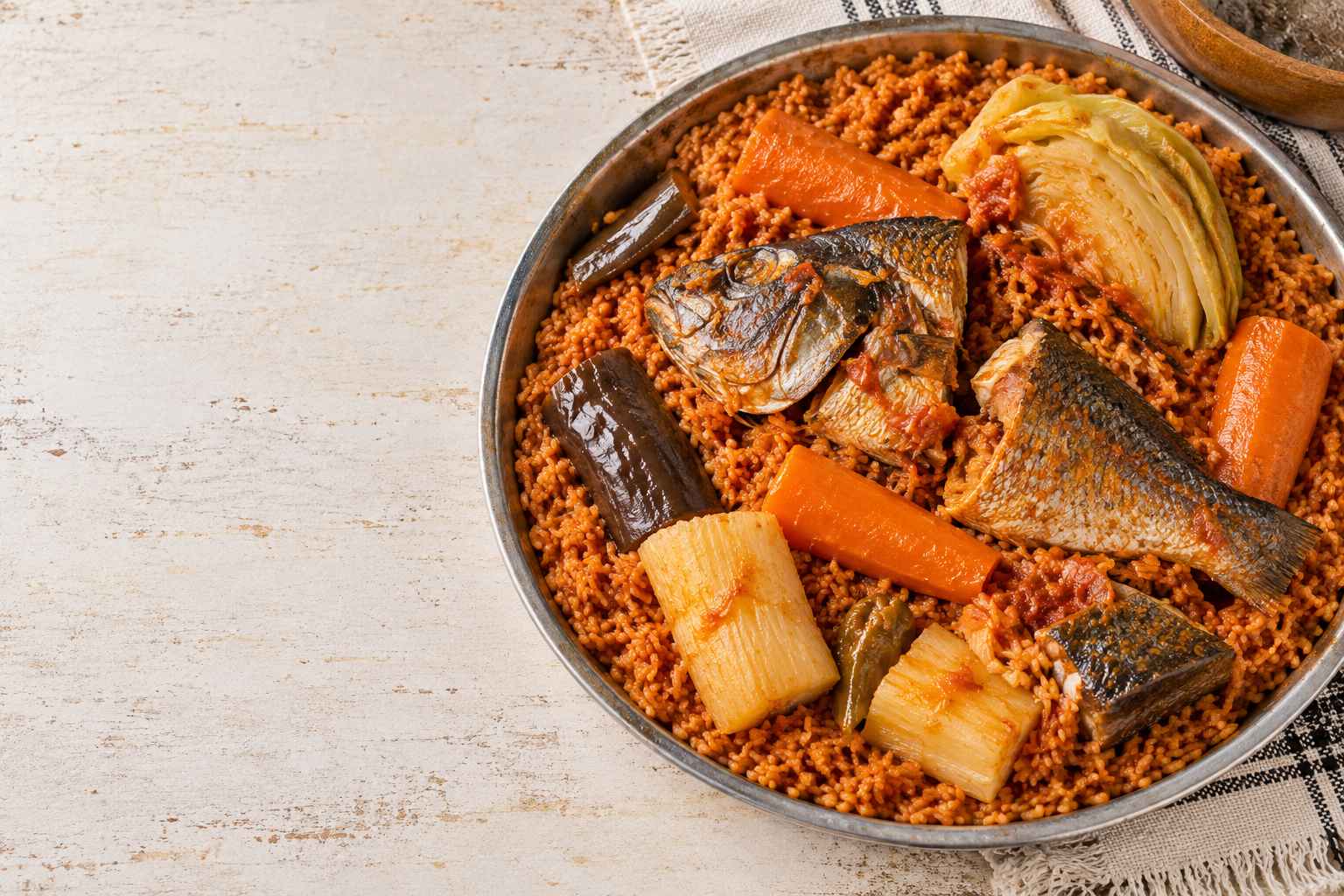
Follow rice into Ceebu Jën: a Senegalese dish in which the grain, the fish and the act of gathering belong together.
Explore the dish01 / AN ENCOUNTER
A platter has
a centre.
Follow one grain of rice towards the centre of a meal. Around it are other ingredients, people and the work of bringing everything together.
Senegal’s UNESCO record locates Ceebu Jën’s beginnings in the fishing communities of Saint-Louis. It describes rice and fish with vegetables, and recognises knowledge shared across generations.
The version explored here
A cultural reading grounded in Senegal’s UNESCO heritage nomination, with an editorial cooking sequence informed by SAVEUR’s published 2012 thiéboudienne. Regional and household versions differ.
02 / INSIDE THE DISH
Follow a part.
See the whole.
Choose an ingredient or an object. Explore its place in this preparation, then follow the thread into the atlas.
THE GRAIN THAT HOLDS THE MEAL
Rice
The UNESCO account names broken rice; the linked SAVEUR version uses basmati.
Look closely at the grain. Imagine how its scale changes the feel of a mouthful.
03 / THE TRANSFORMATION
A sequence
of decisions.
Follow four moments in this preparation. Each opens a different question about the work of making flavour.
THE WORK BEFORE COOKING
THE SELECTED COOKING SEQUENCE
Bring the parts into view.
The linked SAVEUR version begins with an herb stuffing for the fish.
Imagine each ingredient before it enters the pot. Which shape will still be recognisable at the table?
THE PUBLISHED PREPARATION
A cultural reading grounded in Senegal’s UNESCO heritage nomination, with an editorial cooking sequence informed by SAVEUR’s published 2012 thiéboudienne. Regional and household versions differ.
04 / A LIVING TRADITION
More than
the ingredients.
Inscribed on UNESCO’s Representative List in 2021, Ceebu Jën is recognised as culinary knowledge and social practice. The heritage account describes recipes passed from mother to daughter and conventions around eating together.
This exhibition’s platter is interpretive artwork. For people, gestures and the setting of the tradition, turn to the film and documentation supplied with Senegal’s nomination.
THE LIVING HERITAGE RECORDWatch the community documentation.
Visit the UNESCO record for the nomination film, photographs and the account submitted by Senegal.
A MOMENT OF ATTENTION
What would
you notice?
Choose a lens. These original prompts invite observation rather than assign a universal flavour score.
Imagine lifting a small mouthful. Attend to the rice before the larger pieces on the platter.
05 / KEEP FOLLOWING THE THREAD
A table opens
another landscape.
THE RESEARCH ROOM
Curiosity, with
its sources attached.
Explore the attribution and cultural record behind this exhibition.