
THE INGREDIENTS · NO. 01
A small fruit.
A world of
journeys.
Meet black pepper. A climbing vine, an ocean traveller, a familiar turn of the mill. There is a whole landscape inside it.
Follow the pepper01 / A CLOSER LOOK
Before it was a spice,
it was a fruit.
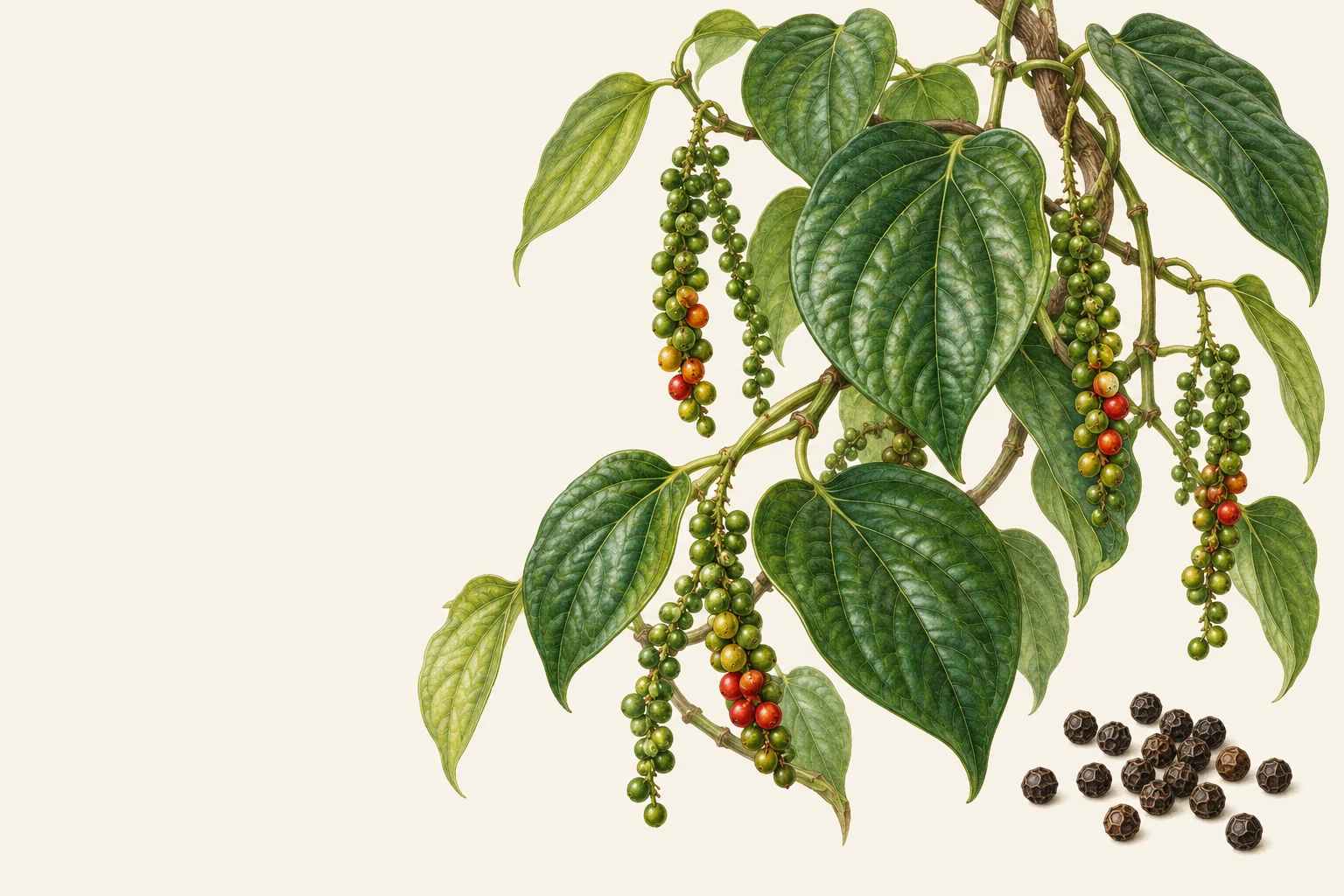
Something so familiar can become almost invisible. Look again: each peppercorn began as a fruit on a perennial climbing vine, growing in a humid tropical landscape.
Its story connects plant life with the choices of growers, traders and cooks. Start with the vine. See where the evidence takes you.
- BOTANICAL NAME
- Piper nigrum
- PART WE EAT
- The fruit
- GROWTH HABIT
- A climbing vine
- ONE PLANT, MANY FORMS
- Black · white · green
02 / THE ATLAS
Southern India.
A landscape of pepper.
Botanical ancestry, the movement of goods, a living kitchen. Each layer tells a different story.
The map could not load. All locations and stories remain available below.
Selected regions, not a single point of domestication.
About this origin marker
The origin layer uses one regional marker: southern India, centred on the south-western Western Ghats and Malabar. It represents a landscape, rather than a first farm.
03 / ENTER THE LANDSCAPE
Before the mill,
the monsoon.
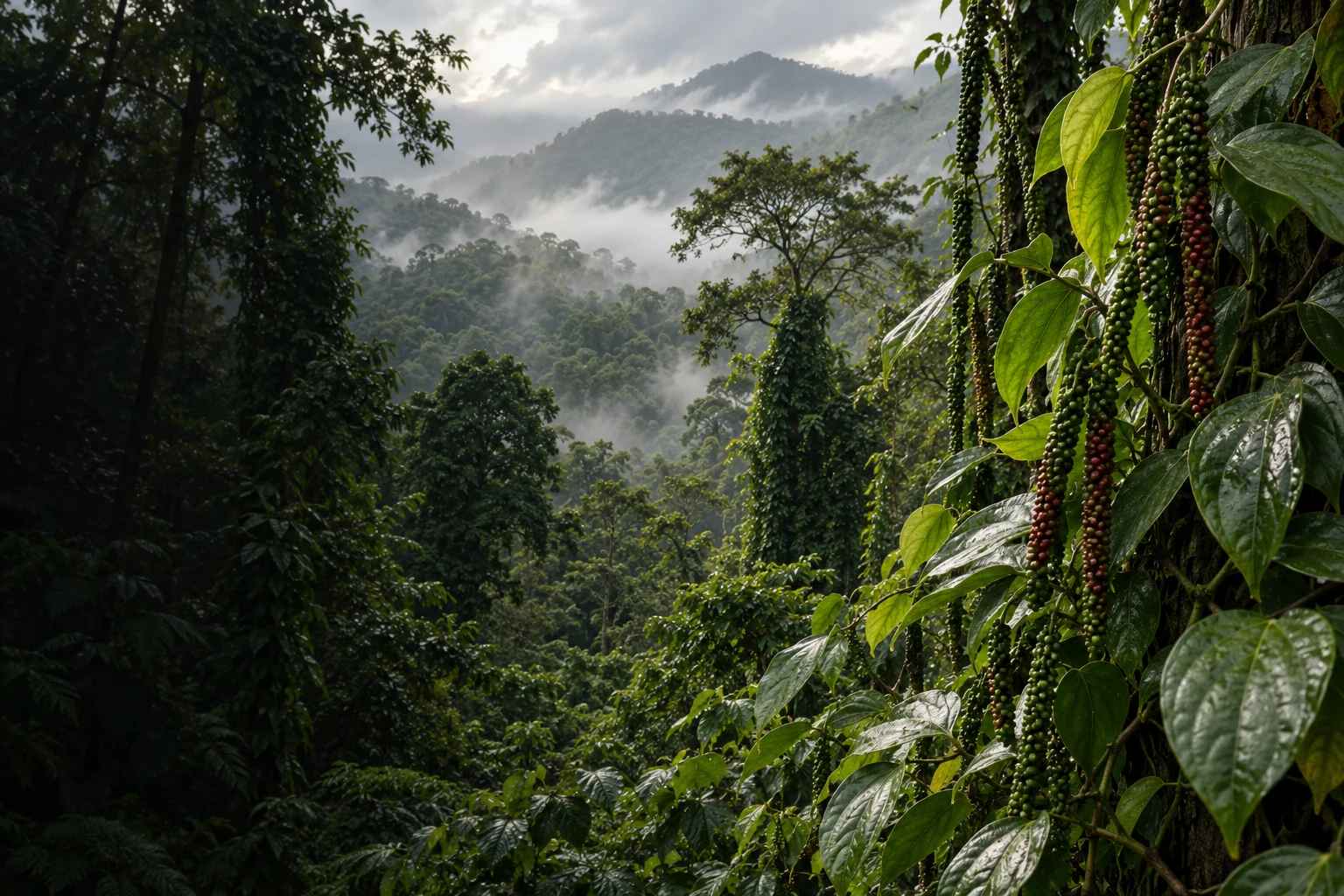
A vine reaches upward. Fruit gathers along slender spikes. In the humid growing landscapes of southern India, pepper is part of a cultivated, living ecology.
Kerala, Karnataka and Tamil Nadu are important Indian growing regions. The landscape is shaped by the plant—and by the people who tend it.
04 / THE TRANSFORMATION TABLE
One vine.
Three different lives.
Colour tells a story of harvest and preparation. These are forms of the same species, shaped by what happens after picking.
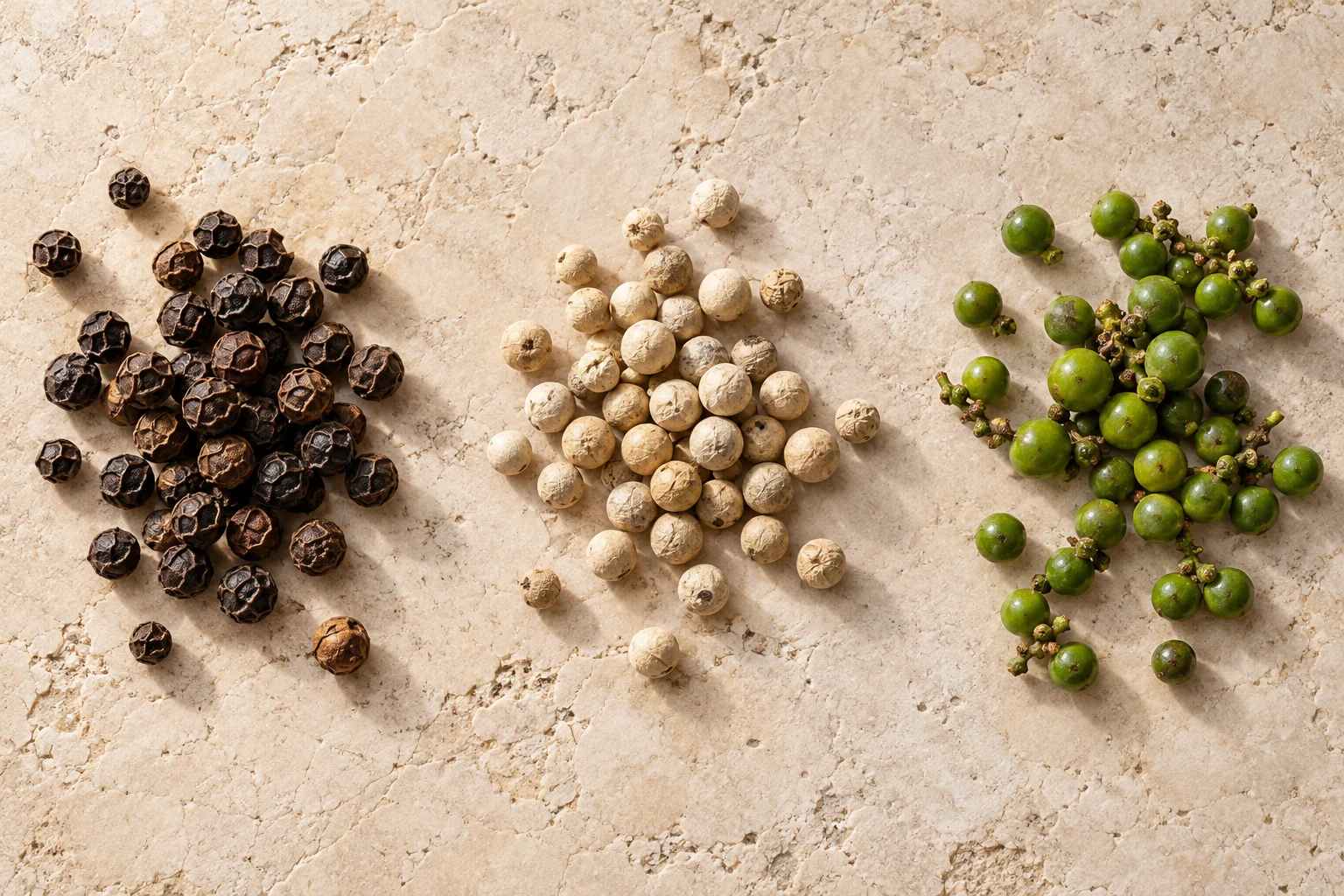 01 / BLACK02 / WHITE03 / GREEN
05 / A SURVIVING TRACE
A jar beside
the Red Sea.
BERENIKE, EGYPT · FIRST CENTURY CE
Nearly seventeen pounds of black pepper.
One remarkable archaeological find.
In 1999, excavators at Berenike uncovered a jar of peppercorns in the courtyard of the Serapis Temple. The deposit dated to the first century CE.
The fruit itself had survived. It is material evidence of connections between South Asia and Roman Egypt—though it cannot tell us the precise farm, ship or voyage that brought it there.
ANOTHER SURVIVING OBJECT
A little theatre at the table.
A silver pepper pot from Roman Britain had a rotating base for filling, closing and sprinkling. The Hoxne object brings the story from a port to a dining table.
06 / A LIVING TRADITION
A world inside
a bowl of rasam.
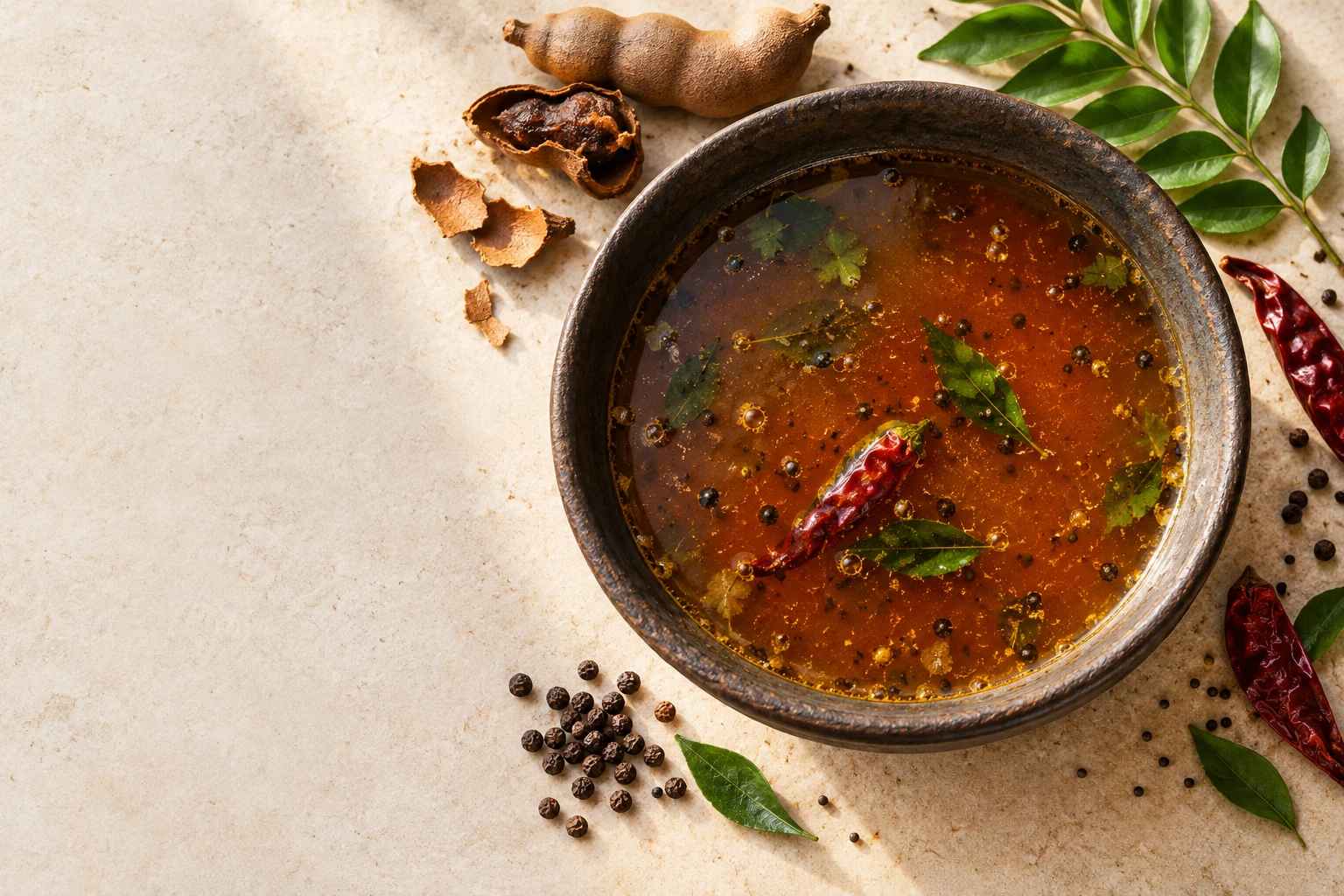
In a tamarind broth, pepper becomes part of a conversation: sourness, heat, aroma and the final seasoning.
A small fruit.
A place in the meal.
KERALA · SOUTHERN INDIA
Pepper, in company.
In the version published by Kerala Tourism, pepper is crushed with other spices and cooked in a tamarind-based broth. Mustard seeds, curry leaves, chilli and shallots enter in the final seasoning.
Rasam also appears with rice near the close of a sadya, Kerala’s celebratory vegetarian feast. This is one published version within a much wider family of household and regional traditions.
Cook the source recipeAN INTERACTIVE TASTING LENS
What does each ingredient bring?
Sensory descriptions are invitations to notice, not fixed scores. Preparation and personal perception change the experience.
THE RESEARCH ROOM
Every story leaves
a paper trail.
Explore the evidence, its limits, and the making of this exhibition.
KEEP FOLLOWING THE THREAD
One flavour opens
another door.
Chilli ↗
A fruit with many forms. A seed carried across oceans. A heat made at home.
EXHIBITION 03Vanilla ↗
An orchid, a fleeting flower, and an aroma made through time and skilled hands.
EXHIBITION 04Tamarind ↗
A brittle shell. A sticky centre. A sourness that finds a home in many kitchens.
EXHIBITION 05Cacao ↗
A pod on a trunk. A seed transformed. A cup with a long human history.
EXHIBITION 06Rice ↗
A grass. A grain. A shared meal that holds more than one history.
EXHIBITION 07Sesame ↗
A tiny seed. A capsule opening. A bread ring covered in a thousand small encounters.
EXHIBITION 08Saffron ↗
A purple flower. A few red threads. A small gesture that changes the whole pan.
EXHIBITION 09Maize ↗
A grass transformed by people. A grain transformed by water, lime and the work of hands.
A CONNECTING STORYWhat we call heat ↗
Two plants. Different compounds. A sensation that connects them.