
THE INGREDIENTS · NO. 03
A fleeting flower.
An aroma
made by time.
An orchid, a fleeting flower, and an aroma made through time and skilled hands.
Follow the vanilla01 / A CLOSER LOOK
Before the dark pod,
an orchid.
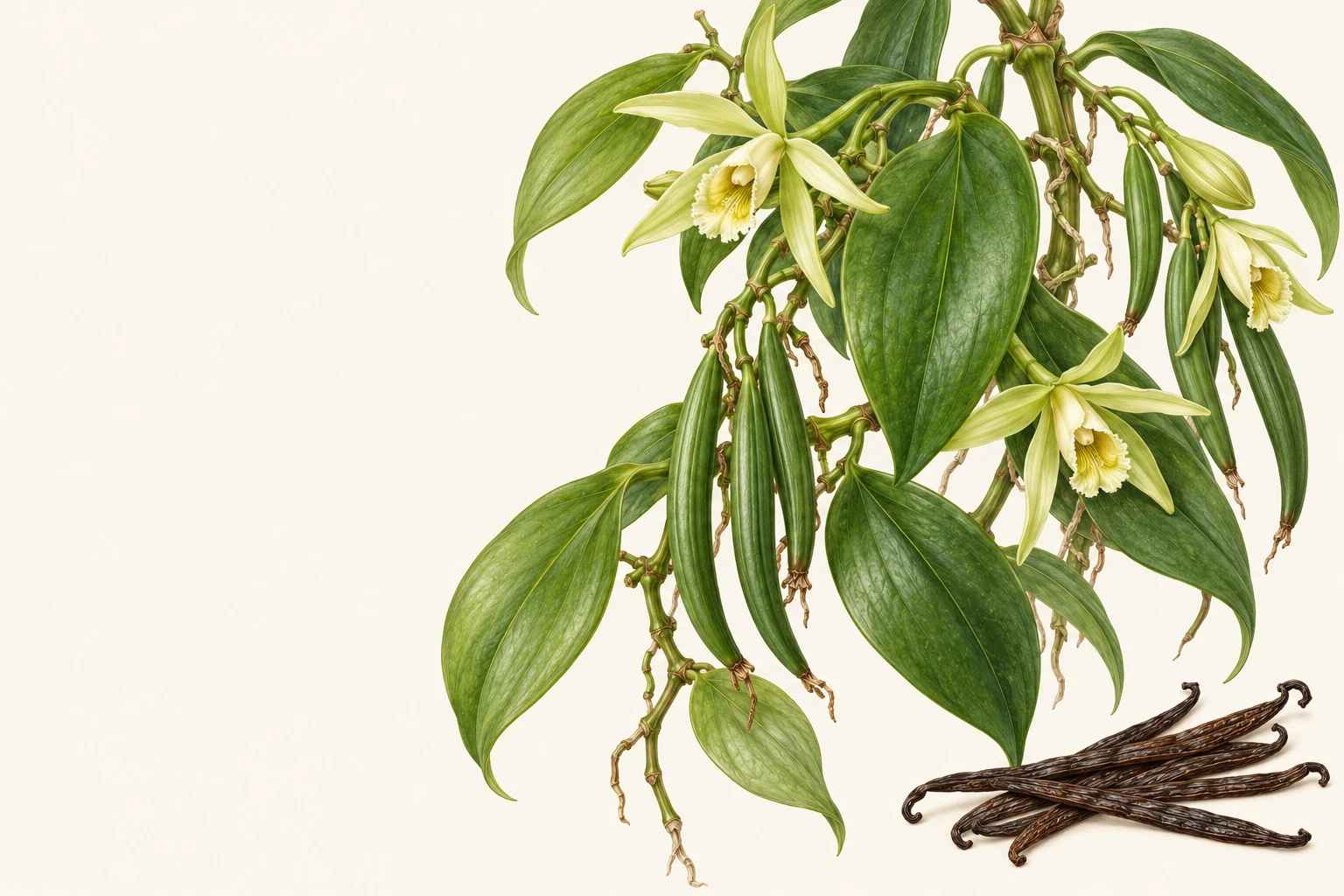
The familiar vanilla “bean” is a cured fruit capsule. This exhibition follows Vanilla planifolia, a climbing orchid and the principal commercial vanilla species.
Its native range extends from southern Mexico to northern Brazil. Cultivation, pollination and curing add human histories to that botanical geography.
- BOTANICAL NAME
- Vanilla planifolia
- PART WE USE
- The cured fruit
- PLANT FAMILY
- Orchidaceae
- TIME & TECHNIQUE
- Pollinate · cure · infuse
02 / THE ATLAS
Every place tells
a different story.
Botanical ancestry, the movement of goods, a living kitchen. Each layer tells a different story.
The map could not load. All locations and stories remain available below.
Selected regions, not a single point of domestication.
How to read this atlas
Vanilla planifolia has a broad tropical American native range. Mexican cultivation history, Totonac knowledge and the later development of cultivation on Réunion are connected stories, but they are not interchangeable origin claims.
03 / FROM THE FIELD
A vine climbs.
A person tends.
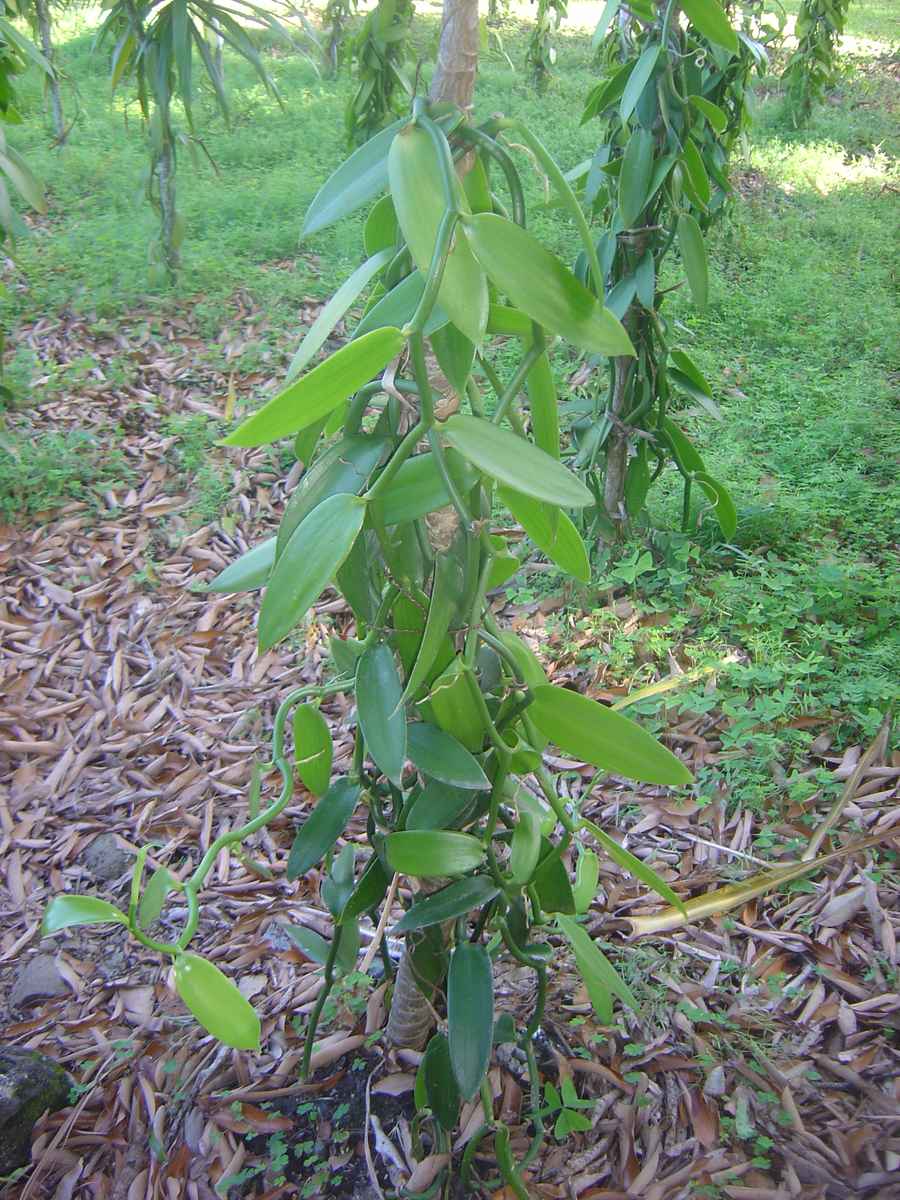
This photograph was made at Maison de la Vanille in Saint-André, Réunion, in 2005. A cultivated vine grows around a support.
Vanilla asks for repeated attention: managing its growth, pollinating flowers and waiting for capsules to mature. Its aroma begins long before the curing room.
04 / THE TRANSFORMATION TABLE
A fragrance
made slowly.
The green capsule is not the dark ingredient in the kitchen. Curing and extraction shape what we recognise as vanilla.
Pollinate → Grow → Harvest
Heat → Sweat → Dry → Condition
Cure → Extract → Use
05 / A HUMAN HISTORY
A gesture.
A name to remember.
RÉUNION · EDMOND ALBIUS
A practical method of hand pollination.
An enslaved twelve-year-old’s botanical skill.
On Réunion, Edmond Albius developed a practical method of hand-pollinating vanilla. His contribution helped make cultivation possible far beyond the plant’s American home.
He was enslaved. His skill belongs in the story alongside the colonial conditions that denied him freedom. Earlier hand-pollination work existed; the credit here is for his practical method.
LOOK A LITTLE CLOSER
A short window, months of waiting.
An individual V. planifolia flower lasts only one day. Successful pollination begins a much longer period of fruit development. That contrast gives cultivation its rhythm.
06 / A LIVING TRADITION
A fragrance with
a cultural home.
Around Papantla, vanilla is associated with Totonac knowledge of cultivation. Its story is larger than a bottle of extract.
A fragrance.
A moment to notice.
PAPANTLA · VERACRUZ, MEXICO
Knowledge carried through practice.
Mexico’s Ministry of Agriculture describes the historical association between Totonac communities and vanilla cultivation. Growing and preparing a flavour can itself be a food tradition.
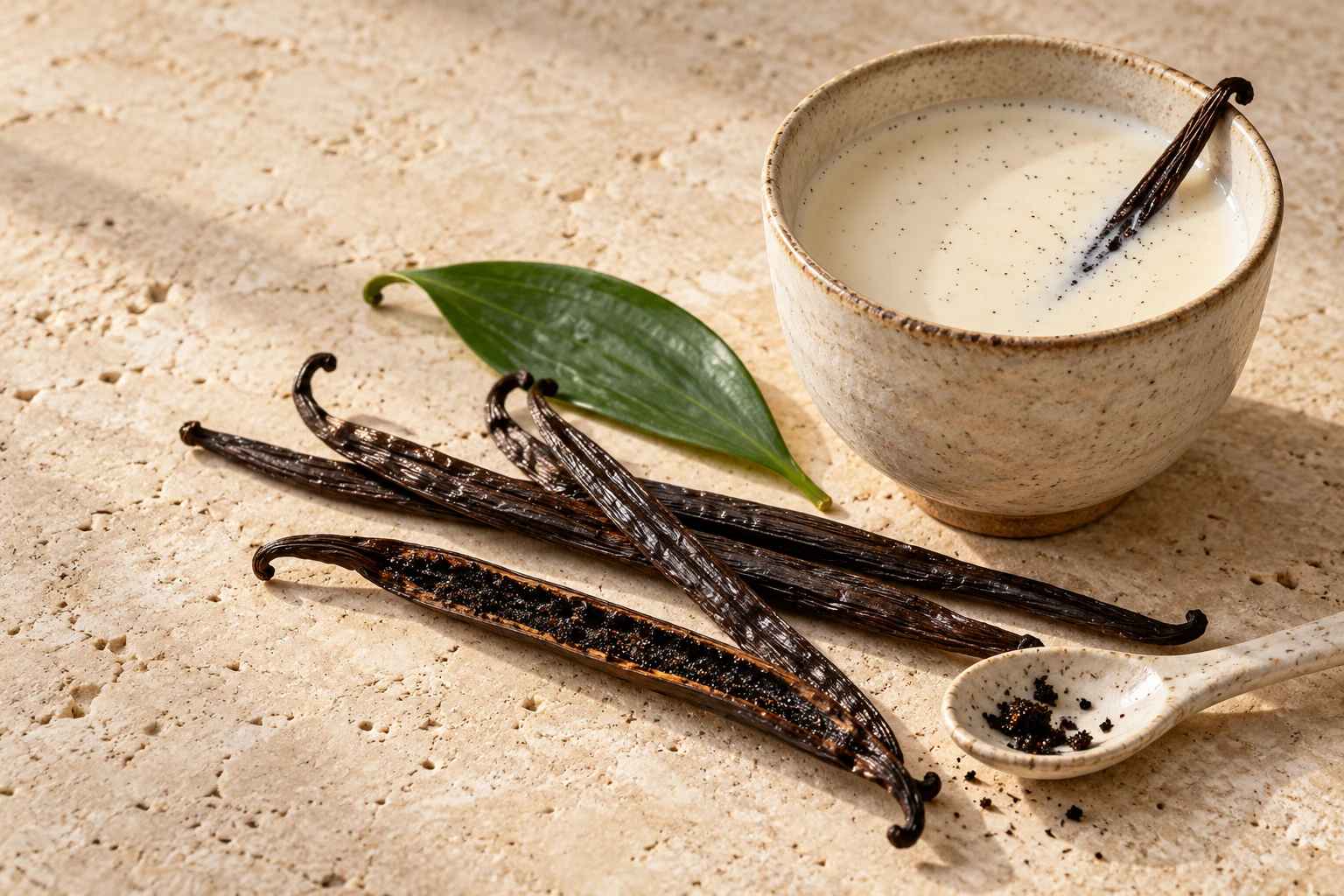
This chapter offers context rather than a claimed traditional recipe. The observation exercise below is our own invitation to explore aroma in the kitchen.
Read the cultural account ↗AN INTERACTIVE TASTING LENS
Notice the work behind the aroma.
Original editorial prompts. These are invitations to observe, not universal sensory scores.
KEEP FOLLOWING THE THREAD
One flavour opens
another door.
Black pepper ↗
A climbing vine, an ocean traveller, a familiar turn of the mill.
EXHIBITION 02Chilli ↗
A fruit with many forms. A seed carried across oceans. A heat made at home.
EXHIBITION 04Tamarind ↗
A brittle shell. A sticky centre. A sourness that finds a home in many kitchens.
EXHIBITION 05Cacao ↗
A pod on a trunk. A seed transformed. A cup with a long human history.
EXHIBITION 06Rice ↗
A grass. A grain. A shared meal that holds more than one history.
EXHIBITION 07Sesame ↗
A tiny seed. A capsule opening. A bread ring covered in a thousand small encounters.
EXHIBITION 08Saffron ↗
A purple flower. A few red threads. A small gesture that changes the whole pan.
EXHIBITION 09Maize ↗
A grass transformed by people. A grain transformed by water, lime and the work of hands.
A CONNECTING STORYFlavour takes time ↗
Vanilla and cacao. A harvest is only the beginning.
THE RESEARCH ROOM
Every story leaves
a paper trail.
Explore the evidence and the limits of this edition.