
THE INGREDIENTS · NO. 05
Before the bar.
Before the
first sip.
A pod on a trunk. A seed transformed. A cup with a long human history.
Follow the cacao01 / A CLOSER LOOK
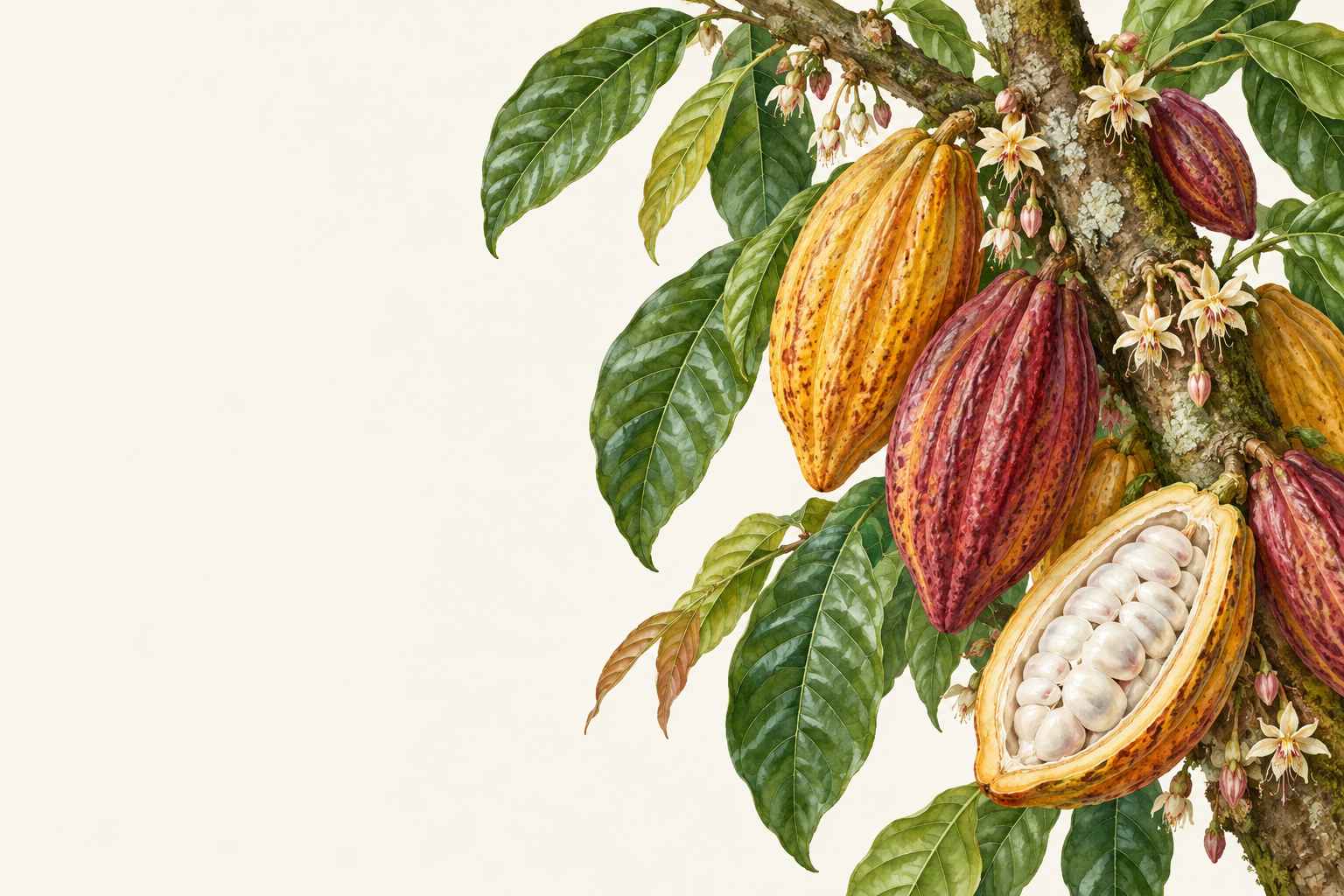
Chocolate begins
inside a fruit.
Cacao pods grow on the tree’s trunk and branches. Open a pod and the familiar brown bean is still a seed surrounded by moist pulp.
The plant and the finished drink belong to the same story, but many decisions lie between them. Let the seed lead you through the work of transformation.
- BOTANICAL NAME
- Theobroma cacao
- PART WE FOLLOW
- The seed
- PLANT FAMILY
- Malvaceae
- BEFORE THE CUP
- Ferment · dry · roast · grind
02 / THE ATLAS
Every place tells
a different story.
Botanical ancestry, the movement of goods, a living kitchen. Each layer tells a different story.
The map could not load. All locations and stories remain available below.
Selected regions, not a single point of domestication.
How to read this atlas
Cacao’s native range and its history of human use are different layers. The upper-Amazon marker represents important archaeological evidence; it is not a claim that every cacao population or drinking tradition began at that exact point.
03 / FROM THE FIELD
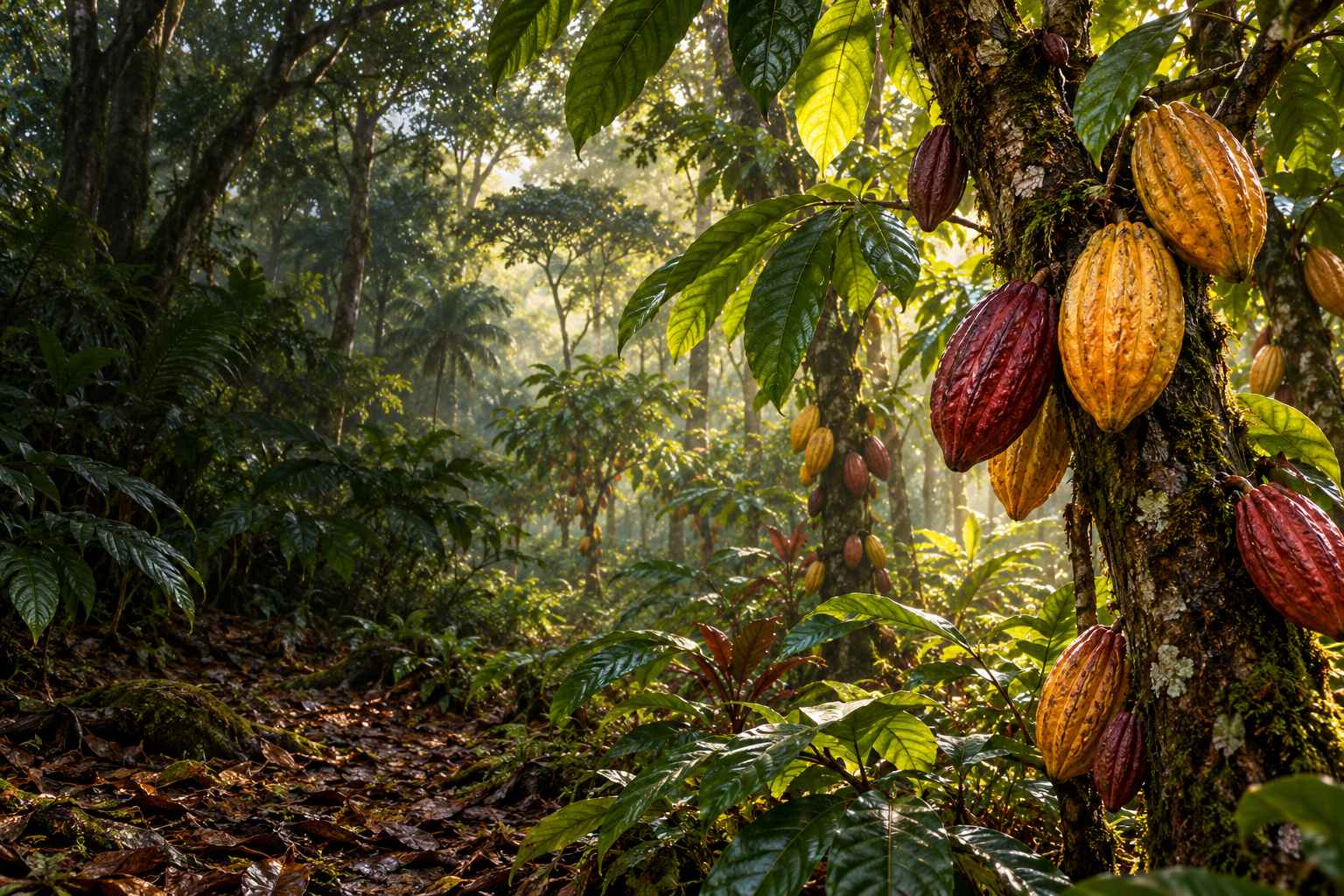
Beneath the canopy.
Before the chocolate.
Cacao begins as a living tree, with pods growing directly from its trunk and branches.
Pods, harvests and processing choices come before the finished cup. Keep the grower’s work in the story as the familiar flavour comes into view.
04 / THE TRANSFORMATION TABLE
A seed becomes
something else.
These connected stages make the familiar taste possible. They are a sequence, not interchangeable kinds of cacao.
Open → Ferment → Dry
Roast → Crack → Winnow
Grind → Blend → Whisk
05 / A HUMAN HISTORY
A history
held in a vessel.
UPPER AMAZON · SANTA ANA–LA FLORIDA
Years ago, approximately.
Cacao-use evidence from southeast Ecuador.
At Santa Ana–La Florida, several kinds of evidence place cacao use far back in the upper Amazon. Ancient residues can preserve a relationship between people and plants when the meal itself has disappeared.
Later research across American ceramics reveals exchange and mixing rather than one tidy origin-to-destination line. The atlas connects selected evidence and a contemporary Mexican preparation; the drawn route is schematic.
LOOK A LITTLE CLOSER
What can a vessel remember?
A container can retain starch, molecules and traces of DNA. Combined evidence tells a stronger story than assuming that a vessel’s shape alone reveals everything once served inside it.
06 / A LIVING TRADITION
Water, chocolate.
And the work of foam.
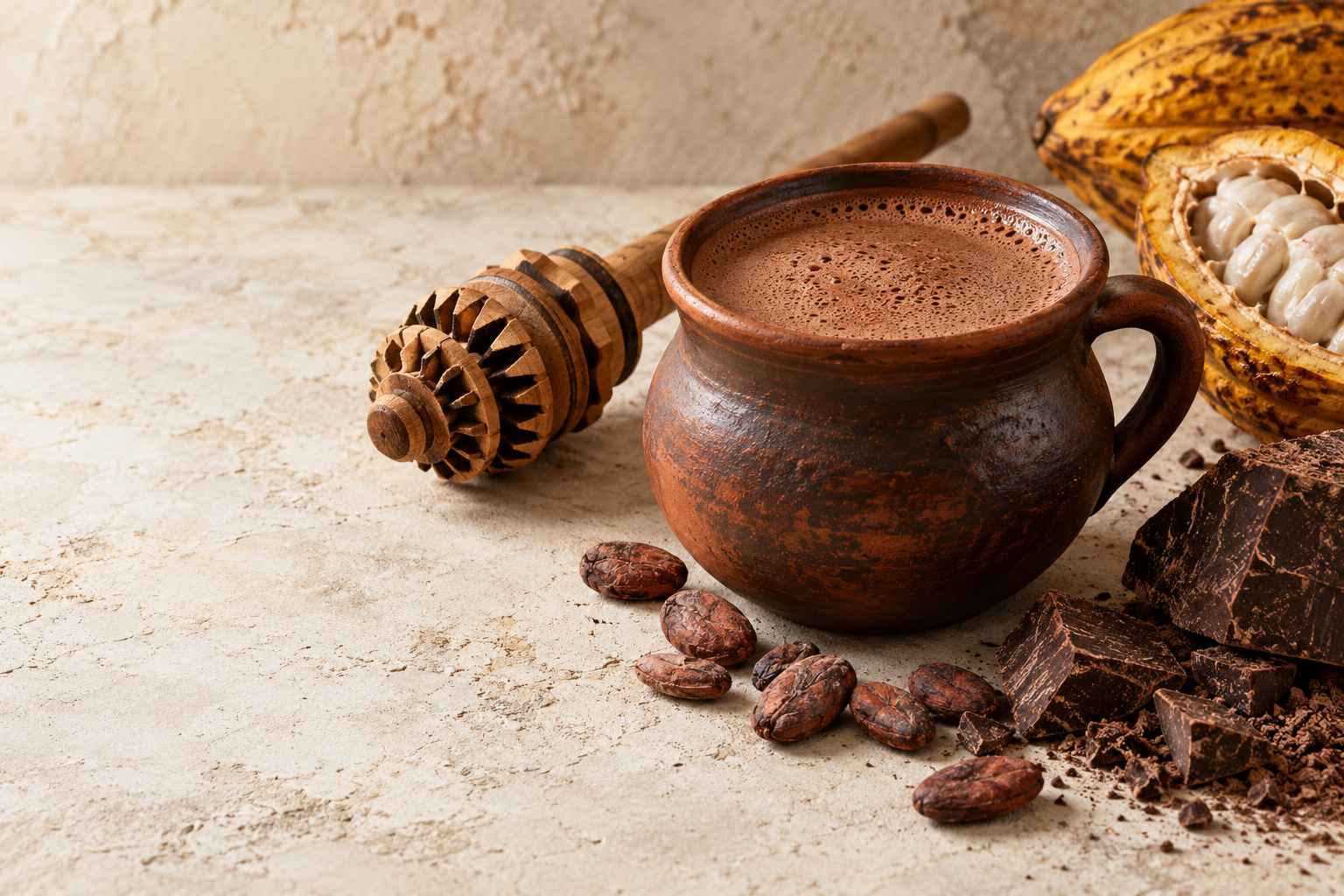
A documented Mexican chocolate en agua brings the ingredient into a warm, aromatic cup.
A seed.
A vessel.
A little air.
MEXICO · PROFECO’S 2022 PREPARATION
A molinillo makes the next change.
In this published version, a chocolate tablet dissolves in water warmed with cinnamon. A molinillo is used to raise foam before serving.
It is one contemporary preparation. The exhibition follows its ingredients and gestures without presenting it as the single original form of a cacao drink.
Read the documented preparation ↗AN INTERACTIVE TASTING LENS
Read the cup in three ways.
Original editorial prompts. These are invitations to observe, not universal sensory scores.
KEEP FOLLOWING THE THREAD
One flavour opens
another door.
Black pepper ↗
A climbing vine, an ocean traveller, a familiar turn of the mill.
EXHIBITION 02Chilli ↗
A fruit with many forms. A seed carried across oceans. A heat made at home.
EXHIBITION 03Vanilla ↗
An orchid, a fleeting flower, and an aroma made through time and skilled hands.
EXHIBITION 04Tamarind ↗
A brittle shell. A sticky centre. A sourness that finds a home in many kitchens.
EXHIBITION 06Rice ↗
A grass. A grain. A shared meal that holds more than one history.
EXHIBITION 07Sesame ↗
A tiny seed. A capsule opening. A bread ring covered in a thousand small encounters.
EXHIBITION 08Saffron ↗
A purple flower. A few red threads. A small gesture that changes the whole pan.
EXHIBITION 09Maize ↗
A grass transformed by people. A grain transformed by water, lime and the work of hands.
A CONNECTING STORYFlavour takes time ↗
Vanilla and cacao. A harvest is only the beginning.
THE RESEARCH ROOM
Every story leaves
a paper trail.
Explore the evidence and the limits of this edition.