
THE INGREDIENTS · NO. 04
A quiet pod.
A bright
awakening.
A brittle shell. A sticky centre. A sourness that finds a home in many kitchens.
Follow the tamarind01 / A CLOSER LOOK
Break the shell.
Meet the fruit.
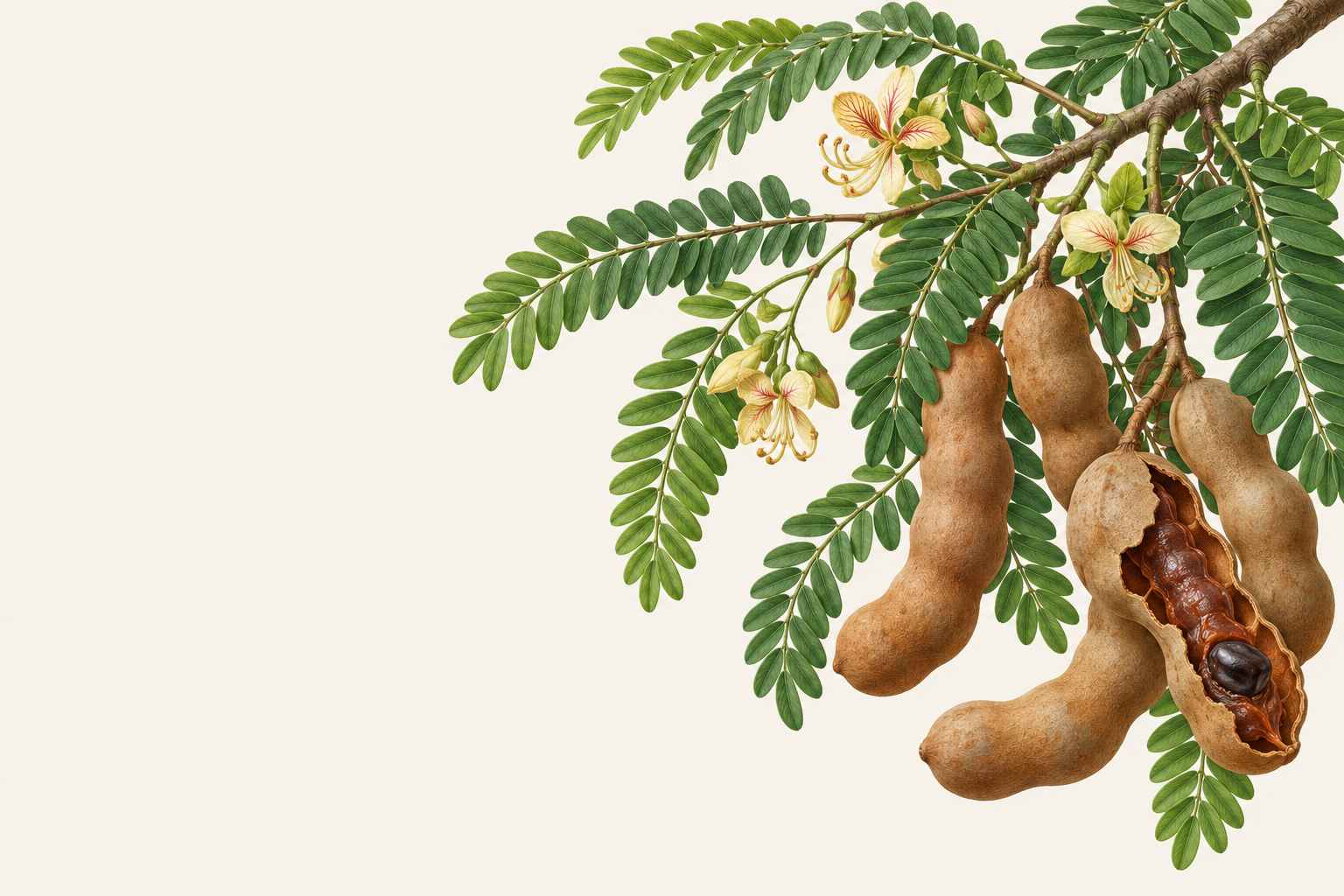
The tamarind tree carries pods whose pulp is prized for its acidity. Small leaflets line its leaves; inside the mature shell, the edible centre surrounds hard seeds.
The botanical family is Fabaceae. Begin with the contrast between shell and pulp: the part that protects the fruit and the part that changes a meal.
- BOTANICAL NAME
- Tamarindus indica
- PART WE FOLLOW
- The fruit pulp
- PLANT FAMILY
- Fabaceae
- AT THE TABLE
- Sourness · sweetness · balance
02 / THE ATLAS
Every place tells
a different story.
Botanical ancestry, the movement of goods, a living kitchen. Each layer tells a different story.
The map could not load. All locations and stories remain available below.
Selected regions, not a single point of domestication.
How to read this atlas
Ancient cultivation complicates the native-range story. Kew currently lists Comoros and Madagascar; older profiles use a wider tropical-African account. The markers identify the current listed range, not a first farm.
03 / FROM THE FIELD
A spreading crown.
Many kitchens below.
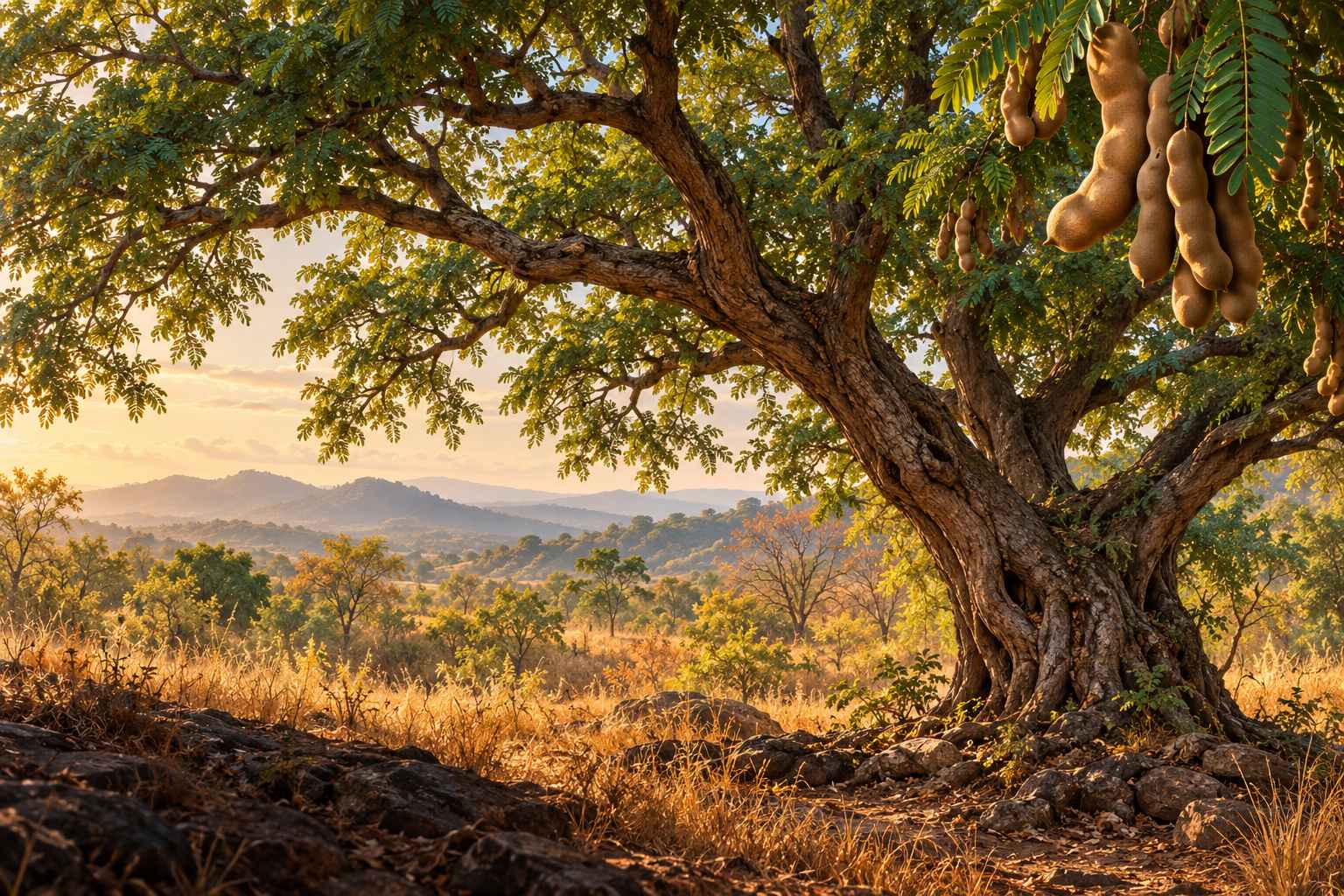
Before it reaches a market, tamarind begins with a tree, a season and a harvest of pods.
Cultivation is one history. The many ways cooks use the pulp are another. Follow both, without treating a familiar kitchen as proof of botanical origin.
04 / THE TRANSFORMATION TABLE
From the pod
to the broth.
Three ways of looking at tamarind: its shell, its pulp and its place in a seasoned liquid.
Open → Separate → Look
Soften → Press → Strain
Add → Stir → Taste
05 / A HUMAN HISTORY
A name travels.
A tree takes root.
INDIAN OCEAN · CULTIVATION & CONNECTIONS
Many journeys.
No single line can contain them.
Long cultivation and movement have blurred tamarind’s early distribution. Its presence in India is deeply established; the species name indica is not proof that the tree originated there.
The atlas joins selected botanical and culinary records. Its dashed lines connect exhibition places; they do not reconstruct a verified shipment or an uninterrupted historical route.
LOOK A LITTLE CLOSER
A label is not a birthplace.
A scientific name, a native range and a dish’s cultural home answer different questions. Keep each label beside the evidence it actually describes.
06 / A LIVING TRADITION
A sour broth.
A familiar comfort.
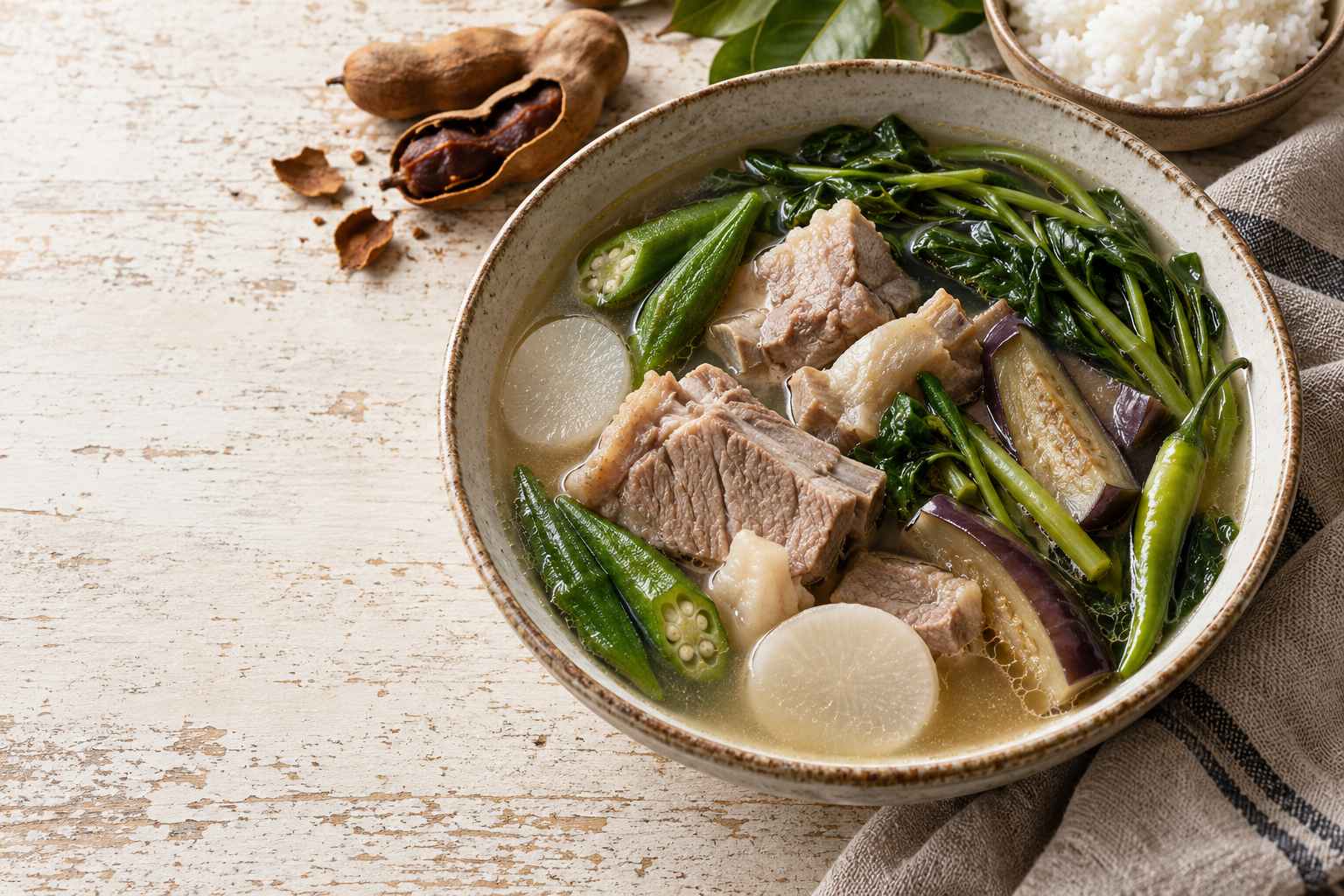
In sinigang, sampalok is one way to give a Filipino broth its bright centre.
A bright broth.
A place at the table.
PHILIPPINES · SINIGANG SA SAMPALOK
One fruit, among many souring choices.
Sinigang brings sourness into a broth with vegetables and, in many versions, meat or seafood. Tamarind is a familiar souring ingredient; other versions use different fruits.
Follow the tamarind version here, then return to rasam. The shared ingredient offers a connection while each preparation keeps its own context.
Open the Filipino food guide ↗AN INTERACTIVE TASTING LENS
Where does sourness lead?
Original editorial prompts. These are invitations to observe, not universal sensory scores.
KEEP FOLLOWING THE THREAD
One flavour opens
another door.
Black pepper ↗
A climbing vine, an ocean traveller, a familiar turn of the mill.
EXHIBITION 02Chilli ↗
A fruit with many forms. A seed carried across oceans. A heat made at home.
EXHIBITION 03Vanilla ↗
An orchid, a fleeting flower, and an aroma made through time and skilled hands.
EXHIBITION 05Cacao ↗
A pod on a trunk. A seed transformed. A cup with a long human history.
EXHIBITION 06Rice ↗
A grass. A grain. A shared meal that holds more than one history.
EXHIBITION 07Sesame ↗
A tiny seed. A capsule opening. A bread ring covered in a thousand small encounters.
EXHIBITION 08Saffron ↗
A purple flower. A few red threads. A small gesture that changes the whole pan.
EXHIBITION 09Maize ↗
A grass transformed by people. A grain transformed by water, lime and the work of hands.
A CONNECTING STORYThe art of balance ↗
Two sour broths. Many ways to bring a flavour into focus.
THE RESEARCH ROOM
Every story leaves
a paper trail.
Explore the evidence and the limits of this edition.