
THE INGREDIENTS · NO. 07
A small seed.
An entire
surface.
A tiny seed. A capsule opening. A bread ring covered in a thousand small encounters.
Follow the sesame01 / A CLOSER LOOK
Before the crust,
there was a capsule.
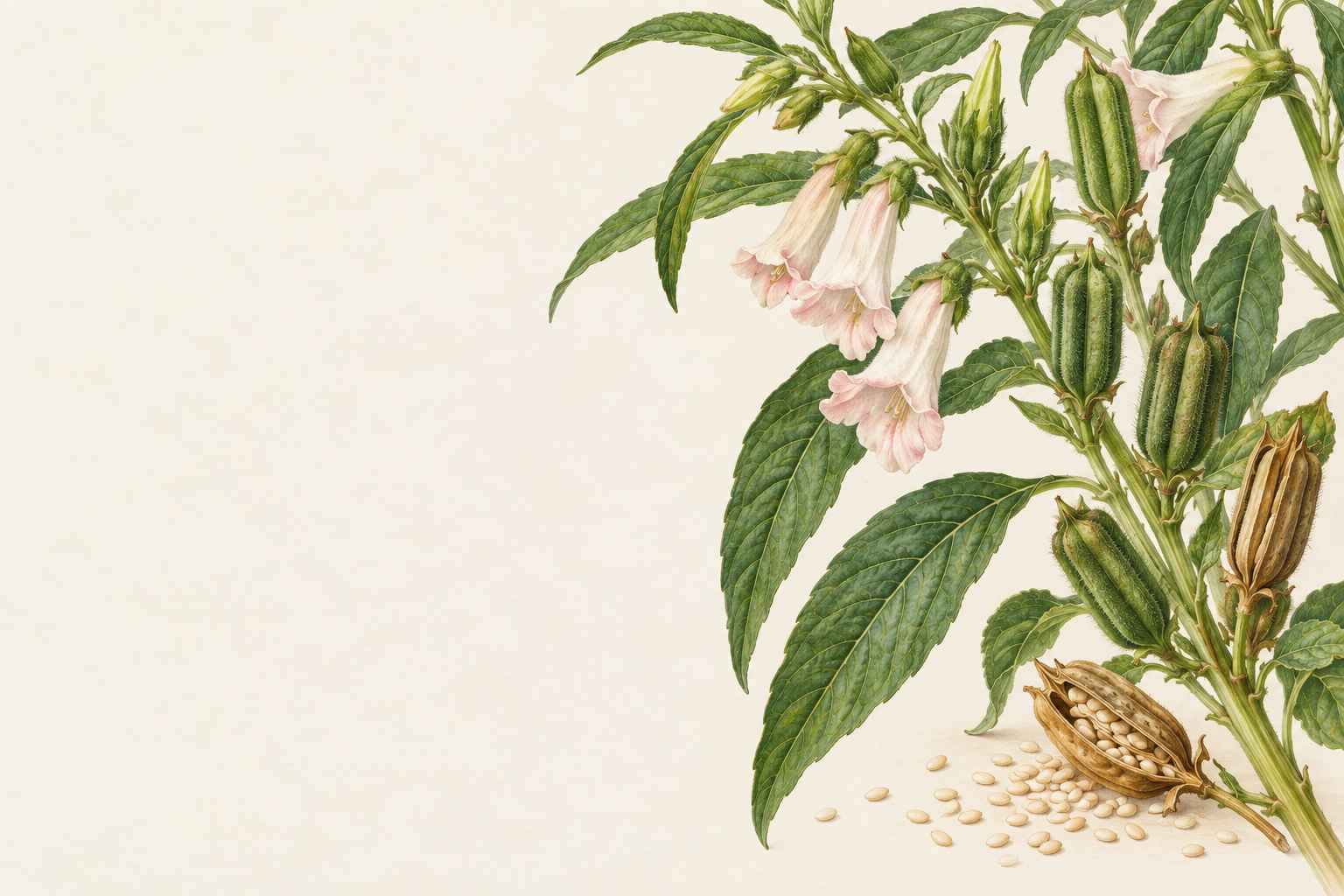
Sesame grows as an annual herb. Its tubular flowers give way to capsules that release small edible seeds when they open.
The familiar scattering on a loaf is part of a plant’s life. Look at a seed as an ingredient in its own right before watching it become a bread’s outer layer.
- BOTANICAL NAME
- Sesamum indicum
- PART WE FOLLOW
- The seed
- PLANT FAMILY
- Pedaliaceae
- SELECTED PREPARATION
- Roasted seeds on Ankara Simidi
02 / THE ATLAS
Every place tells
a different story.
Botanical ancestry, the movement of goods, a living kitchen. Each layer tells a different story.
The map could not load. All locations and stories remain available below.
Selected regions, not a single point of domestication.
How to read this atlas
Kew’s current record lists the Indian subcontinent as native. The domestication history is a separate archaeological question. This atlas uses a broad regional marker rather than declaring a first farm or a single ancient route to Türkiye.
03 / FROM THE FIELD
A field before
the scattering.
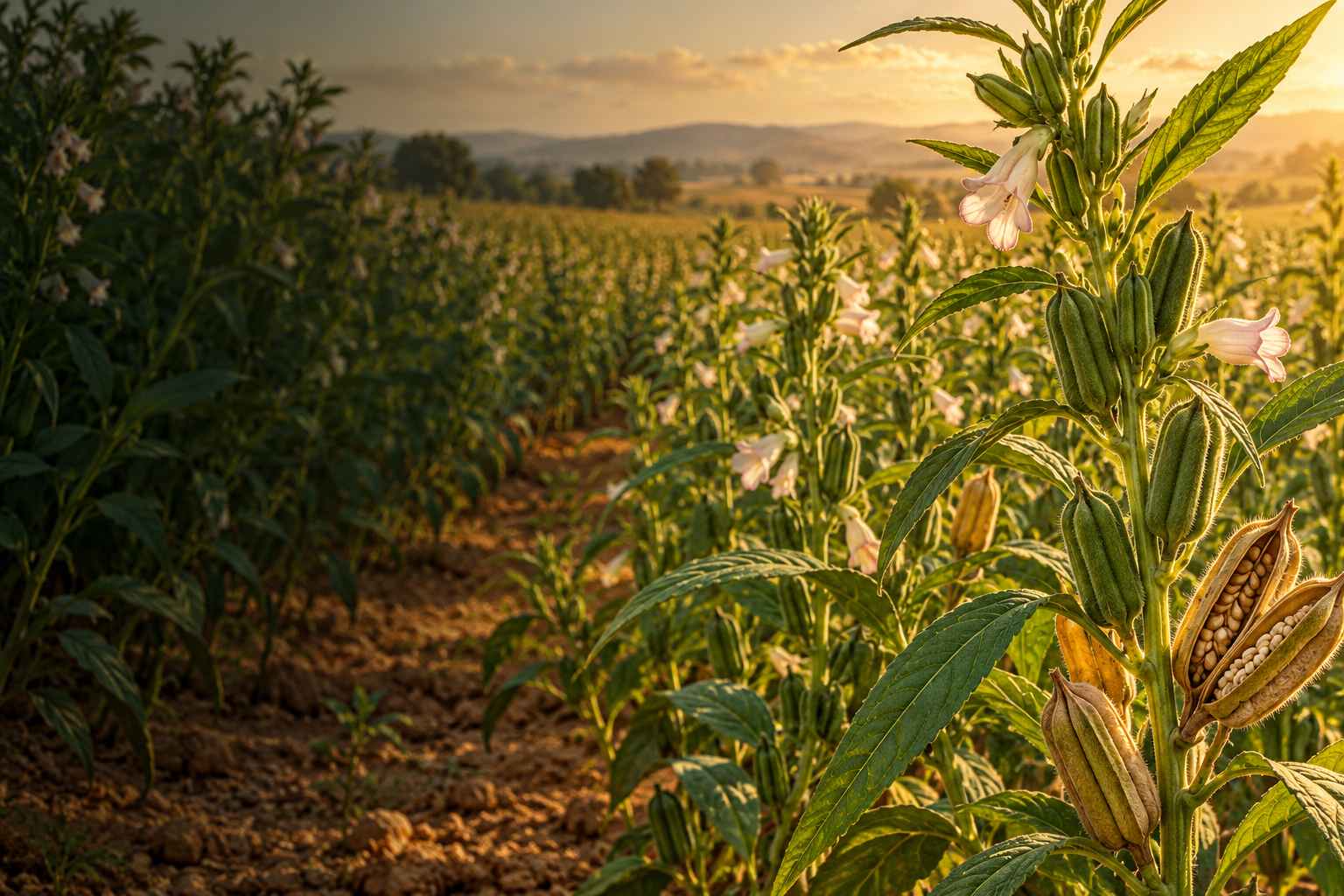
At the scale of a crop, sesame reveals the plant behind the familiar seed.
A seed can disappear into the decoration of a finished dish. Here, the exhibition gives the plant room before following its role on a loaf.
04 / THE TRANSFORMATION TABLE
From capsule
to crust.
The ingredient becomes a surface through a sequence of choices. Follow the selected Ankara bread’s use of sesame.
Harvest → Separate → Look
Select → Roast → Cool
Shape → Dip → Coat → Bake
05 / A HUMAN HISTORY
A crop moves.
A kitchen makes
its own use.
SOUTH ASIA · ANCIENT CULTIVATION · TÜRKİYE
Seed, many possible roles.
This exhibition follows one bread.
Archaeological work places sesame within long histories of South Asian cultivation and exchange. Exact beginnings and movements deserve more care than a single origin slogan.
The Ankara kitchen marker belongs to a modern documented regional tradition. Connecting it to the botanical record shows the exhibition’s scope; the dashed line does not identify a particular trader or shipment.
LOOK A LITTLE CLOSER
Not every sesame ring is the same ring.
Size, dough, coating and oven can distinguish local breads. A specific production record lets us notice those differences rather than using one photograph to stand for every simit.
06 / A LIVING TRADITION
A ring of bread.
A landscape
of seeds.
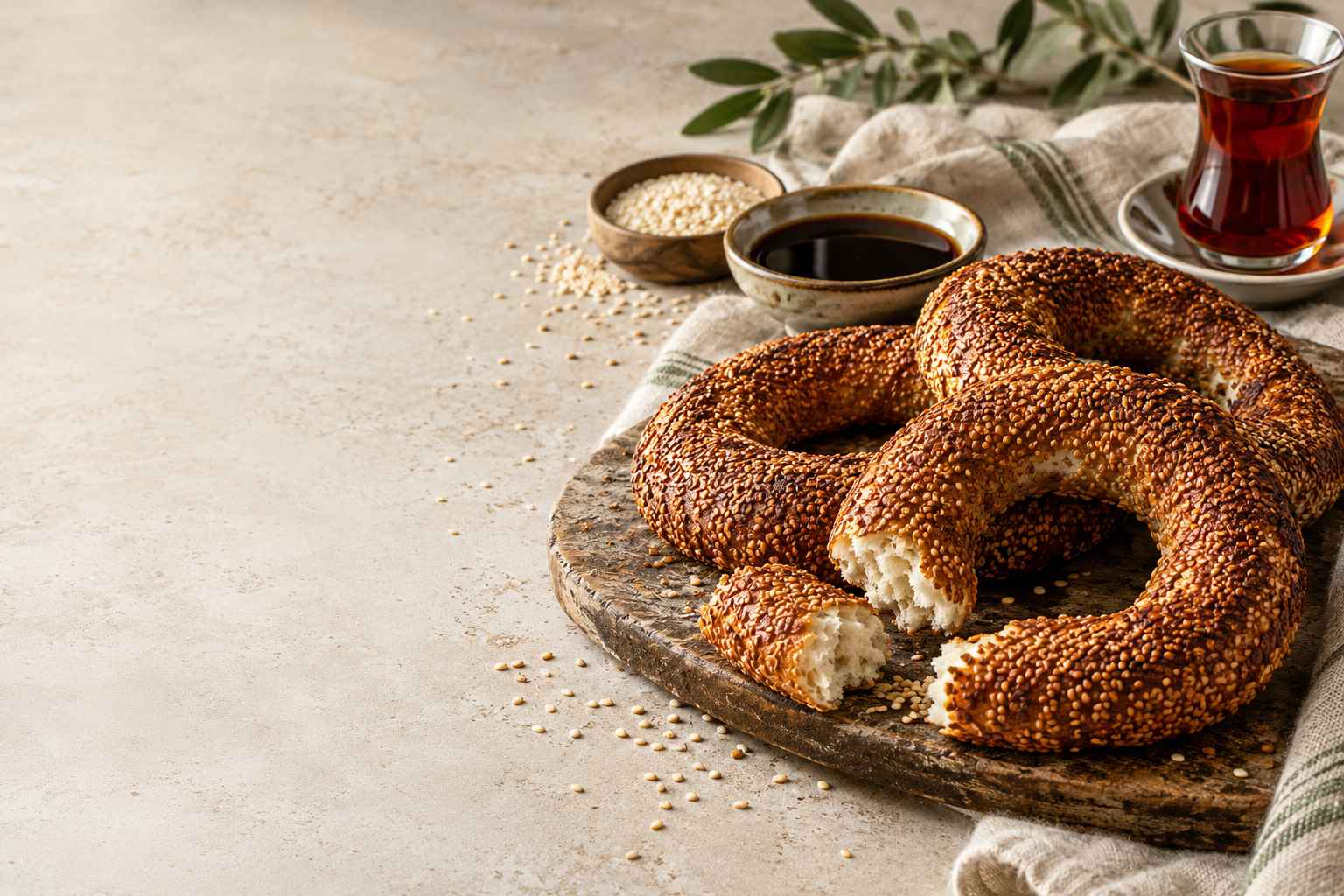
In Ankara Simidi, sesame is part of the bread’s structure, colour and first encounter.
A ring.
A crust.
A thousand seeds.
ANKARA · TÜRKİYE
Roasted sesame, grape pekmez, a hot oven.
The geographical-indication record follows a thinner, smaller simit. Its dark exterior comes from the pekmez coating; darkness alone should not be read as a burnt crust.
Roasted sesame covers the prepared dough before baking. Enter the dish exhibition to follow this attributed regional process from dough to finished ring.
Read the regional specification ↗AN INTERACTIVE TASTING LENS
Explore the outside first.
Original editorial prompts. These are invitations to observe, not universal sensory scores.
KEEP FOLLOWING THE THREAD
One flavour opens
another door.
Black pepper ↗
A climbing vine, an ocean traveller, a familiar turn of the mill.
EXHIBITION 02Chilli ↗
A fruit with many forms. A seed carried across oceans. A heat made at home.
EXHIBITION 03Vanilla ↗
An orchid, a fleeting flower, and an aroma made through time and skilled hands.
EXHIBITION 04Tamarind ↗
A brittle shell. A sticky centre. A sourness that finds a home in many kitchens.
EXHIBITION 05Cacao ↗
A pod on a trunk. A seed transformed. A cup with a long human history.
EXHIBITION 06Rice ↗
A grass. A grain. A shared meal that holds more than one history.
EXHIBITION 08Saffron ↗
A purple flower. A few red threads. A small gesture that changes the whole pan.
EXHIBITION 09Maize ↗
A grass transformed by people. A grain transformed by water, lime and the work of hands.
A CONNECTING STORYA grain becomes a meal ↗
Rice and maize. Three dishes shaped by technique and tradition.
THE RESEARCH ROOM
Every story leaves
a paper trail.
Explore the evidence and the limits of this edition.