
THE INGREDIENTS · NO. 08
A flower.
A thread.
A golden
landscape.
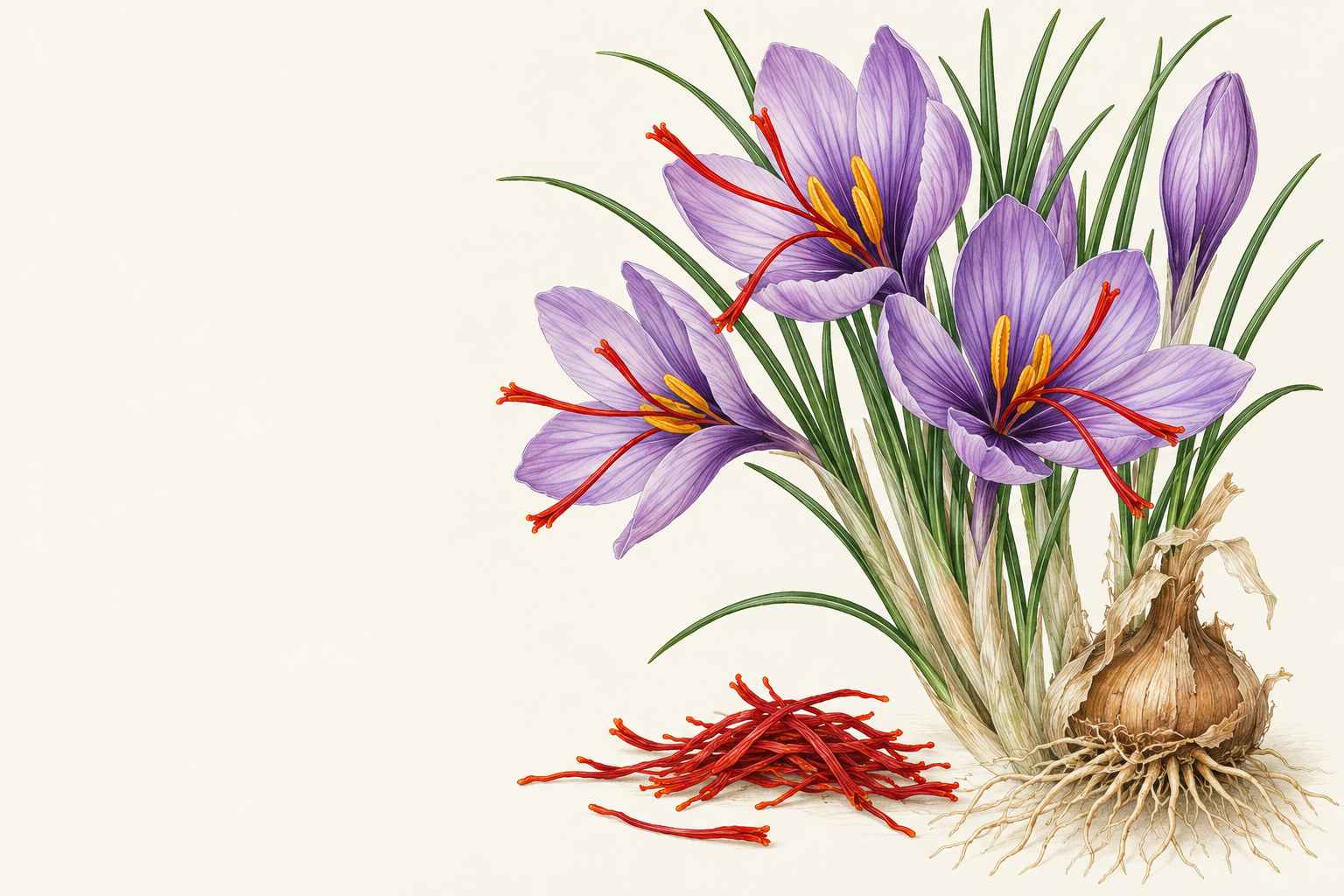
A purple flower. A few red threads. A small gesture that changes the whole pan.
Follow the saffron01 / A CLOSER LOOK
The flower is large.
The spice is small.
Saffron comes from the stigmas of Crocus sativus. The red threads occupy only a small part of the purple flower; petals and yellow anthers are different structures.
That distinction changes the scale of attention. A field becomes flowers, flowers become a small quantity of spice, and that spice joins the cooking around it.
- BOTANICAL NAME
- Crocus sativus
- PART WE FOLLOW
- Dried stigmas
- PLANT FAMILY
- Iridaceae
- CULTIVATION & USE
- Flower → thread → cooking liquid
02 / THE ATLAS
Every place tells
a different story.
Botanical ancestry, the movement of goods, a living kitchen. Each layer tells a different story.
The map could not load. All locations and stories remain available below.
Selected regions, not a single point of domestication.
How to read this atlas
Kew describes cultivated saffron as a cultigen from Greece; genetic research supports ancestry from Crocus cartwrightianus and points to Attica. Spanish cultivation and Valencian cooking are distinct later contexts, not claims of botanical origin.
03 / FROM THE FIELD
A brief flowering.
A patient harvest.
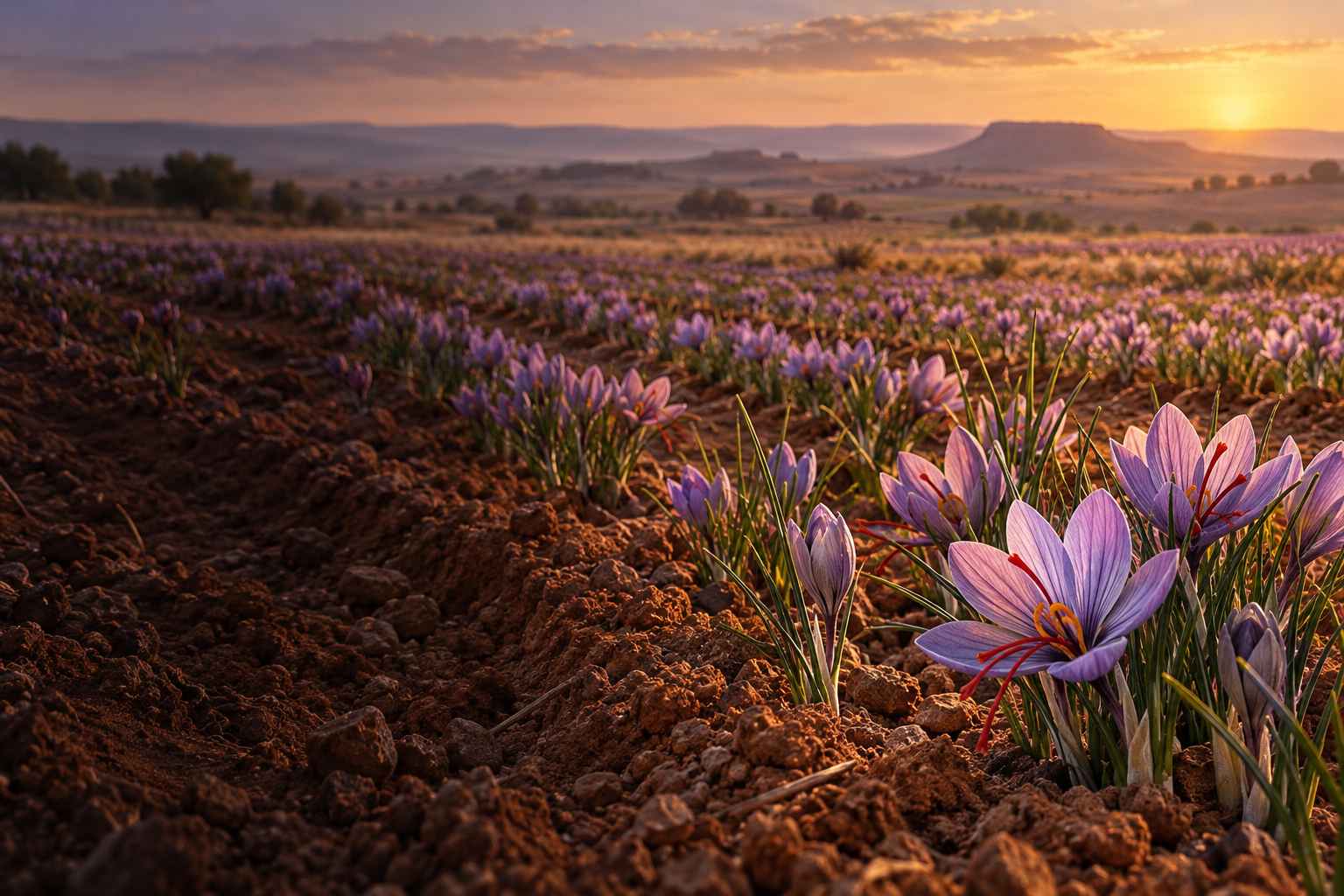
A field of saffron in flower offers a brief, vivid moment before the work of harvest.
Look closely at the scale of the work: the culinary ingredient is only a part of each flower. Its preparation asks us to keep human attention in the picture.
04 / THE TRANSFORMATION TABLE
From purple
to gold.
Harvesting and preparing the dried spice precede its role in the pan. Follow the distinction between the flower, the thread and the liquid.
Harvest → Open → Separate
Separate → Dry → Protect
Add → Simmer → Notice
05 / A HUMAN HISTORY
One ancestry.
Many cultivated
landscapes.
GREECE · LA MANCHA · VALÈNCIA
Places in this exhibition.
Ancestry, cultivation and a kitchen.
Research places saffron’s ancestry in Greece. Following it to La Mancha opens a different question: how a cultivated spice becomes part of a regional landscape and body of skill.
València is another layer again. The cooking traditions of a place do not need to share a plant’s botanical birthplace to give it a distinctive culinary role. The atlas connects these contexts without claiming an exact historical shipment.
LOOK A LITTLE CLOSER
A thread is not a petal.
Botanical precision gives the artwork a purpose. Distinguishing the red stigmas from the rest of the flower reveals what the harvest is selecting, and why a bag of threads begins with many flowers.
06 / A LIVING TRADITION
A little saffron.
A whole pan
of rice.
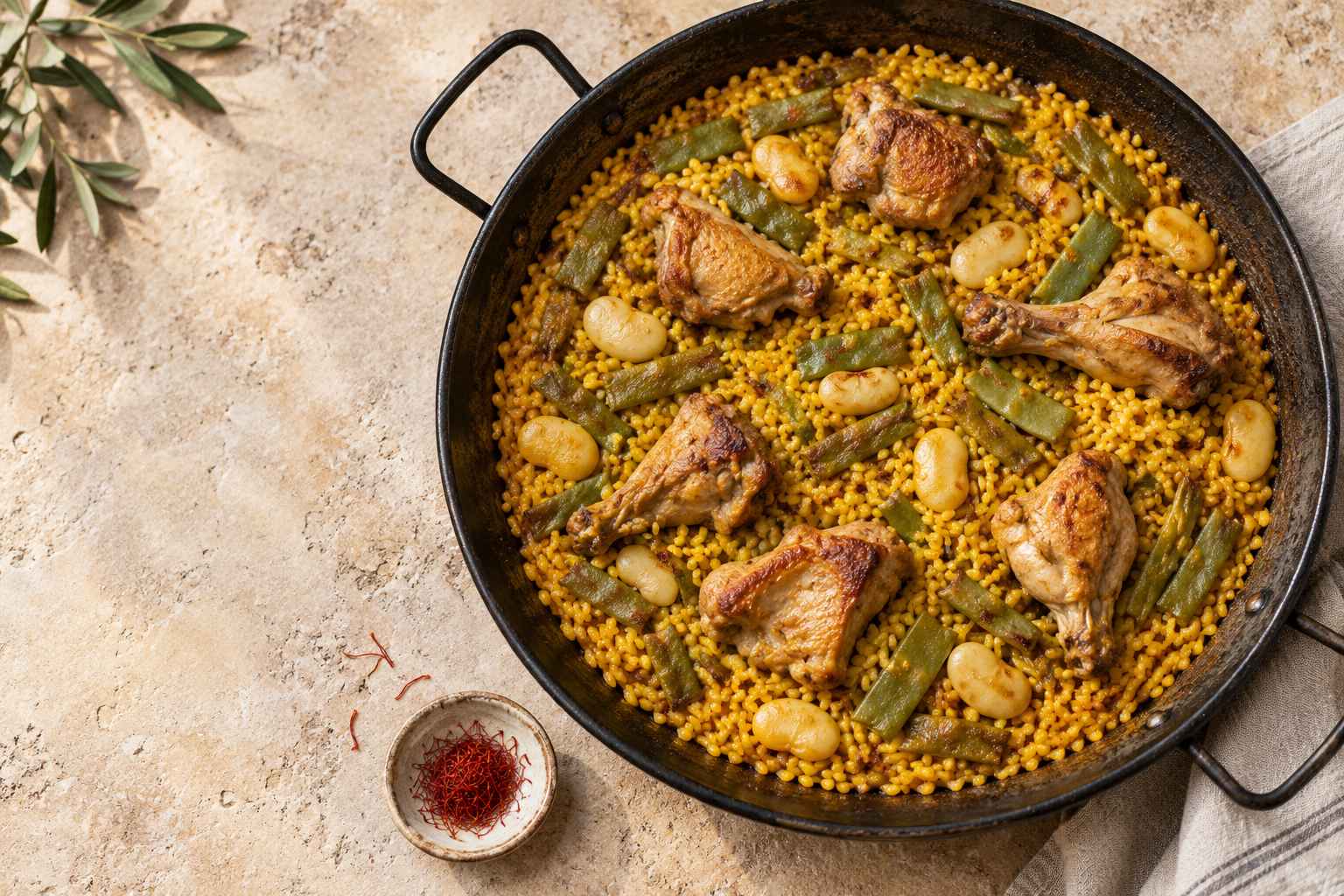
In the selected paella valenciana, the spice joins rice, vegetables, chicken and rabbit.
A few threads.
A whole pan
of possibilities.
VALÈNCIA · SPAIN
The colour belongs to a larger preparation.
The regional recipe brings saffron into a pan with rice, chicken, rabbit, green beans and garrofó. The spice has a place among other ingredients rather than carrying the dish alone.
Follow the cooking liquid into the grain. This is one documented paella valenciana; it should not be used to erase the distinct identities of other Valencian rice preparations.
Read the regional recipe ↗AN INTERACTIVE TASTING LENS
Look past the golden colour.
Original editorial prompts. These are invitations to observe, not universal sensory scores.
KEEP FOLLOWING THE THREAD
One flavour opens
another door.
Black pepper ↗
A climbing vine, an ocean traveller, a familiar turn of the mill.
EXHIBITION 02Chilli ↗
A fruit with many forms. A seed carried across oceans. A heat made at home.
EXHIBITION 03Vanilla ↗
An orchid, a fleeting flower, and an aroma made through time and skilled hands.
EXHIBITION 04Tamarind ↗
A brittle shell. A sticky centre. A sourness that finds a home in many kitchens.
EXHIBITION 05Cacao ↗
A pod on a trunk. A seed transformed. A cup with a long human history.
EXHIBITION 06Rice ↗
A grass. A grain. A shared meal that holds more than one history.
EXHIBITION 07Sesame ↗
A tiny seed. A capsule opening. A bread ring covered in a thousand small encounters.
EXHIBITION 09Maize ↗
A grass transformed by people. A grain transformed by water, lime and the work of hands.
A CONNECTING STORYA grain becomes a meal ↗
Rice and maize. Three dishes shaped by technique and tradition.
THE RESEARCH ROOM
Every story leaves
a paper trail.
Explore the evidence and the limits of this edition.