
THE INGREDIENTS · NO. 09
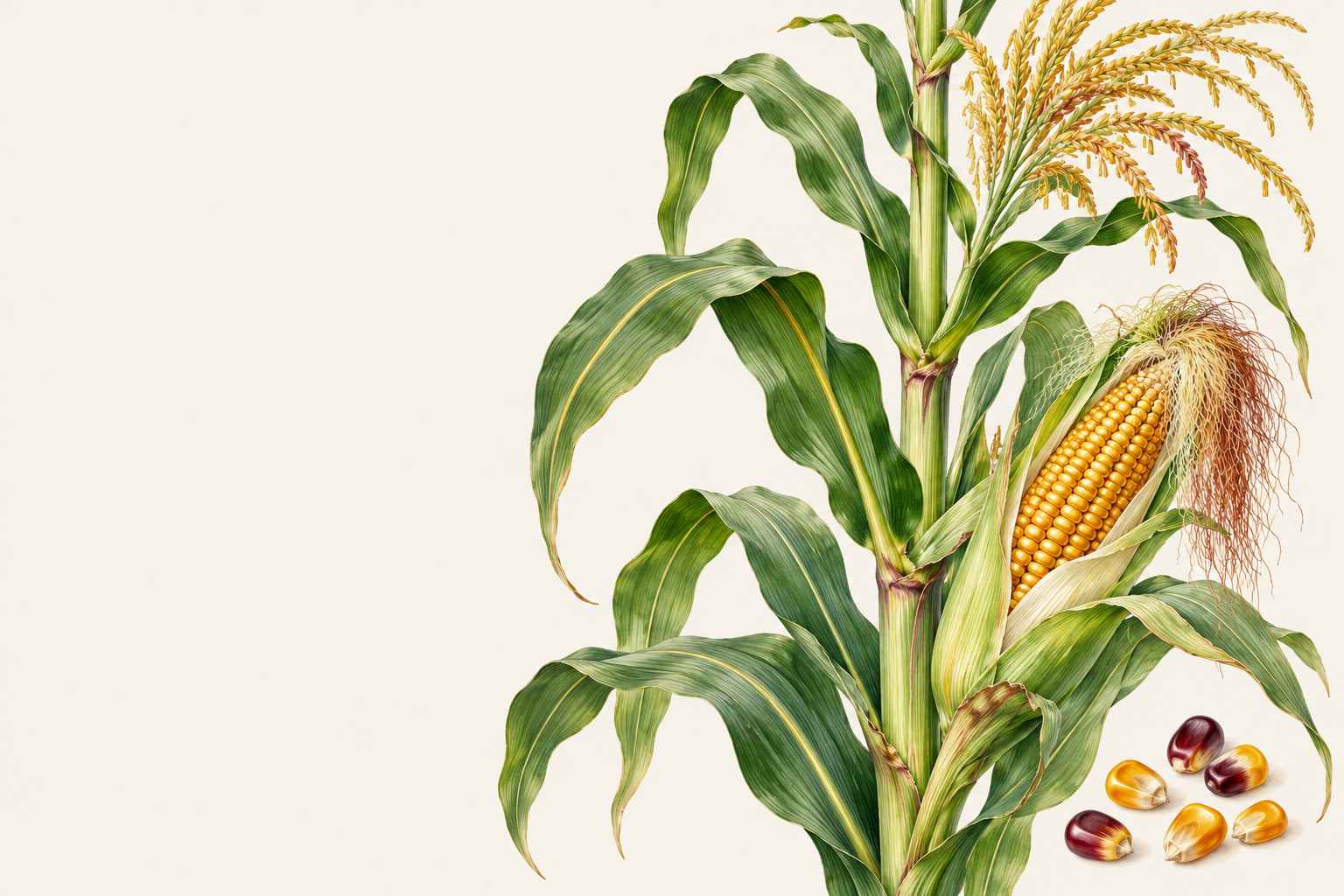
An ear of grain.
A world
held in masa.
A grass transformed by people. A grain transformed by water, lime and the work of hands.
Follow the maize01 / A CLOSER LOOK
A familiar ear.
A long human
relationship.
Maize is a grass. Its kernels, ears and many cultivated forms hold a history of selection by people, alongside the plant’s biological ancestry.
The maize used for masa is not interchangeable with every sweetcorn cob or popcorn kernel. Follow a particular material and a particular preparation as the grain changes its form.
- BOTANICAL NAME
- Zea mays
- PART WE FOLLOW
- The grain
- PLANT FAMILY
- Poaceae · grasses
- SELECTED TRANSFORMATION
- Nixtamal → masa → tamal
02 / THE ATLAS
Every place tells
a different story.
Botanical ancestry, the movement of goods, a living kitchen. Each layer tells a different story.
The map could not load. All locations and stories remain available below.
Selected regions, not a single point of domestication.
How to read this atlas
Maize domestication began in southwestern Mexico approximately 9,000 years ago. Later dispersal and genetic exchange across the Americas make the crop’s history more complex than one line. Neither the origin marker nor that date identifies the invention of tamales.
03 / FROM THE FIELD
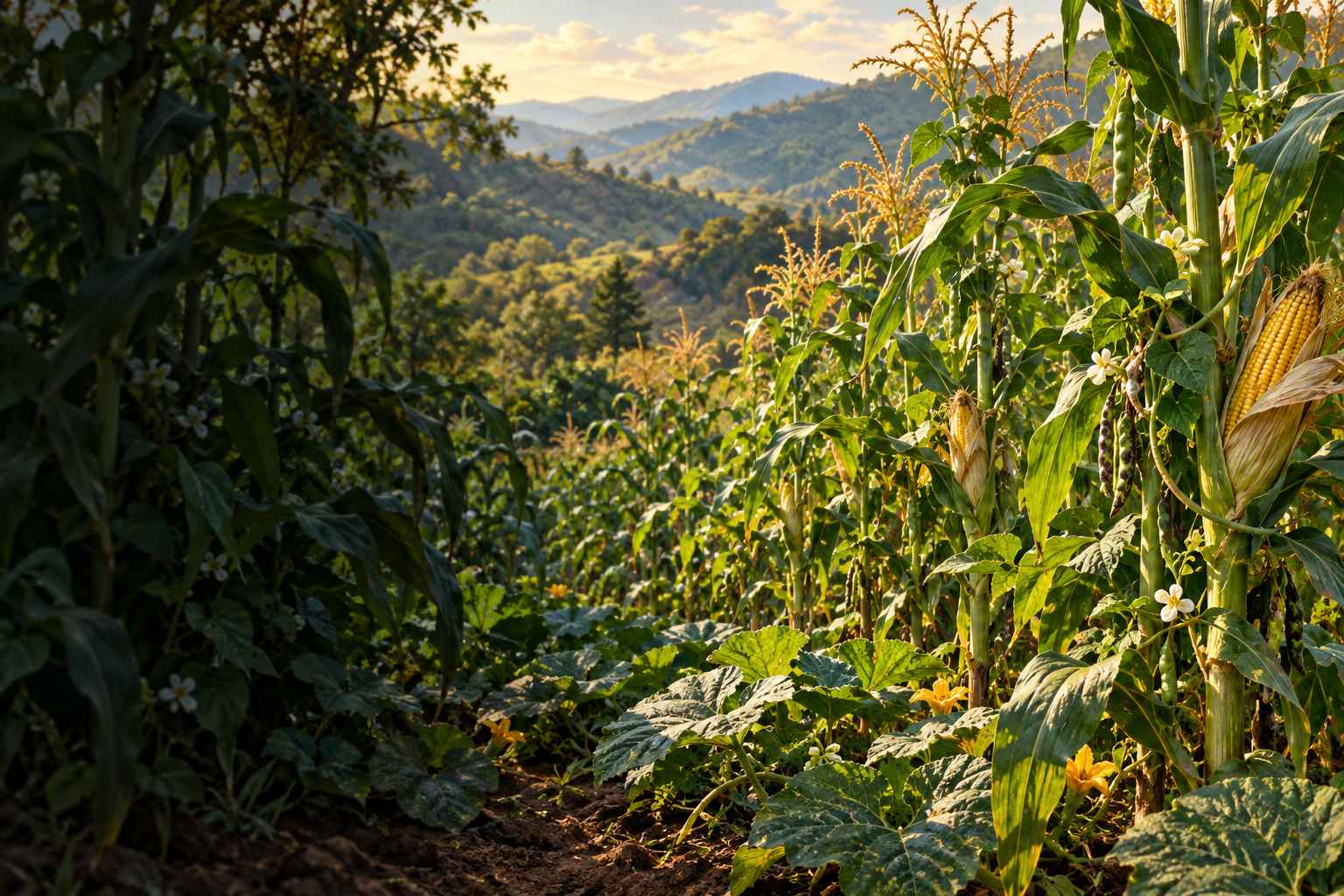
A field of grain.
A landscape shaped
with people.
A field of maize restores a sense of the living plant before the grain enters the kitchen.
The next transformation happens at a different scale: water, lime, heat and grinding turn selected grain into the material a cook can shape.
04 / THE TRANSFORMATION TABLE
From a kernel
to a dough.
Nixtamalization and grinding change how the grain can be used. In the selected tamal, the resulting dough is shaped and steamed.
Cook → Rest → Wash
Grind → Mix → Work
Spread → Fill → Wrap → Steam
05 / A HUMAN HISTORY
A beginning.
Then many
generations.
SOUTHWESTERN MEXICO · THE AMERICAS
Years ago, approximately.
The beginning of maize domestication.
Research traces maize domestication to southwestern Mexico and describes later dispersal and genetic exchange across the Americas. People continued to shape the crop as it entered new settings.
The atlas chooses a few research and kitchen contexts from that larger history. Moving from an early maize record to a modern tamal recipe connects questions; it does not make the modern recipe a reconstruction of an ancient meal.
LOOK A LITTLE CLOSER
A wrapper is also part of the preparation.
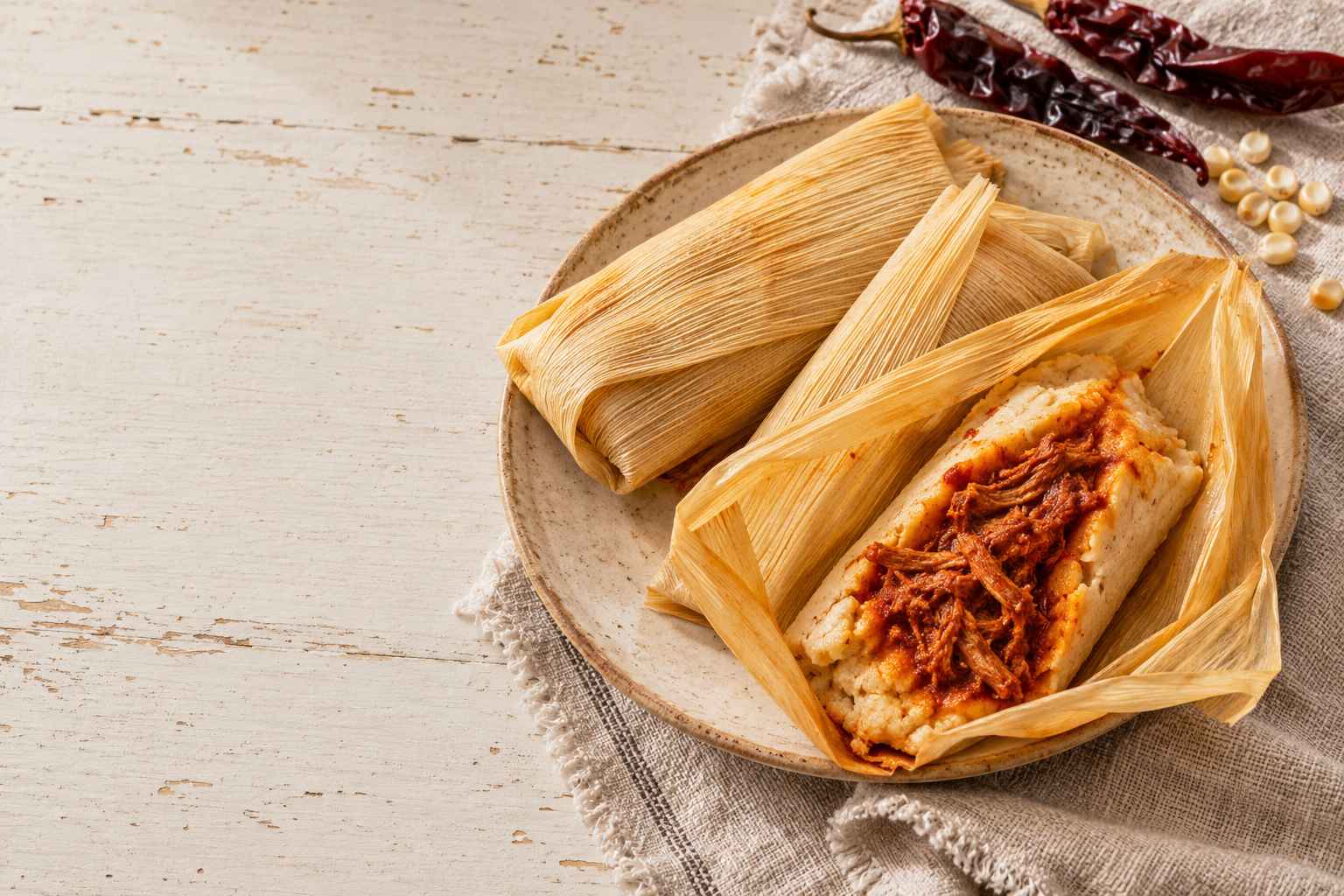
The dried corn husk is softened and folded to hold a portion of dough. Looking at both grain and husk reveals two plant materials with different roles in the same dish.
06 / A LIVING TRADITION
A fold.
A little steam.
A meal within.
Mely Martínez’s tamales rojos de cerdo give the atlas one clearly attributed way into the world of tamales.
A fold.
A little steam.
A meal within.
MEXICO · AN ATTRIBUTED HOME PREPARATION
Masa, red chile pork and a corn-husk wrapper.
In Martínez’s published version, nixtamalized maize flour becomes a dough with fat and cooking liquid. Pork in red chile sauce goes inside the portion before it is wrapped and steamed.
Tamales take many forms. This exhibition follows the chosen cook’s method while keeping the larger family of regional preparations open beyond it.
Read Mely Martínez’s recipe ↗AN INTERACTIVE TASTING LENS
Follow the grain through its changes.
Original editorial prompts. These are invitations to observe, not universal sensory scores.
KEEP FOLLOWING THE THREAD
One flavour opens
another door.
Black pepper ↗
A climbing vine, an ocean traveller, a familiar turn of the mill.
EXHIBITION 02Chilli ↗
A fruit with many forms. A seed carried across oceans. A heat made at home.
EXHIBITION 03Vanilla ↗
An orchid, a fleeting flower, and an aroma made through time and skilled hands.
EXHIBITION 04Tamarind ↗
A brittle shell. A sticky centre. A sourness that finds a home in many kitchens.
EXHIBITION 05Cacao ↗
A pod on a trunk. A seed transformed. A cup with a long human history.
EXHIBITION 06Rice ↗
A grass. A grain. A shared meal that holds more than one history.
EXHIBITION 07Sesame ↗
A tiny seed. A capsule opening. A bread ring covered in a thousand small encounters.
EXHIBITION 08Saffron ↗
A purple flower. A few red threads. A small gesture that changes the whole pan.
A CONNECTING STORYA grain becomes a meal ↗
Rice and maize. Three dishes shaped by technique and tradition.
THE RESEARCH ROOM
Every story leaves
a paper trail.
Explore the evidence and the limits of this edition.