
THE INGREDIENTS · NO. 02
A little fruit.
A different kind
of fire.
A fruit with many forms. A seed carried across oceans. A heat made at home.
Follow the chilli01 / A CLOSER LOOK
A world of variation,
within one species.
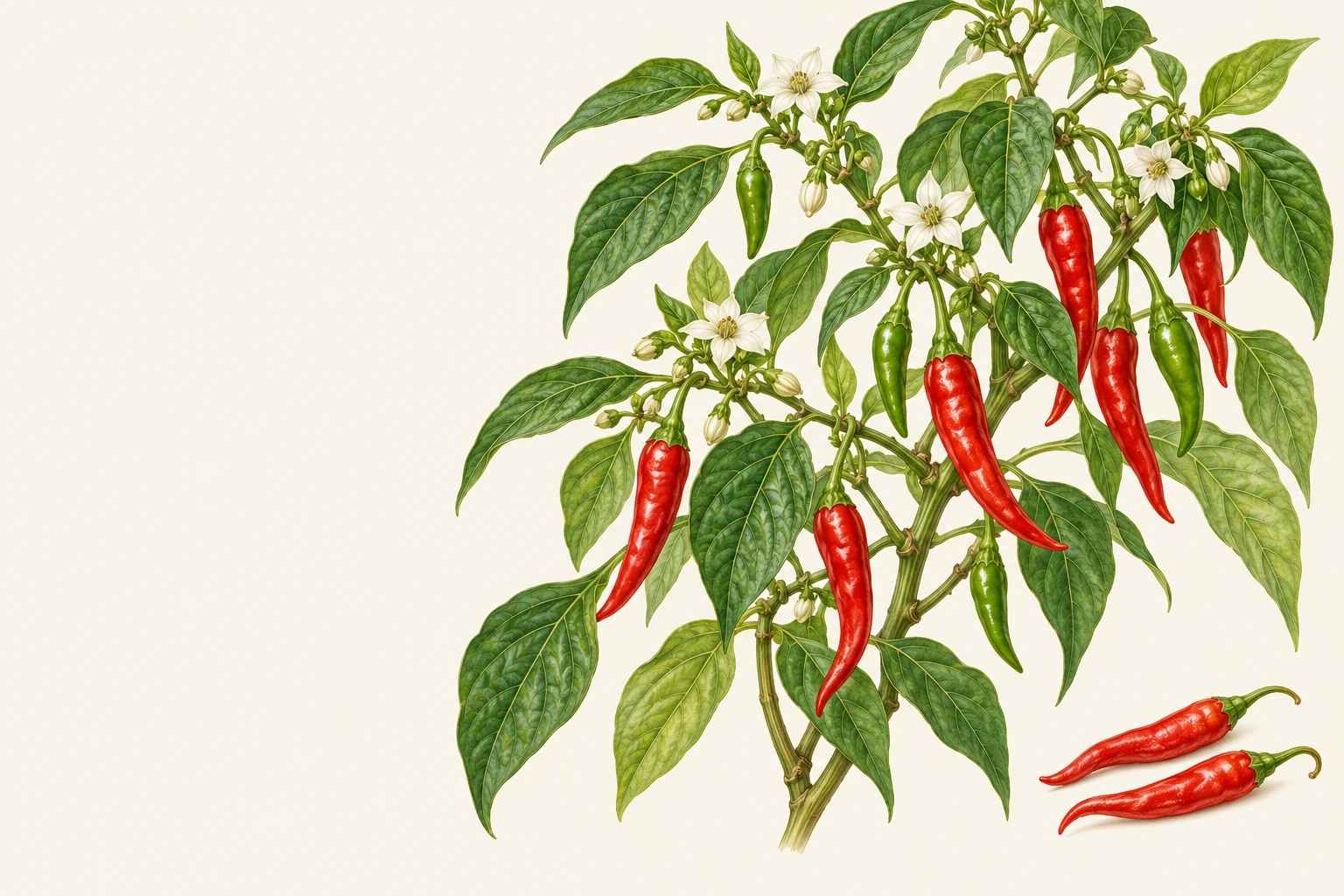
This exhibition follows Capsicum annuum, a member of the nightshade family. It includes pungent chillies and sweet peppers: shape, colour and heat are anything but uniform.
Chilli is a wider culinary name. Other domesticated Capsicum species have their own histories. Keep that distinction in mind as you move from a botanical plate to a market basket.
- BOTANICAL NAME
- Capsicum annuum
- PART WE EAT
- The fruit
- PLANT FAMILY
- Solanaceae
- WAYS OF PREPARING
- Fresh · roasted · dried
02 / THE ATLAS
Every place tells
a different story.
Botanical ancestry, the movement of goods, a living kitchen. Each layer tells a different story.
The map could not load. All locations and stories remain available below.
Selected regions, not a single point of domestication.
How to read this atlas
A native range describes where a plant occurs naturally; domestication asks how people changed it. Research integrating several kinds of evidence points to central-east Mexico for C. annuum domestication. The exact history is larger than any single marker.
03 / FROM THE FIELD
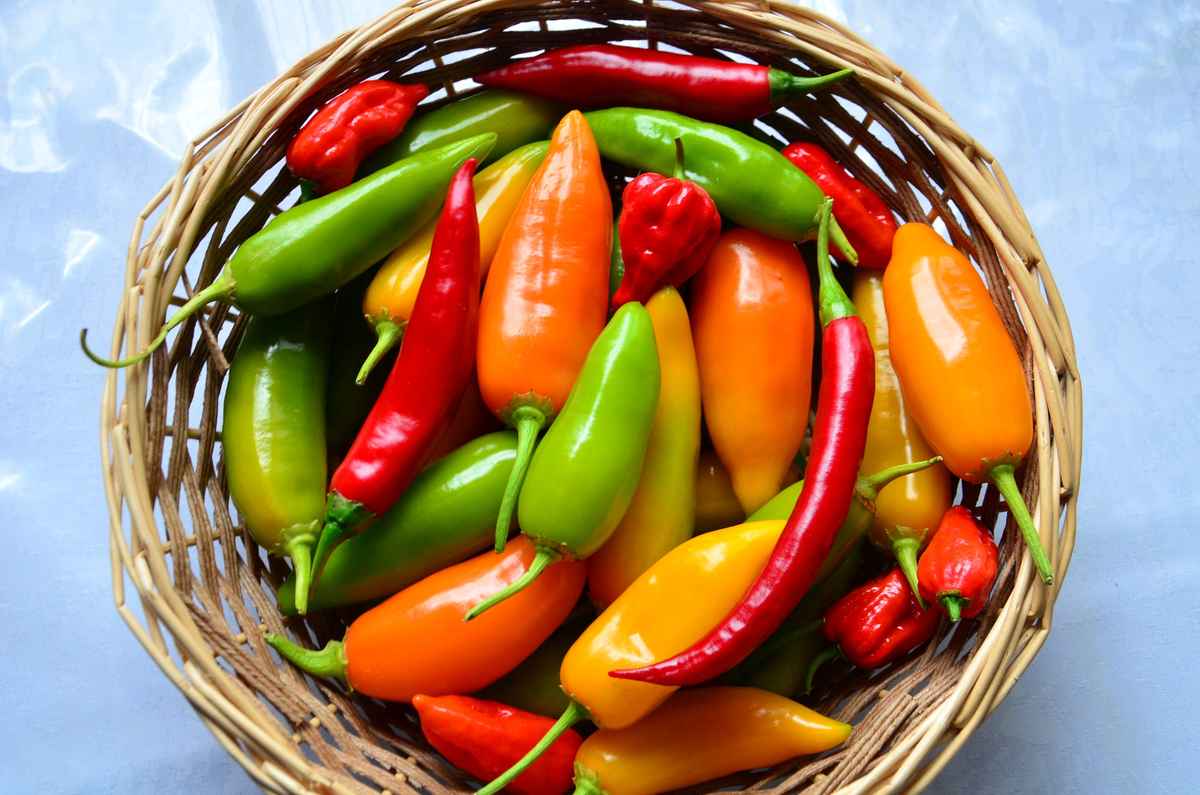
Many colours.
Many kinds of chilli.
A basket can hold more diversity than a single species name suggests. This documented home-grown harvest brings several Capsicum species together.
Our exhibition follows C. annuum. The photograph is a reminder to look closely before treating every chilli as the same plant.
04 / THE TRANSFORMATION TABLE
From the harvest
to another season.
Fresh, roasted and dried fruit offer different textures and kitchen possibilities. Ripeness and cultivar matter, too.
Pick → Cut → Notice
Heat → Blister → Peel
Ripen → Dry → Store
05 / A HUMAN HISTORY
A history
before the crossing.
THE AMERICAS · LONG BEFORE TRANSATLANTIC TRADE
Years before present, approximately.
Some of the starch evidence reaches this far back.
Microscopic starch traces identify Capsicum in archaeological sites across the Americas. These are genus-level findings: they do not prove that every ancient chilli was C. annuum.
After European arrival, colonial and trading networks carried chillies to Europe, Africa and Asia. The story of a plant’s movement is also a story of local growers and cooks making it their own.
LOOK A LITTLE CLOSER
The evidence can be almost invisible.
Plant remains, genetic relationships, environments and words each preserve different parts of the domestication story. Together, they offer more than a single “birthplace”.
06 / A LIVING TRADITION
A harvest hanging
in the kitchen.
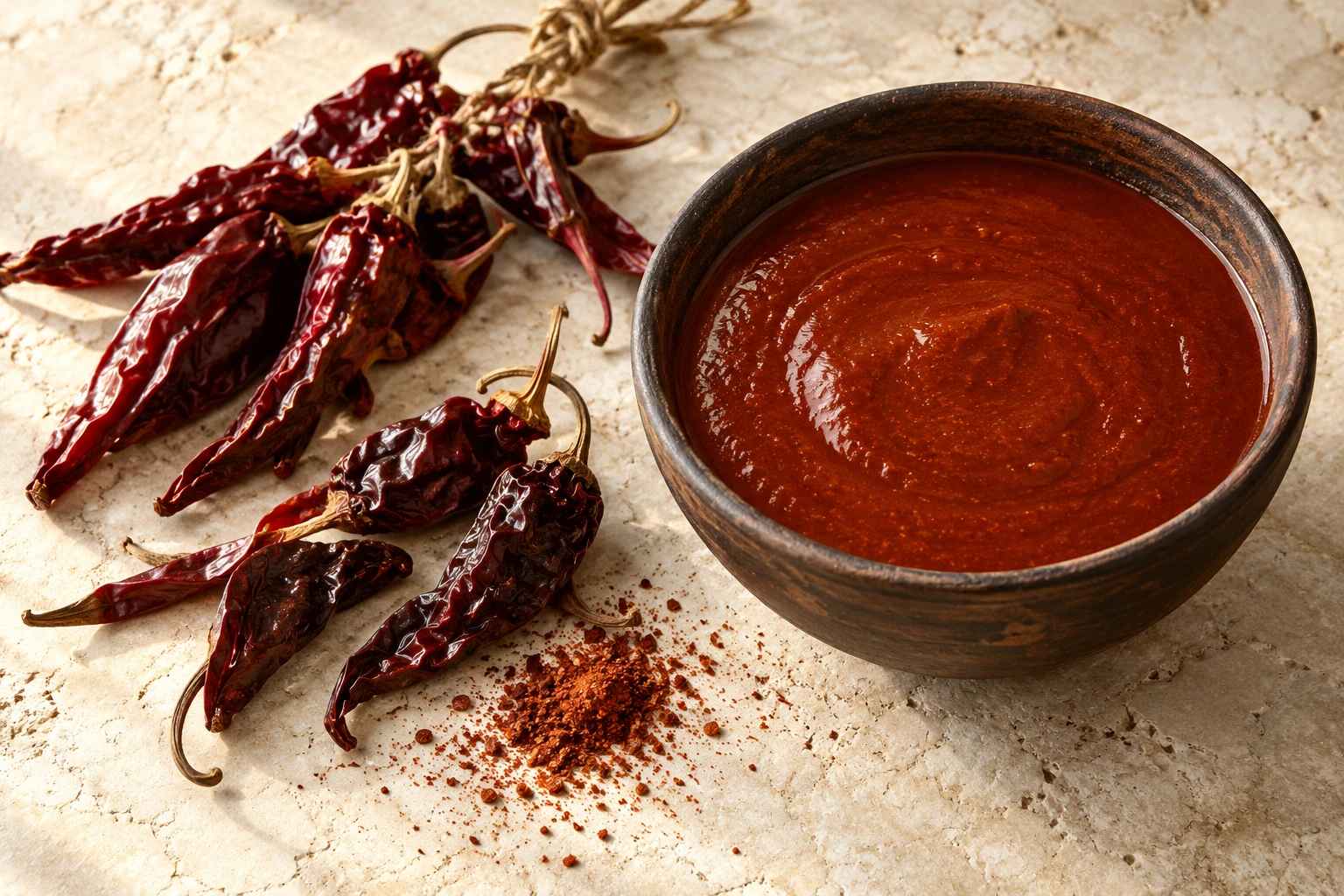
In New Mexico, the ristra connects a season’s fruit to meals still to come.
A season kept
for another day.
NEW MEXICO · UNITED STATES
Red chile, returned to sauce.
NMSU Extension documents red chile strung into ristras for drying, and sauce prepared from dried pods or powder. Preservation is part of the dish’s story.
This is one regional practice, not a shorthand for all American chilli traditions. A dried fruit can be an everyday ingredient and a record of a harvest at the same time.
Read the preparation guide ↗AN INTERACTIVE TASTING LENS
Follow a change in the fruit.
Original editorial prompts. These are invitations to observe, not universal sensory scores.
KEEP FOLLOWING THE THREAD
One flavour opens
another door.
Black pepper ↗
A climbing vine, an ocean traveller, a familiar turn of the mill.
EXHIBITION 03Vanilla ↗
An orchid, a fleeting flower, and an aroma made through time and skilled hands.
EXHIBITION 04Tamarind ↗
A brittle shell. A sticky centre. A sourness that finds a home in many kitchens.
EXHIBITION 05Cacao ↗
A pod on a trunk. A seed transformed. A cup with a long human history.
EXHIBITION 06Rice ↗
A grass. A grain. A shared meal that holds more than one history.
EXHIBITION 07Sesame ↗
A tiny seed. A capsule opening. A bread ring covered in a thousand small encounters.
EXHIBITION 08Saffron ↗
A purple flower. A few red threads. A small gesture that changes the whole pan.
EXHIBITION 09Maize ↗
A grass transformed by people. A grain transformed by water, lime and the work of hands.
A CONNECTING STORYWhat we call heat ↗
Two plants. Different compounds. A sensation that connects them.
THE RESEARCH ROOM
Every story leaves
a paper trail.
Explore the evidence and the limits of this edition.