
THE LIVING TABLE · NO. 03
MEXICO · A WATER-BASED CHOCOLATE STUDY
A seed.
A surface
of foam.
Cacao becomes a warm drink. Follow grinding, water and the small movements that bring air into the cup.
Explore the cup01 / AN ENCOUNTER
Look at
the surface.
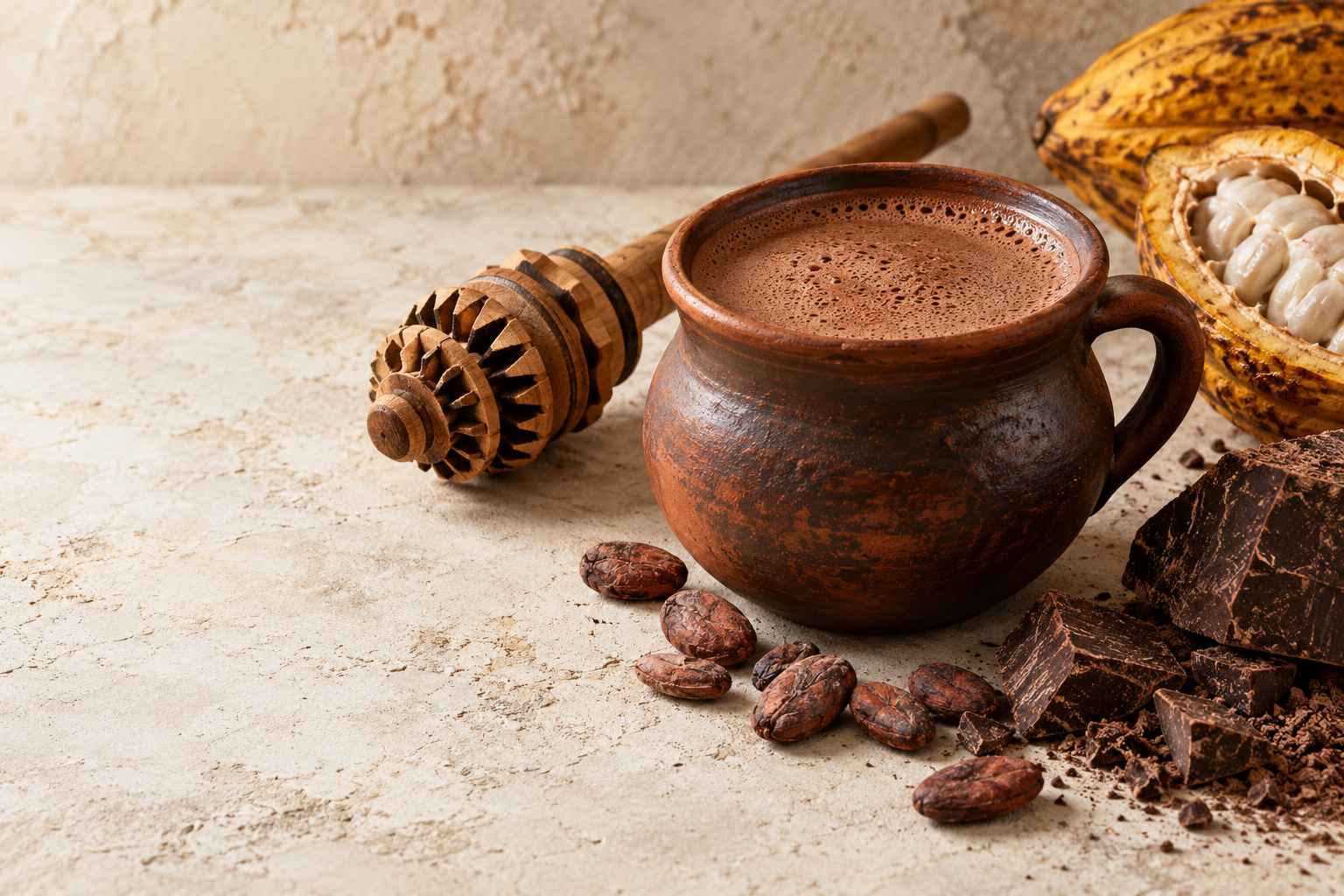
Pause before the first sip. Notice the meeting of liquid, air and vessel: tiny bubbles, a dark edge, a trace left on the cup. The surface is part of the experience.
Cocina tradicional jerezana records a hot preparation combining water, metate or homemade chocolate and dark sugar or piloncillo. That short description anchors this contemporary study.
The version explored here
An original observation study informed by the water-based Mexican chocolate described in Cocina tradicional jerezana, by Eugenia Vargas Hernández and Luis Miguel Berumen Vargas, and the Smithsonian’s molinillo record.
02 / INSIDE THE CUP
Follow a part.
See the whole.
Choose an ingredient or an object. Explore its place in this preparation, then follow the thread into the atlas.
THE SEED BEHIND THE CUP
Cacao
Prepared chocolate carries cacao into this water-based drink.
Imagine placing a cacao seed beside the finished cup. How many acts of work sit between them?
03 / THE TRANSFORMATION
A sequence
of decisions.
Follow four moments in this preparation. Each opens a different question about the work of making flavour.
A MATERIAL TO TRANSFORM
THE SELECTED COOKING SEQUENCE
Begin with the chocolate.
The cultural record names chocolate ground on a metate or prepared at home.
Consider the texture before it reaches the water. What does a fragment let you see?
THE PUBLISHED PREPARATION
An original observation study informed by the water-based Mexican chocolate described in Cocina tradicional jerezana, by Eugenia Vargas Hernández and Luis Miguel Berumen Vargas, and the Smithsonian’s molinillo record.
04 / A LIVING TRADITION
One drink.
Many preparations.
The Mexican cultural collection records several cacao drinks with different ingredients and serving styles. The water-based cup explored here is one entry in that wider landscape.
A wooden whisk is also an object made by hands. The Smithsonian’s collection record invites us to see the tool alongside the liquid: something shaped, held, moved and kept.
THE OBJECT ROOMA whisk with a history.
Open the Smithsonian collection record for a molinillo. Compare its form with the interpretive artwork in this exhibition.
A MOMENT OF ATTENTION
What would
you notice?
Choose a lens. These original prompts invite observation rather than assign a universal flavour score.
Pause at the cup before an imagined sip. What words describe its aroma without naming the ingredient?
05 / KEEP FOLLOWING THE THREAD
A table opens
another landscape.
Before the cup, the pod.
Return to cacao and follow the transformation from fruit to prepared chocolate.
CACAO ↔ VANILLAAnother way into aroma.
Compare cacao with vanilla’s story of curing and fragrance. The link is a tasting question, not a claim that vanilla belongs in this recipe.
THE RESEARCH ROOM
Curiosity, with
its sources attached.
Explore the attribution and cultural record behind this exhibition.