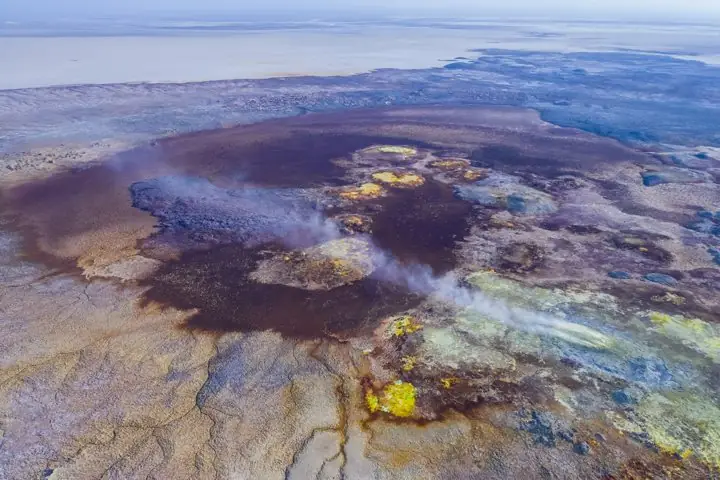
A thermal pool.
Hot water provides a changing range of temperatures across the spring.
LANDSCAPE KEY Heat
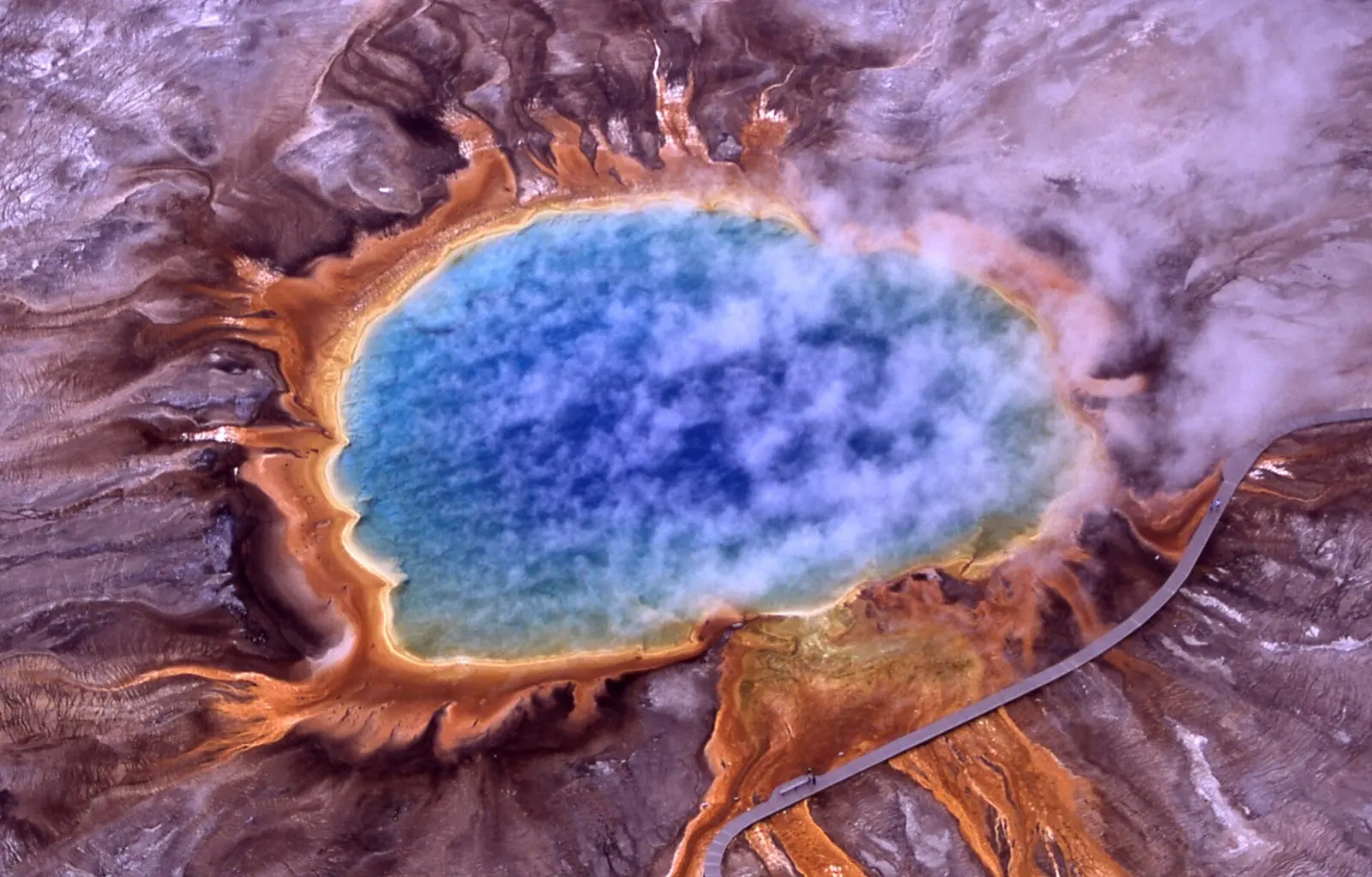
01 / The landscape
Colour makes an invisible ecology visible.
A blue thermal pool spreads into orange and rust-coloured channels. At Yellowstone, temperature and microscopic life turn hot water into a visible ecological map.
One detail to remember
113
metres across · approximately
USGS gives its widest diameter as 370 feet.
Source / USGS · The story of Grand Prismatic02 / Landscape anatomy
Three ways to read Grand Prismatic Spring.
A field guide to what you’re seeing.
Hot water provides a changing range of temperatures across the spring.
Water cools as it flows away from the centre, creating different living conditions.
Heat-loving communities form coloured mats where conditions allow them to live.
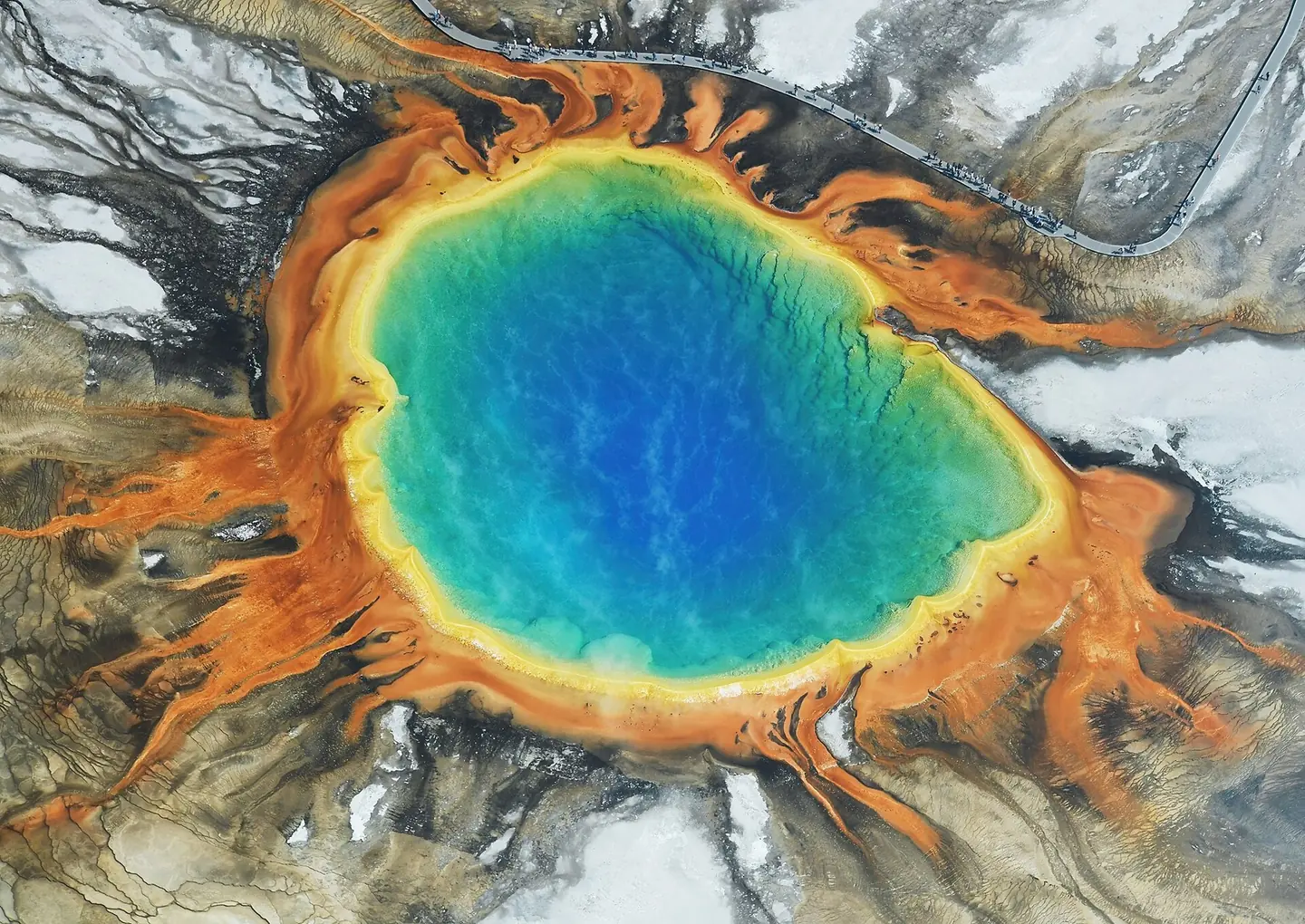
Water, heat and life.
A living environmental gradient.
Behind the view
Grand Prismatic’s colour is partly physical and partly biological. Water in the central pool appears blue, while cooler margins support communities of heat-loving microorganisms. As water flows outward and cools, different organisms occupy different conditions, producing coloured mats. Temperature and water chemistry help determine which communities can live where. The bands are therefore more than decoration: they make environmental gradients visible. Seen from above, the spring resembles a diagram drawn by the organisms themselves.
03 / The human story
Homes, hunting grounds, routes.
A landscape long known.
Yellowstone’s human story long predates its designation as a national park in 1872. The National Park Service documents more than 11,000 years of human use across the region, including homes, hunting grounds and routes used by many tribes and bands. That wider history matters when looking at its celebrated thermal features. The apparent unfamiliarity of a landscape to an outside viewer does not make it an undiscovered place.
04 / Across time
The view changes with steam, weather and light. Microbial mats follow temperature and chemical conditions, so their colours belong to a dynamic habitat rather than a painted surface.
Steam and atmospheric conditions change how clearly the spring’s bands can be seen.
Microbial colours and textures reflect the conditions of water, heat and chemistry.
The spring’s visible pattern depends on living communities and the conditions of flowing water. NPS explains that microbial colours and textures can indicate temperature changes. Steam, light and the angle of view also affect how clearly the pool’s bands appear. A photograph fixes one moment in a system whose water, heat and biology continue moving through the frame.
Keep looking / Sources & photography
Hero: Jim Peaco, National Park Service / Public domain · Resized and WebP compressed; cropped for display.
Second photograph: Carsten Steger / CC BY-SA 4.0 · Resized and WebP compressed; cropped for display.