A closed basin.
Water carries dissolved gypsum from the surrounding mountains.
LANDSCAPE KEY Basin
01 / The landscape
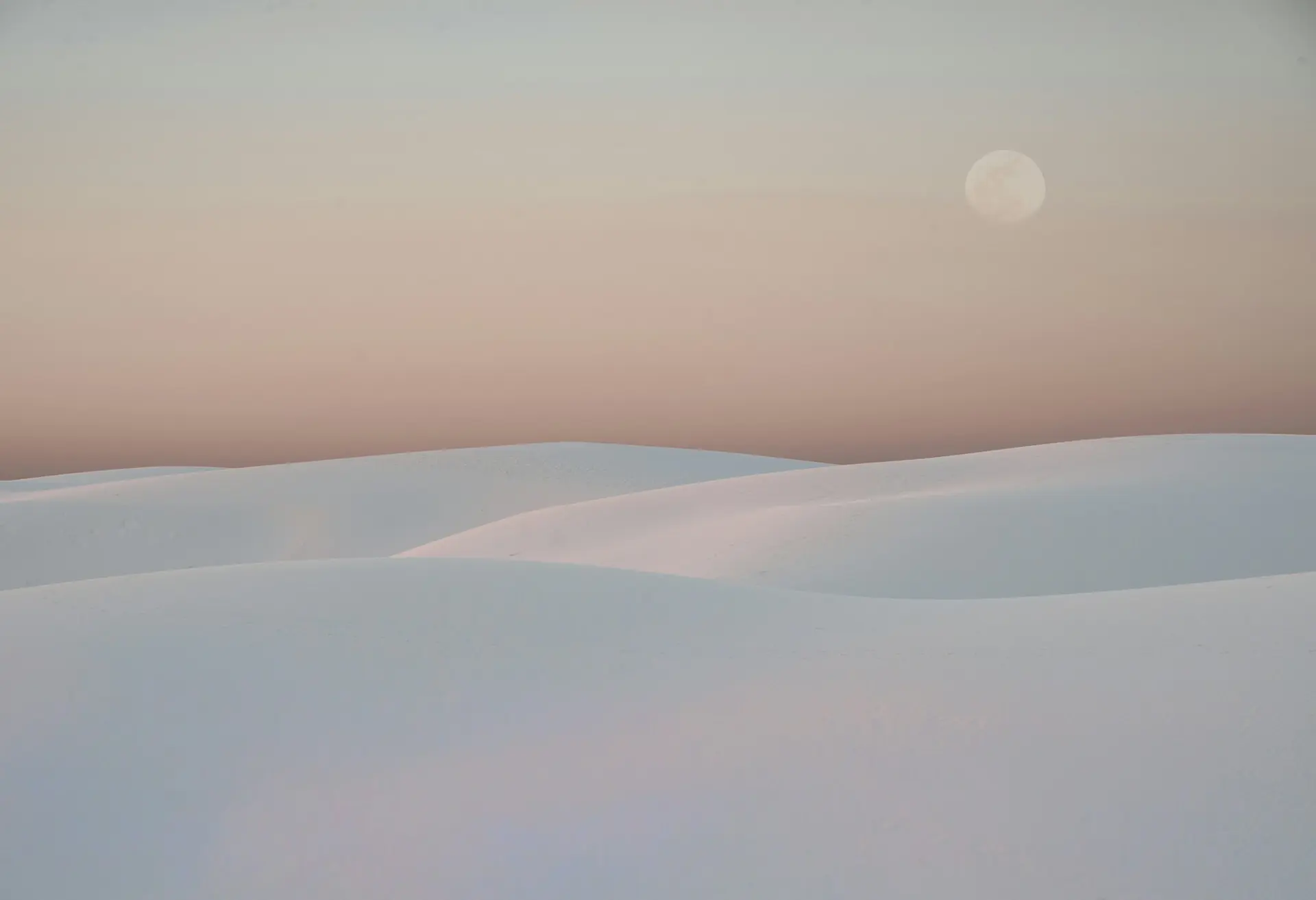
Pale dunes above the traces of an older world.
White dunes flow across New Mexico’s Tularosa Basin. Their bright grains began as gypsum dissolved in water, then crystallised, broken apart and carried by wind.
One detail to remember
23,000
years of human presence · at least
The footprints were left beside an Ice Age lake.
Source / National Park Service · Fossilized footprints02 / Landscape anatomy
Three ways to read White Sands.
A field guide to what you’re seeing.
Water carries dissolved gypsum from the surrounding mountains.
Evaporation leaves gypsum crystals behind.
Broken grains accumulate in shifting white ridges.
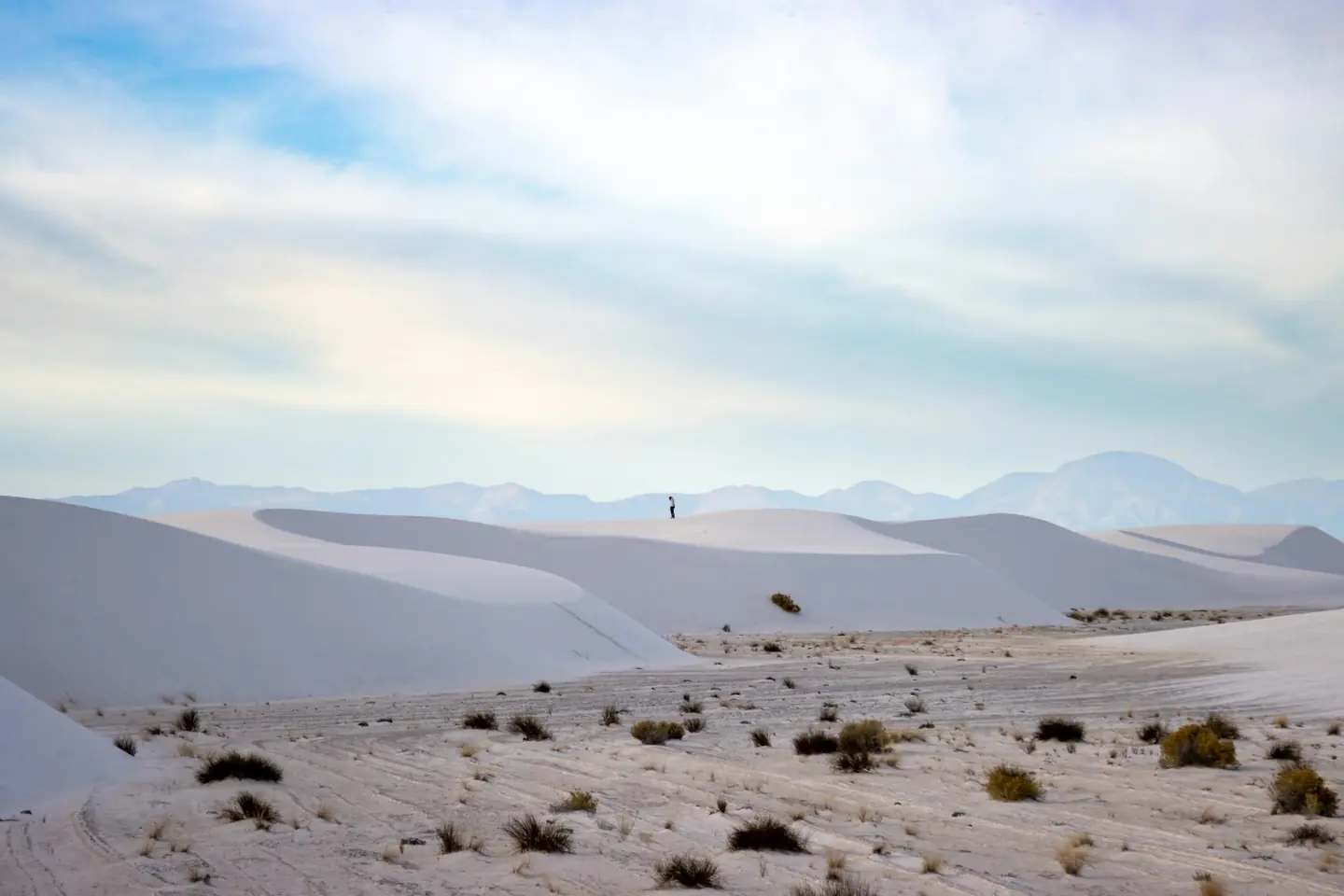
The surface moves.
The ground remembers.
Behind the view
Gypsum usually dissolves and travels onward with water. Here, the basin has no drainage outlet to carry it away. Rain and snowmelt transport dissolved gypsum from surrounding mountains into the low ground; evaporation allows it to crystallise as selenite. Wind and water break those crystals into smaller particles, supplying the dunes. The white sand is therefore one stage in a mineral cycle that repeatedly moves between dissolved material, crystal and grain.
03 / The human story
An ancient lakeshore.
A human presence preserved.
Long before these dunes formed, people walked beside an Ice Age lake. Their footprints survived in sediment alongside traces of mammoths, giant ground sloths and other animals. The National Park Service describes evidence of human presence here at least 23,000 years ago. These are records of ordinary movement made extraordinary by time: a person crossing wet ground, leaving a mark that would outlast the lake itself.
04 / Across time
Wind redraws ripples and dune edges, while intermittent water supplies fresh dissolved gypsum. Low sunlight reveals the relief of a surface that can seem almost featureless at noon.
Wind reshapes crests and ripples across the dunes.
Fossil footprints preserve life from the region’s Ice Age lakeshore.
The source mineral and the dunes belong to very different ages. Gypsum accumulated in an ancient sea hundreds of millions of years ago; the modern dune field developed after a much later lake contracted as the climate became warmer and drier. NASA describes continuing mineral delivery today as waters enter the basin and evaporate. Each new crystal can become part of another moving dune.
Keep looking / Sources & photography
Hero: John Fowler / Unsplash License · Resized and WebP compressed; cropped for display.
Second photograph: Caleb Jack / Unsplash License · Resized and WebP compressed; cropped for display.