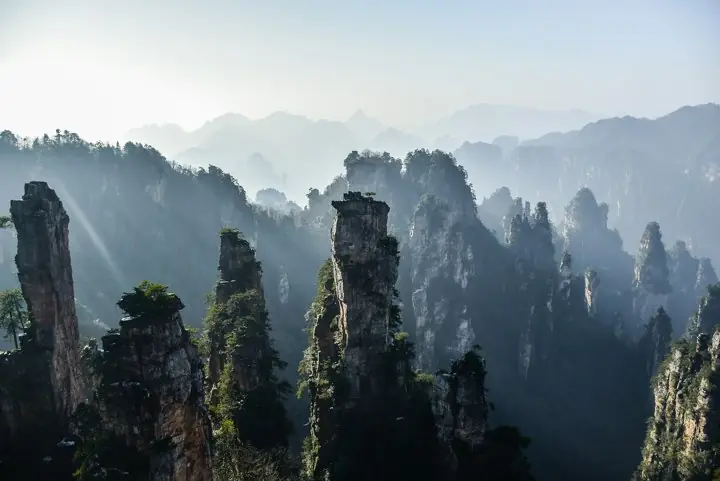
A sandstone country.
Faults and joints divide the rock into walls, towers and deep corridors.
LANDSCAPE KEY Sandstone
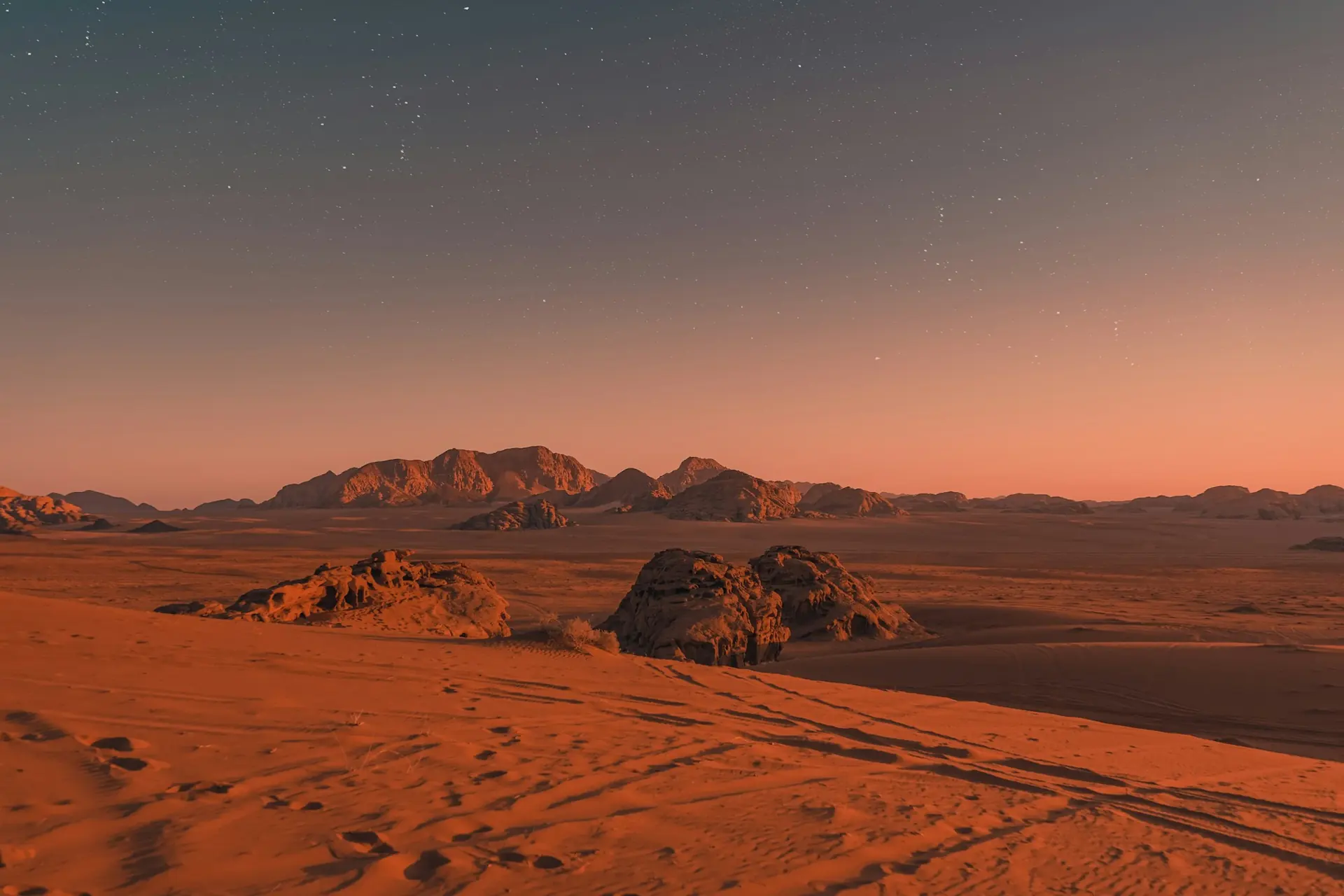
01 / The landscape
The cliffs hold more than shadows.
Sandstone walls rise above wide red valleys, holding both a geological record and thousands of inscriptions left by people who knew this country intimately.
One detail to remember
12,000+
years of human presence
The landscape holds an archive as well as a view.
Source / UNESCO · Wadi Rum Protected Area02 / Landscape anatomy
Three ways to read Wadi Rum.
A field guide to what you’re seeing.
Faults and joints divide the rock into walls, towers and deep corridors.
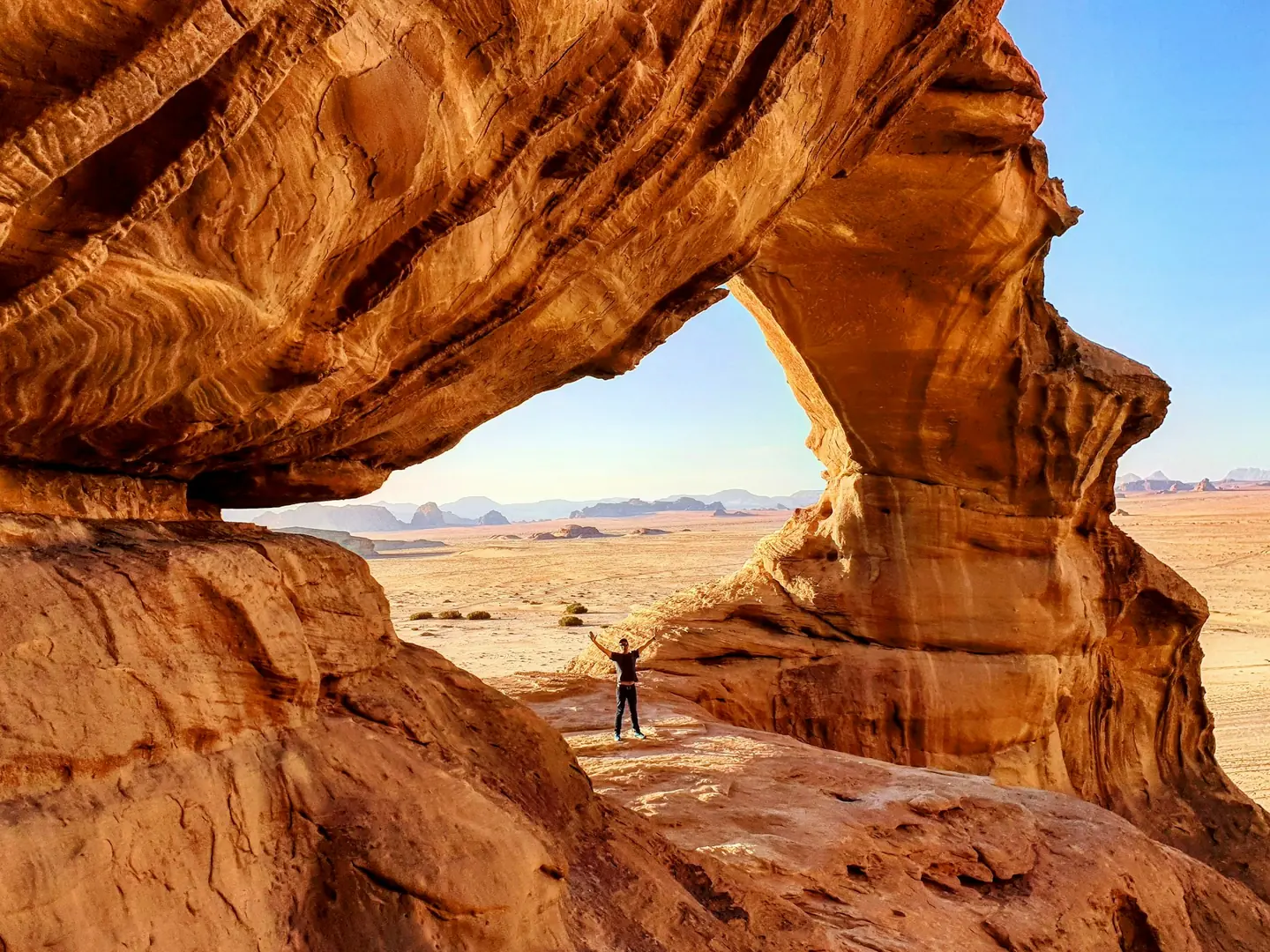
Water and salt weathering exploit weaknesses, enlarging recesses and fractures.
Different processes leave a sculptural landscape of gorges, arches and honeycombed cliffs.
Stone remembers.
People give it meaning.
Behind the view
These cliffs are the result of rock structure meeting weather. Uplift, faults and joints created weaknesses in sandstone; water, salt weathering and other erosional processes enlarged them into gorges, arches and honeycombed walls. Wadi Rum’s present desert climate is only one chapter. UNESCO’s account also traces the influence of wetter past conditions. The seemingly sculptural mountains are therefore records of several forces operating together over immense spans of time.
03 / The human story
Marks in the rock.
Knowledge in living memory.
Rock carvings and inscriptions document at least 12,000 years of human presence. Living knowledge continues alongside that archive. UNESCO’s account of Bedu culture in Petra and Wadi Rum describes oral poetry, songs, tracking, camel husbandry and knowledge of plants and animals. These practices belong to communities with their own changing lives. Reading the landscape means recognising both the marks preserved in stone and the knowledge people continue to carry.
04 / Across time
The largest daily visual change is light: low sun accentuates the sandstone relief. Rainfall and long-term weathering continue the work recorded in channels, joints and cliff faces.
Direct light reduces the shadows that reveal the depth of the sandstone relief.
Long shadows bring cliff faces, recesses and isolated towers into sharper relief.
The inscriptions make human time visible on rock formed and reshaped over vastly longer periods. UNESCO places a major drying of the regional climate in the Bronze Age, after which communities continued adapting their ways of living. Today, light moves quickly across the same cliffs: a wall that looks almost flat at noon can reveal deep recesses as shadows lengthen.
Keep looking / Sources & photography
Hero: Daniele Colucci / Unsplash License · Resized and WebP compressed; cropped for display.
Second photograph: lior dahan / Unsplash License · Resized and WebP compressed; cropped for display.