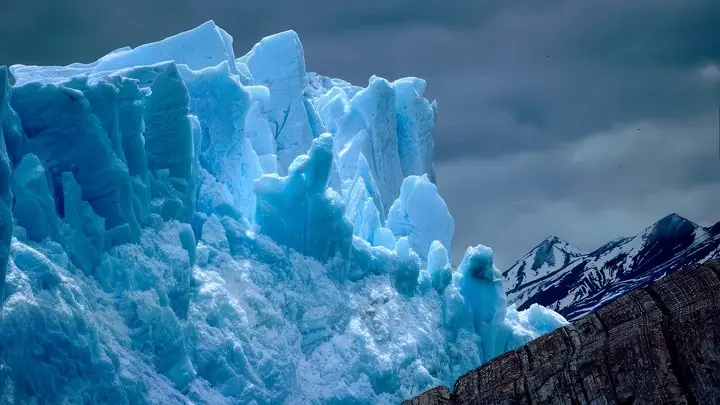
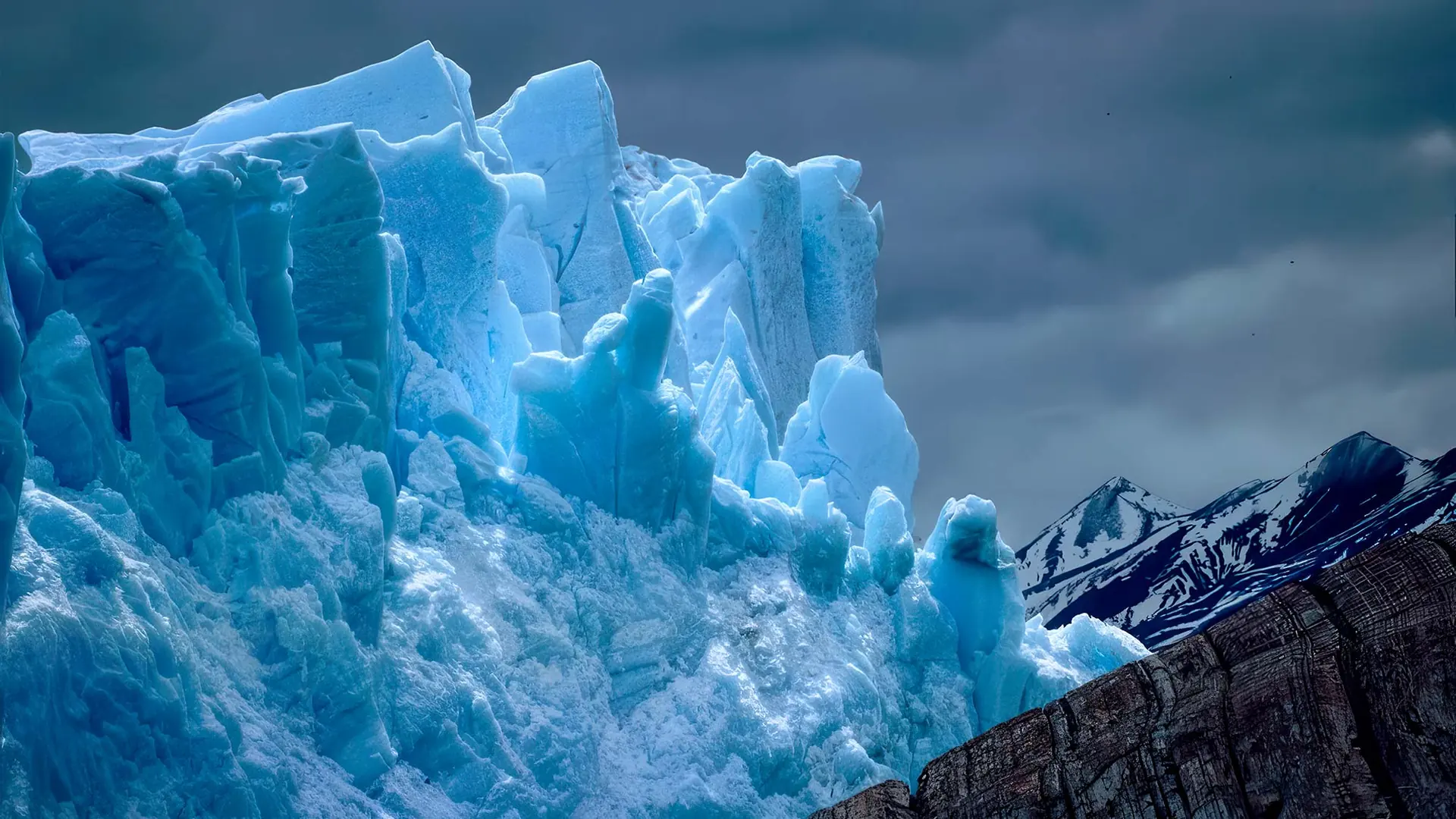
A moving ice cap.
Ice, meltwater and volcanic systems meet across this vast glacial landscape.
LANDSCAPE KEY Glacier
01 / The landscape
A glacier with an interior life.
A world of luminous ice conceals moving water and volcanic heat. Beneath Iceland’s great ice cap, even the most solid-looking architecture is temporary.
One detail to remember
8
subglacial volcanoes
Fire and ice share the same landscape.
Source / UNESCO · Vatnajökull National Park02 / Landscape anatomy
Three ways to read Vatnajökull.
A field guide to what you’re seeing.
Ice, meltwater and volcanic systems meet across this vast glacial landscape.
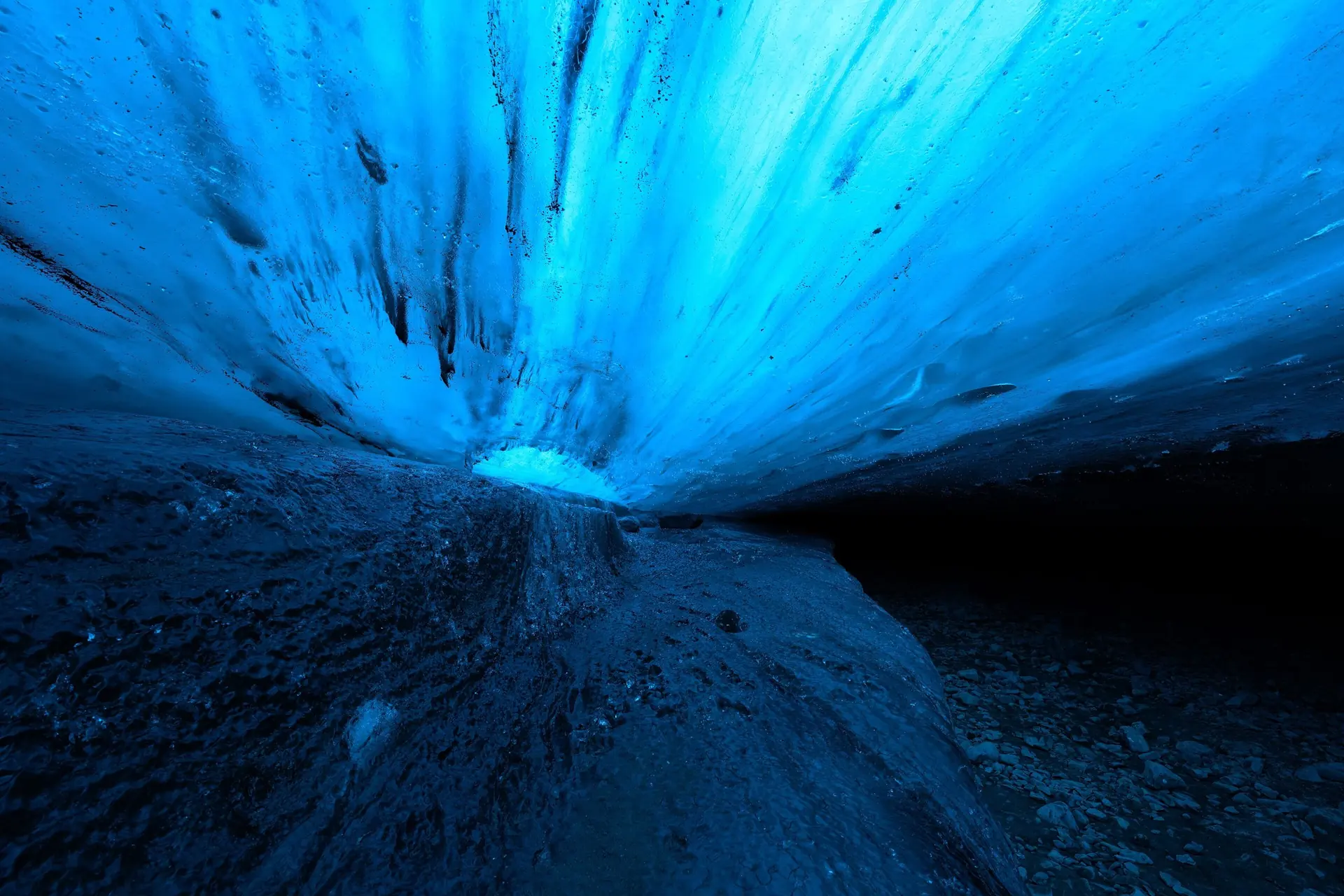
Dense ice absorbs longer red wavelengths, allowing blue light to become more prominent.
Meltwater opens passages through and beneath the glacier; reduced flow can reveal their interiors.
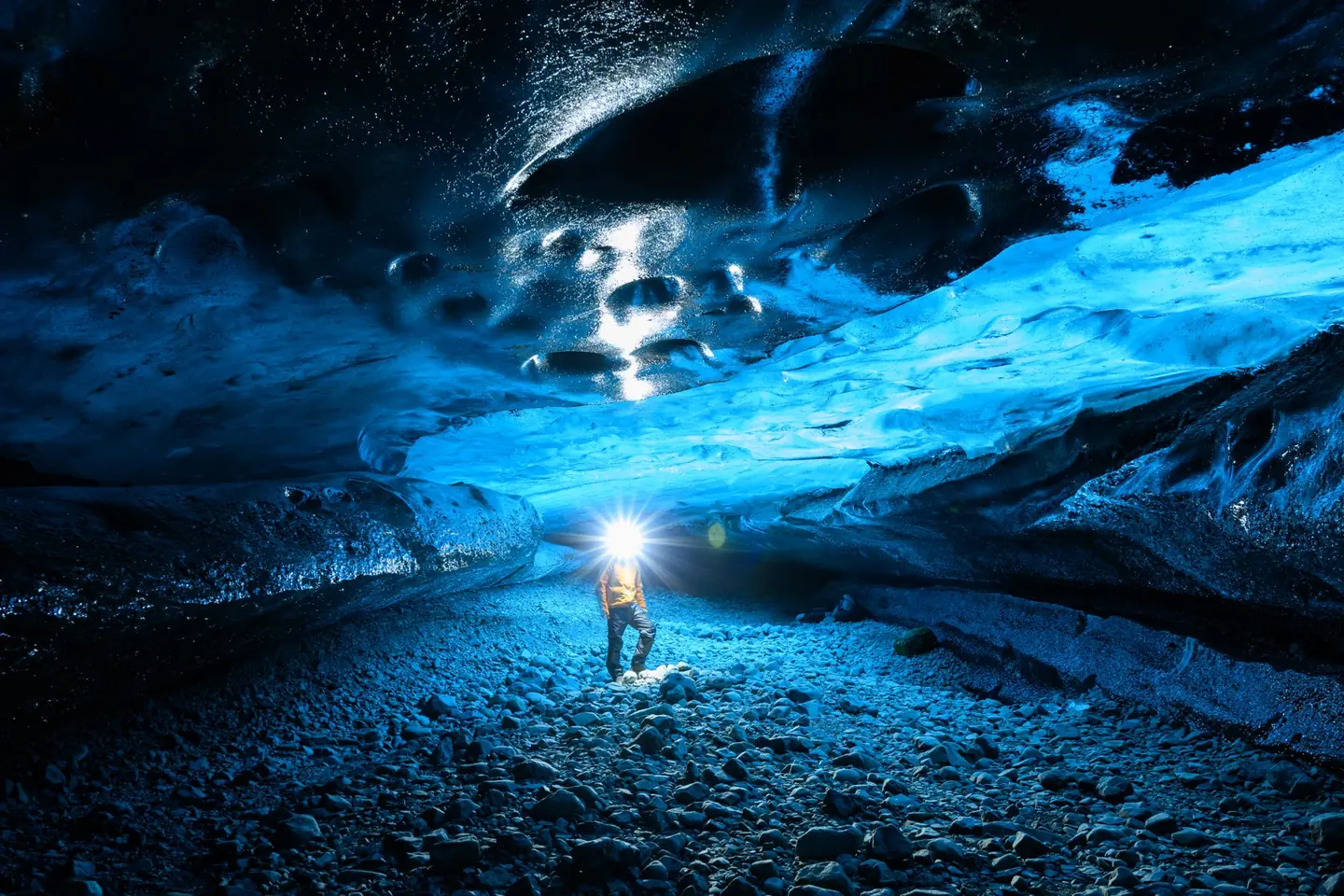
A room that may never
look this way again.
Behind the view
An ice cave is often a watercourse made visible. Meltwater cuts tunnels through or beneath a glacier; when flow diminishes, passages can emerge. The saturated blue comes from the ice itself: longer red wavelengths are absorbed as light travels through dense ice, leaving blue light more prominent. Far below, volcanic systems add another source of heat. Across Vatnajökull, the interaction of ice, eruptions and sudden meltwater floods continually rewrites the surrounding river plains.
03 / The human story
Local knowledge.
A landscape without a floor plan.
Visit Vatnajökull describes local guides scouting the outlet glaciers each autumn. Their knowledge follows a landscape without a permanent floor plan: reading water, weather and movement, rather than treating the glacier as a fixed monument.
04 / Across time
The seasonal contrast is between abundant meltwater and colder periods of reduced flow. Cave shapes, light and visibility vary; no single photograph represents a permanent chamber.
Reduced meltwater flow can expose passages. Rain and warm spells can still change them.
Flowing water cuts and reshapes channels, giving the next cold season a different interior.
Summer watercourses can become visible as flow subsides in colder conditions. Rain and warmer spells can alter the interior again. Over much longer periods, volcanic floods have built and cut the plains beyond the ice.
Keep looking / Sources & photography
Hero: Eric Kilby / CC BY-SA 2.0 · Resized and WebP compressed; cropped for display.
Second photograph: Eric Kilby / CC BY-SA 2.0 · Resized and WebP compressed; cropped for display.