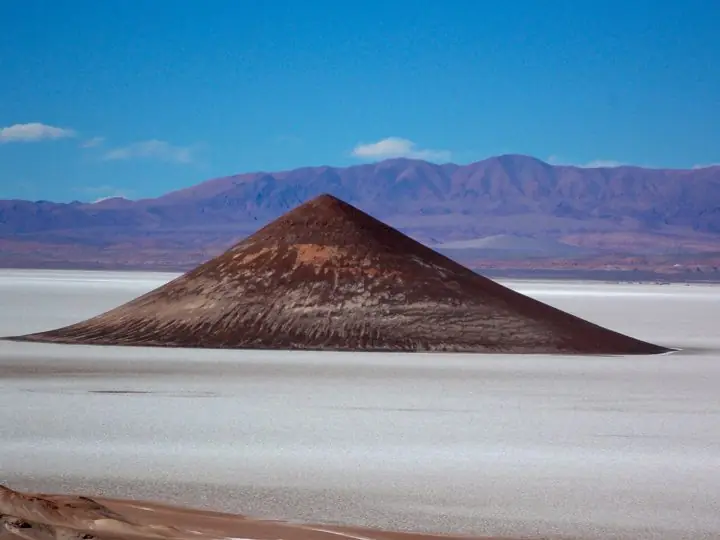
A closed basin.
Water collects in a low-lying basin. Without a river outlet to the sea, its dissolved minerals stay behind.
LAND FORM Enclosed
A world without an edge
There is a moment when the horizon stops making sense.
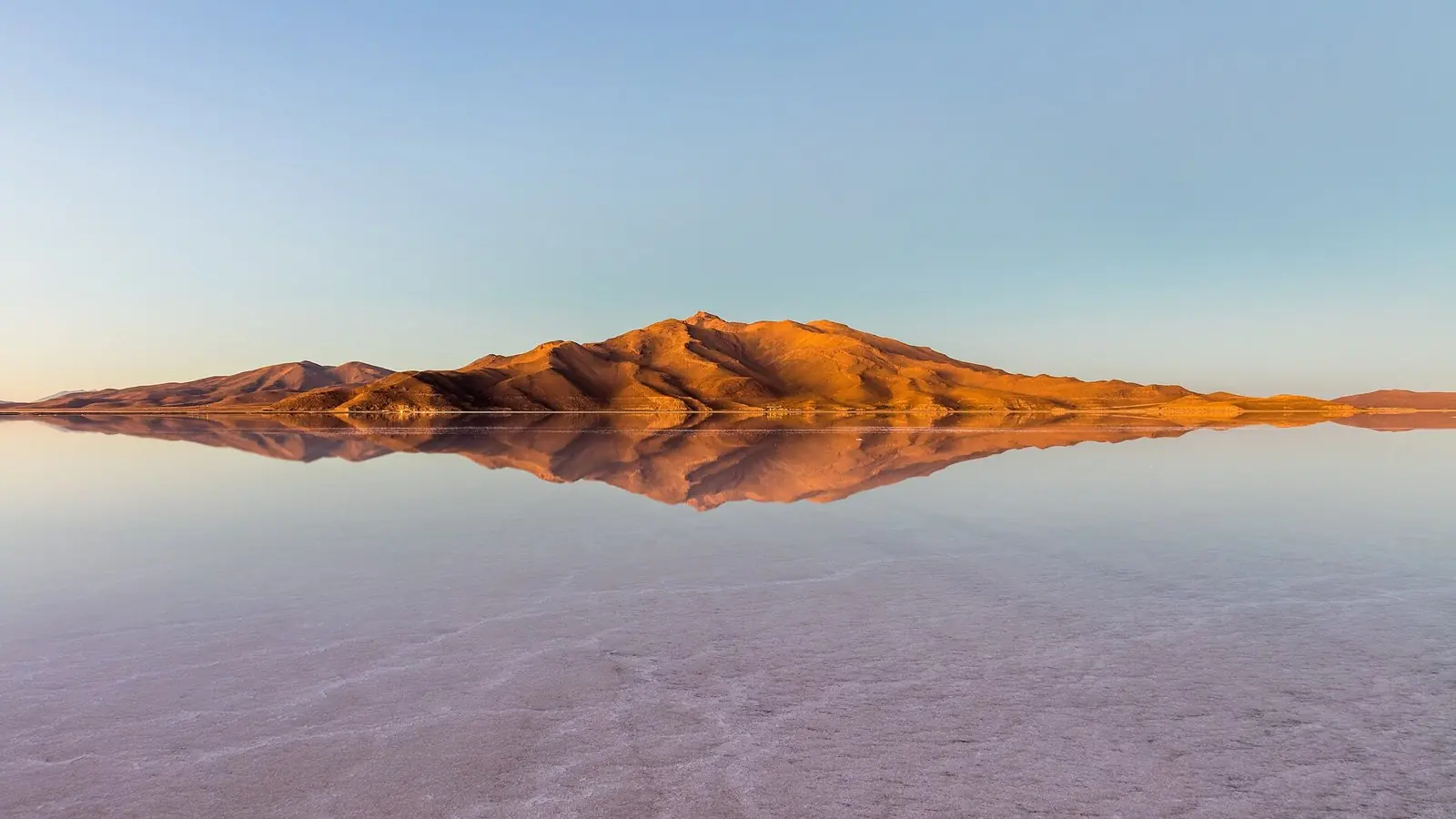
A white horizon becomes a second sky when rain spreads across Bolivia’s salt flat. The transformation begins with a basin that has no outlet.
The effect feels impossible. Its ingredients are wonderfully ordinary: a flat mineral surface, shallow water, and still air.
One detail to remember
10,000
km² · approximately
Seasonal rain can turn parts of it into a mirror.
Source / NASA MODIS · Uyuni Salt Pan Drying Out02 / Landscape anatomy
Three forces. One unfamiliar world.
A field guide to what you’re seeing.
Water collects in a low-lying basin. Without a river outlet to the sea, its dissolved minerals stay behind.
Evaporation removes water. Salts remain, building the pale crust that defines the dry landscape.
Rain spreads into a shallow sheet. When the surface is calm, reflected sky replaces the familiar ground.
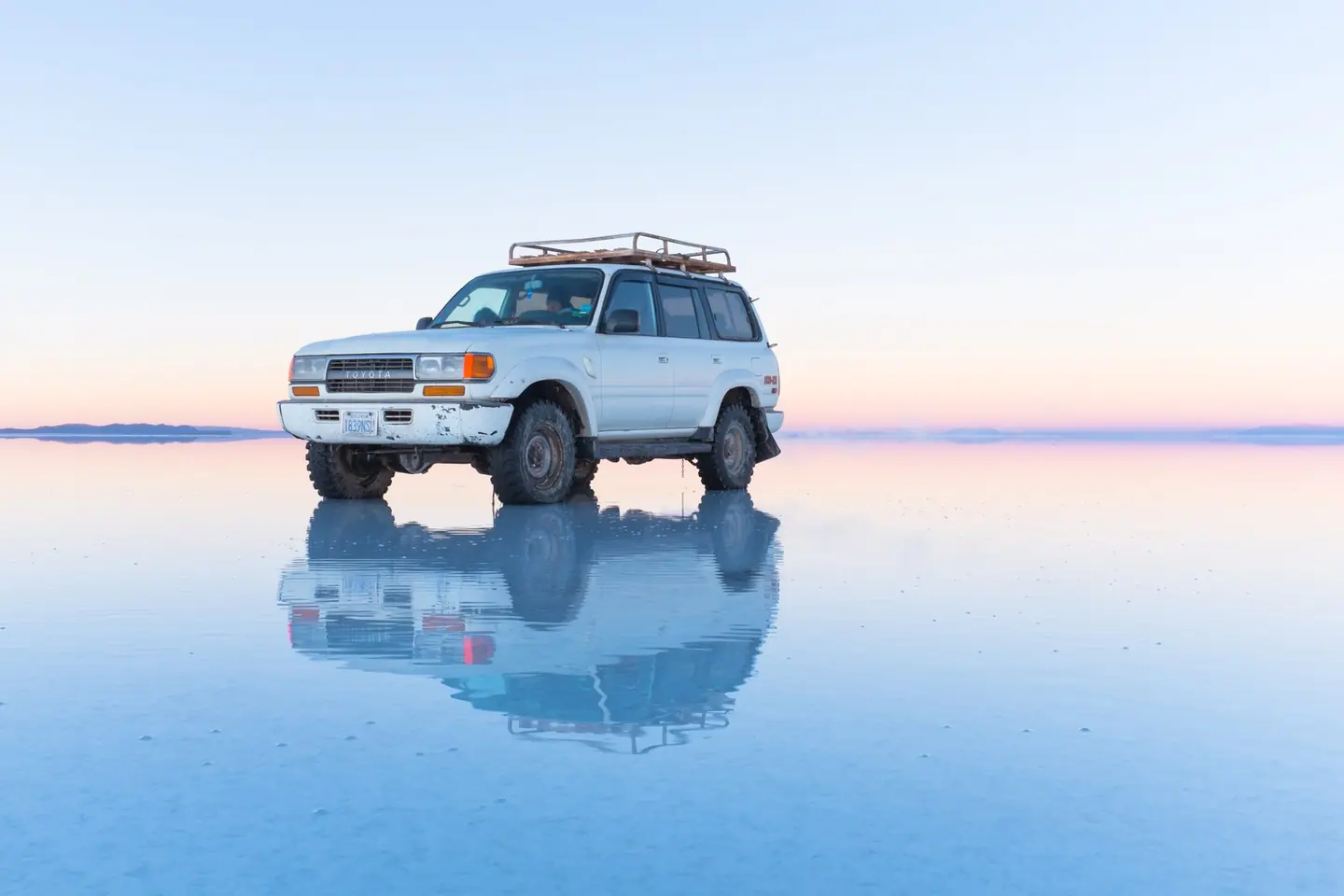
The reflection is an event.
Not a permanent surface.
Behind the view
The Altiplano holds basins surrounded by mountains, with no river carrying their dissolved minerals to the sea. Water can leave through evaporation while salts remain. At Uyuni, the surface contains halite—the mineral in table salt—and gypsum. The extraordinary flatness lets shallow water spread across a wide area. Under calm conditions, that thin sheet reflects the sky, replacing the familiar distinction between ground and atmosphere with an almost continuous field of light.
03 / The human story
A working landscape.
A reference point for the world.
The salar is a working landscape as well as a celebrated view. NASA records mineral harvesting here since at least the seventeenth century, alongside communities around the mountain slopes at its margins. Its flat surface has also served as a transport route. A very different kind of use happens overhead: remote-sensing scientists use the salar as a reference surface when calibrating satellite imagery and altimeters.
04 / Across time
Rain can turn portions of the salar into a mirror; dry periods expose salt crust. The extent of water and the quality of reflections depend on rainfall and wind.
A pale mineral crust defines the horizon. The texture of the ground becomes the story.
Water can spread across portions of the salar. Reflections depend on calm conditions as well as rainfall.
Dry conditions reveal the white mineral crust; seasonal rain can spread water across parts of it. The mirror varies from year to year because rainfall across the surrounding basin contributes to flooding. NASA’s comparison of 2021 and 2022 imagery shows how a wetter season extended the flooded area and kept it inundated longer. The famous reflection is an event, not an always-on surface.
Keep looking / Sources & photography
Hero: Diego Delso / CC BY-SA 4.0 · Resized and WebP compressed; cropped for display.
Reflection photograph: Christopher Crouzet / CC BY-SA 4.0 · Resized and WebP compressed; cropped for display.