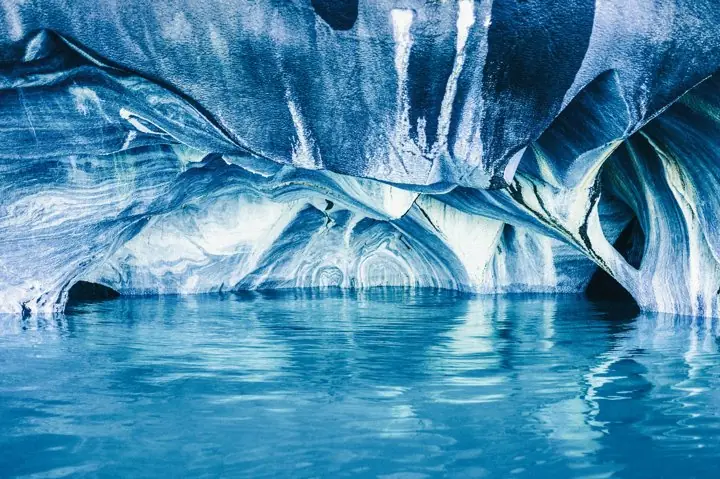
A limestone plateau.
The plateau provides the rock in which fractures and passages develop.
LANDSCAPE KEY Limestone
01 / The landscape
A hidden living world beneath a limestone roof.
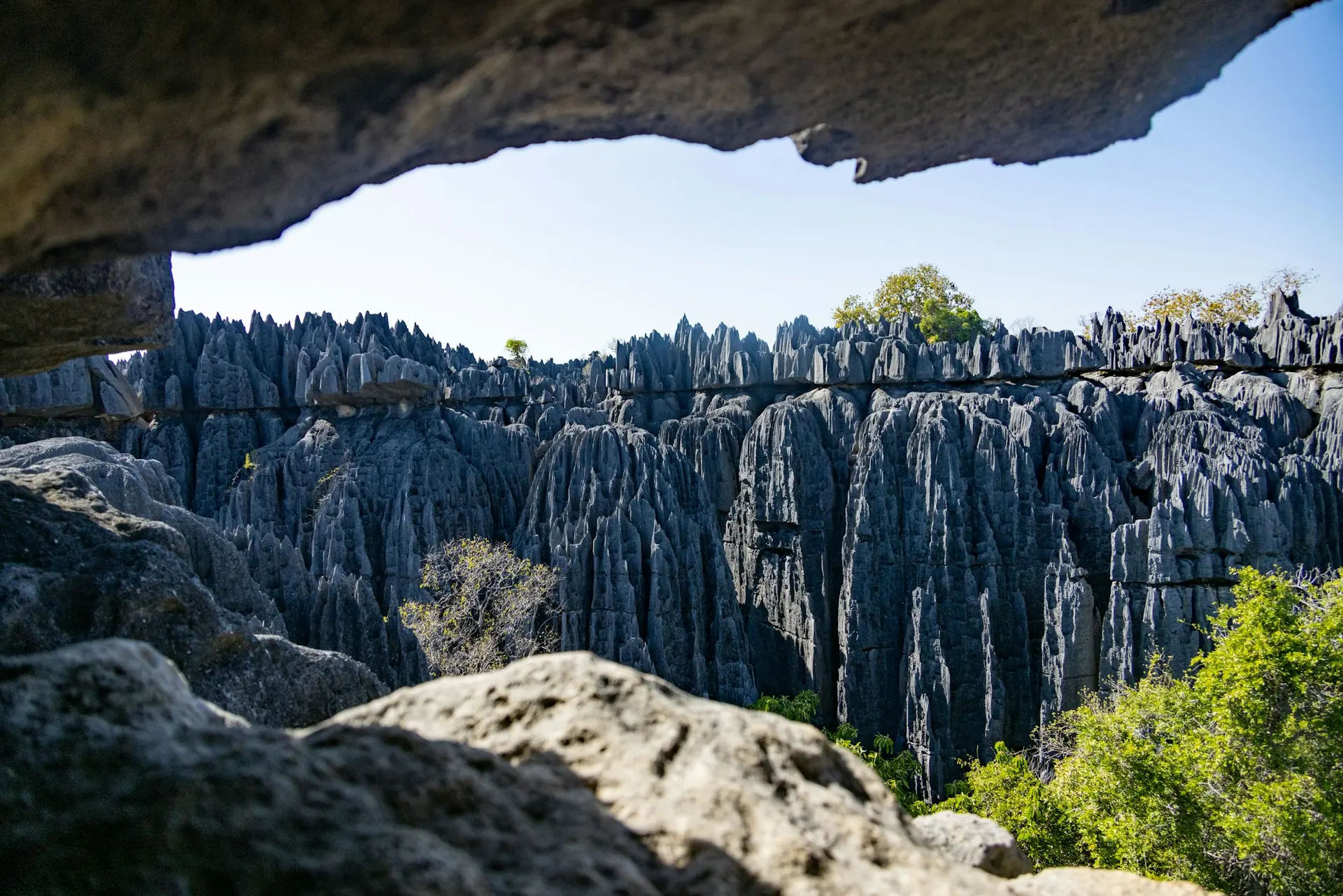
Jagged limestone rises above hidden passages and patches of forest. In western Madagascar, the distance between exposed pinnacle and shaded refuge can be remarkably small.
One detail to remember
100
metres · up to
A towering stone landscape threaded with gorges and forest.
Source / UNESCO · Andrefana Dry Forests, including Bemaraha02 / Landscape anatomy
Three ways to read Tsingy de Bemaraha.
A field guide to what you’re seeing.
The plateau provides the rock in which fractures and passages develop.
Water enlarges weaknesses over time, producing caves, gorges and fissures.
Exposed rock and sheltered hollows create very different conditions close together.
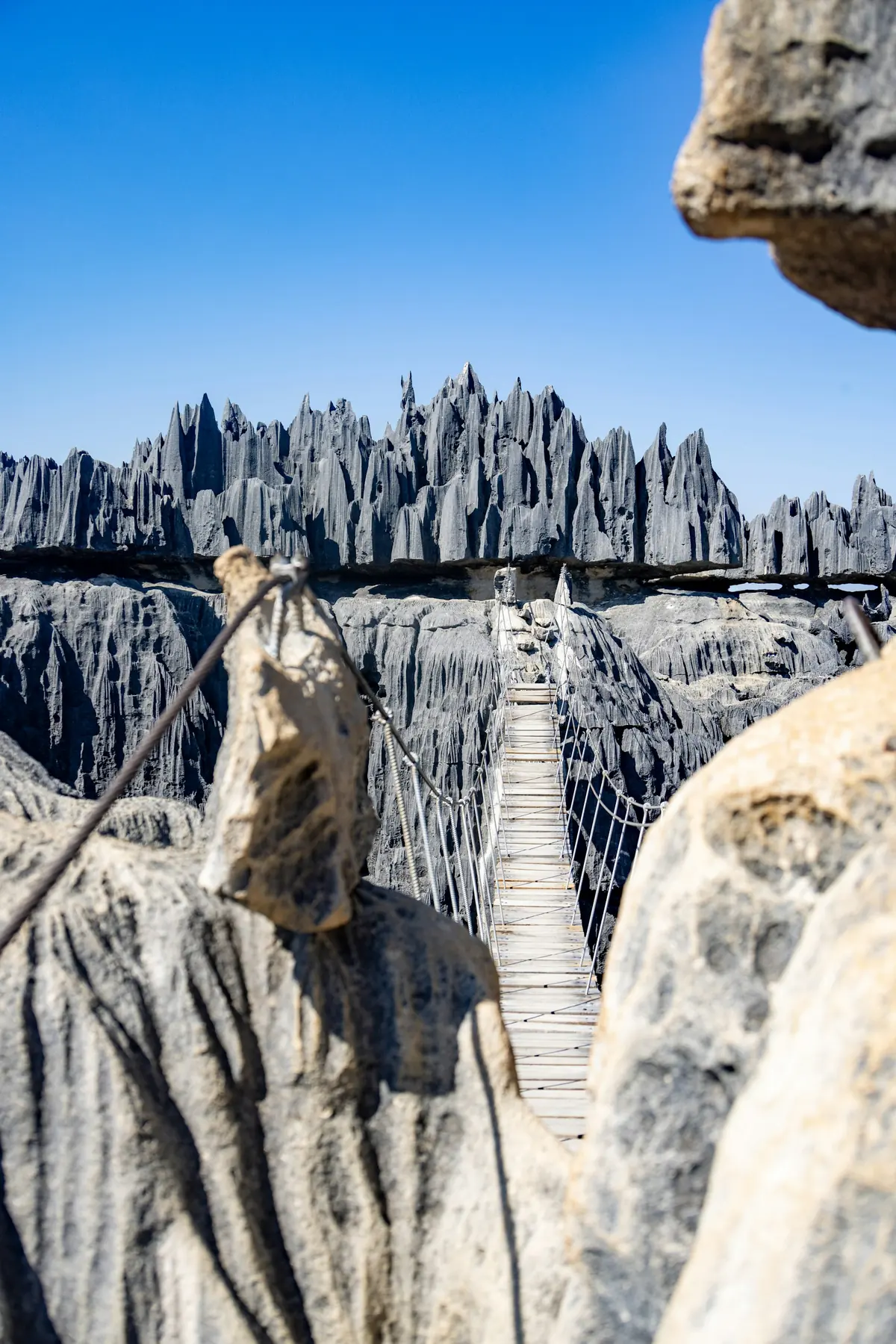
An exposed roof.
A sheltered world below.
Behind the view
Tsingy is a karst landscape: limestone shaped by water dissolving and enlarging fractures over time. At Bemaraha, the result is a dense assembly of sharp peaks, fissures, caves and gorges. It is also an ecological mosaic. Madagascar National Parks distinguishes dry forest on the limestone plateau, vegetation adapted to exposed rock, and more humid habitats in sheltered hollows. The extraordinary surface geometry creates different living conditions within a very small horizontal distance.
03 / The human story
Caves and cultural memory.
A history of stewardship.
Madagascar National Parks documents caves with traces of past human presence and Vazimba tombs in the Manambolo gorge area. These places add cultural meaning to an environment often presented only as a geological spectacle. The park’s modern history also spans several forms of protection, beginning with a reserve in 1927. Stewardship today includes both biodiversity conservation and the surrounding communities.
04 / Across time
Seasonal moisture changes the surrounding deciduous forest and watercourses. Sheltered hollows retain different conditions from the exposed pinnacles, giving the landscape several climates at once.
Rock-adapted vegetation occupies the exposed limestone landscape.
Changing moisture affects deciduous forest and watercourses beneath and around the pinnacles.
Water has worked on this limestone over geological time, but its ecological effects are seasonal too. The park contains dry deciduous forest, alongside sheltered evergreen vegetation and underground streams that may be seasonal or permanent. The exposed roof and shaded interior therefore respond differently to changing moisture. Seen from above, the stone forest conceals much of the living landscape beneath it.
Keep looking / Sources & photography
Hero: Rafael Peier / Unsplash License · Resized and WebP compressed; cropped for display.
Second photograph: Rafael Peier / Unsplash License · Resized and WebP compressed; cropped for display.