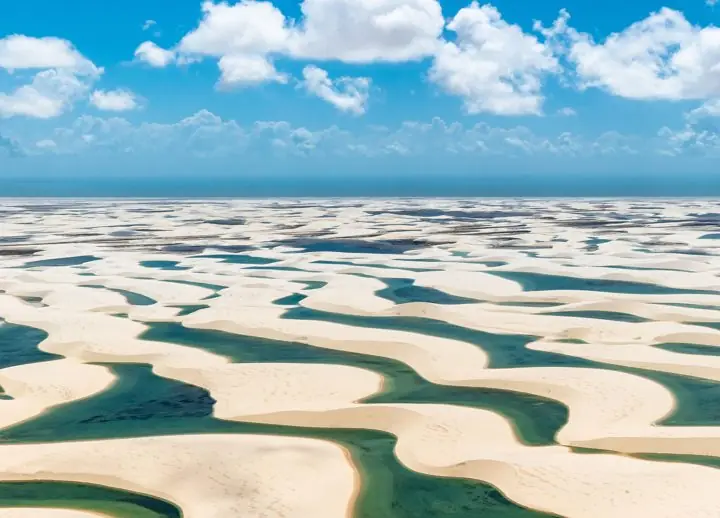
An island apart.
Geographic isolation helped produce a distinctive community of species.
LANDSCAPE KEY Isolation
01 / The landscape
An unfamiliar shape. An irreplaceable ecosystem.
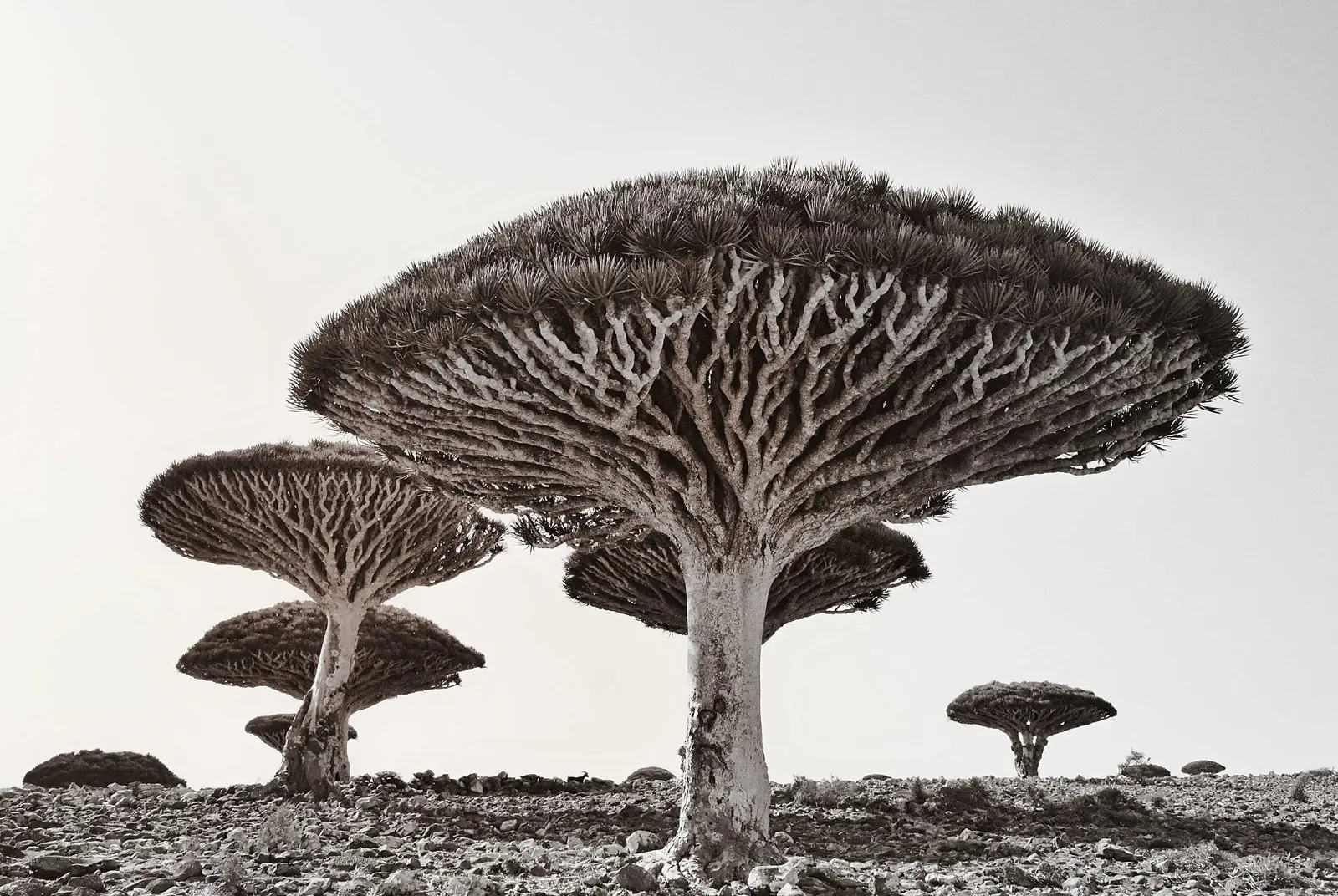
Broad-crowned dragon’s blood trees stand above limestone country. Socotra’s extraordinary forms belong to an island ecosystem shaped by isolation, terrain and seasonal winds.
One detail to remember
37%
of recorded plant species
UNESCO records 307 endemic species among 825 plants.
Source / UNESCO · Socotra Archipelago02 / Landscape anatomy
Three ways to read Socotra.
A field guide to what you’re seeing.
Geographic isolation helped produce a distinctive community of species.
The dragon’s blood tree gives the limestone uplands their unmistakable profile.
Plateaus and mountains provide different environments within the island.
A tree is never
just a silhouette.
Behind the view
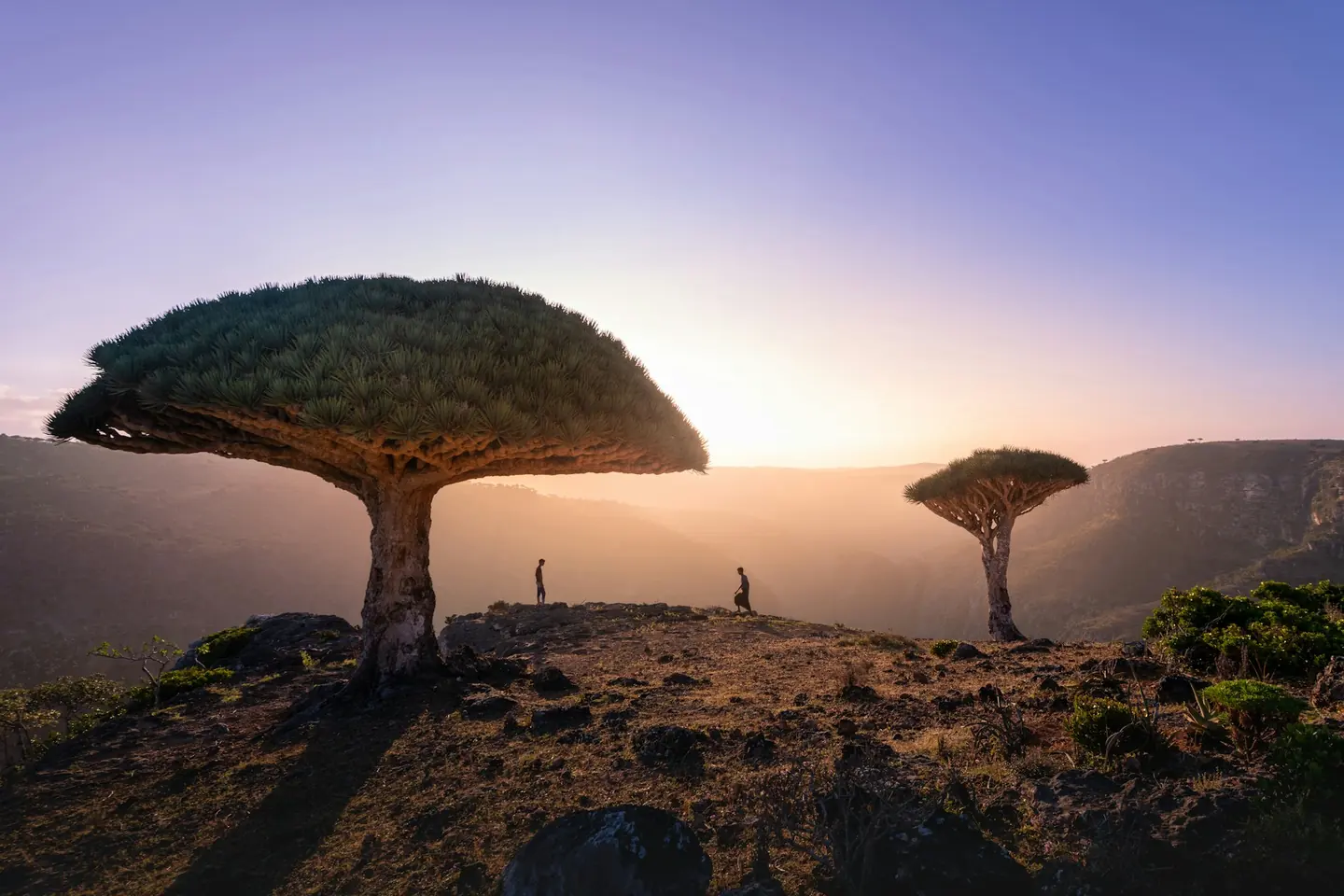
Socotra’s unusual appearance is biological as well as geological. The archipelago supports an exceptional concentration of species found nowhere else; UNESCO reports that more than a third of its recorded plant species are endemic. Limestone plateaus and mountain habitats offer different environments within the island. The dragon’s blood tree, Dracaena cinnabari, gives some uplands their unmistakable silhouette. Its dense crown and branching structure are living architecture, part of an ecosystem rather than an isolated botanical curiosity.
03 / The human story
Resins, grazing and seasons.
Knowledge carried across generations.
The island’s plants have long been woven into people’s livelihoods. UNEP describes resin from the dragon’s blood tree as historically valued for pigments and traditional remedies, alongside frankincense and aloes. The World Heritage nomination also records local resource practices, including rotational grazing and limits on harvesting. Socotra’s story includes accumulated knowledge about plants and seasons, as well as the challenge of sustaining those relationships through change.
04 / Across time
The southwest monsoon brings a season of strong winds. Rain and mountain mist vary across the island, so the same season can produce different conditions at different elevations.
Strong southwest winds change island conditions and connections across the sea.
Rain and mist vary across the island, producing different conditions at different elevations.
Monsoon winds reorganise the island’s conditions each year. The World Heritage nomination describes strong southwest winds during the northern summer and the ecological importance of alternating dryness and mist. These rhythms affect both vegetation and connections across the sea. Over much longer periods, geographic isolation helped produce the distinctive community of species that makes Socotra look so unfamiliar.
Keep looking / Sources & photography
Hero: Rod Waddington / CC BY-SA 2.0 · Resized and WebP compressed; cropped for display.
Second photograph: Andrew Svk / Unsplash License · Resized and WebP compressed; cropped for display.