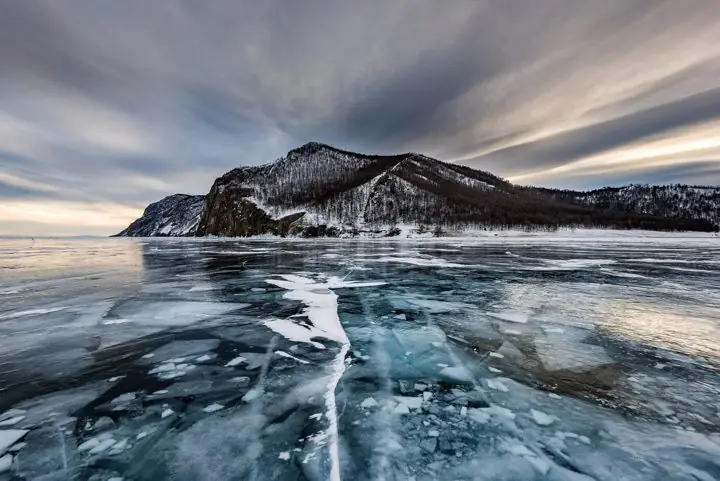
An icefield outlet.
A glacier carries ice from the mountains towards Lago Argentino.
LANDSCAPE KEY Ice flow
01 / The landscape
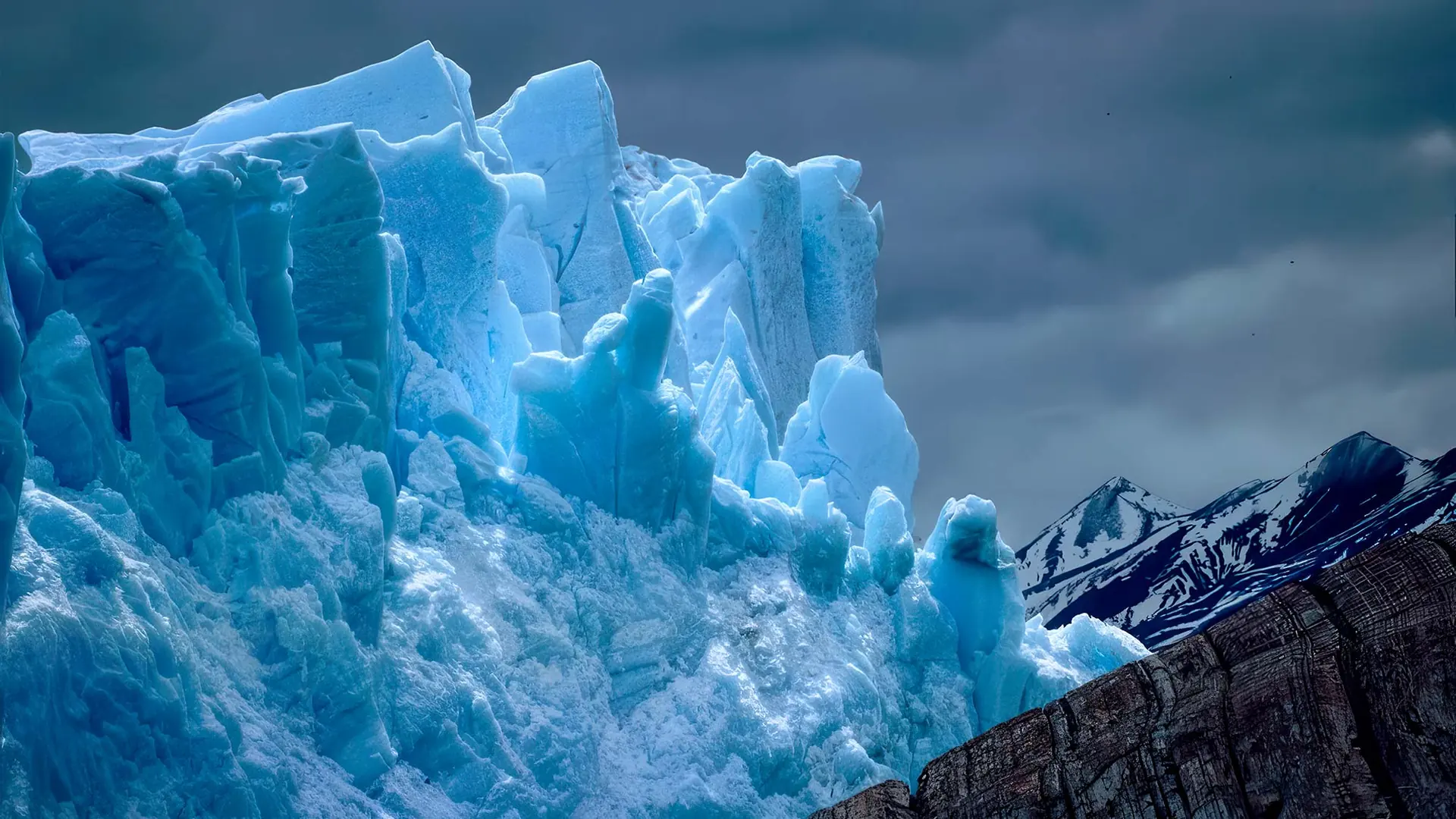
Blue ice. A living edge.
A fractured blue wall meets the water of Lago Argentino. Behind it, ice reaches towards the Patagonian mountains. The apparent architecture is a moving surface: towers, fissures and edges constantly remade.
One detail to remember
60
metres · up to
What looks like a cliff is flowing ice, shedding icebergs into Lago Argentino.
Source / UNESCO · Los Glaciares National Park02 / Landscape anatomy
Three ways to read Perito Moreno.
A field guide to what you’re seeing.
A glacier carries ice from the mountains towards Lago Argentino.
Subglacial ridges and lake depth influence the position of the front.
Calving releases pieces of the glacier into the lake.
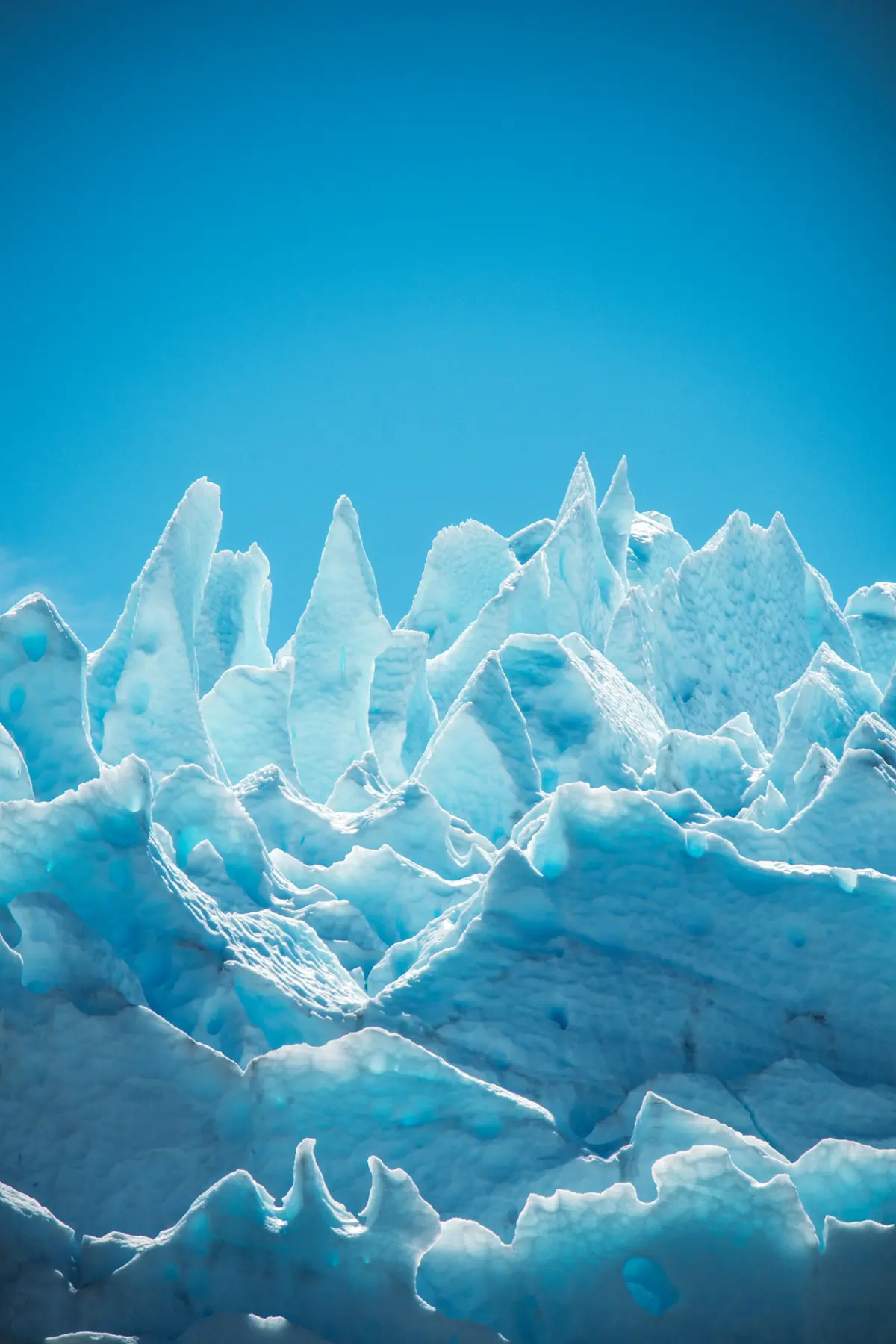
A skyline of frozen towers.
Every edge is temporary.
Behind the view
Perito Moreno is an outlet of the Southern Patagonian Icefield. Ice flows towards the lake, where pieces break away from its front in a process called calving. The visible wall is only part of its geometry. Bedrock beneath the glacier and the depth of the lake help govern its behaviour; a ridge under the ice can hold the front in place even while the glacier itself is changing.
03 / The human story
A livelihood. A field site.
A landscape still being understood.
For El Calafate, this ice is also a source of livelihoods. Researchers describe the glacier as an important driver of the local visitor economy. It is a workplace for scientists, too: helicopter-borne radar surveys in 2022 and lake-depth measurements in 2023 helped reveal a landscape concealed beneath ice and water. The view that draws people here is also a question they are still learning to read.
04 / Across time
Calving can alter the visible face from one moment to the next. Longer observations reveal changes in flow, thickness and the position of the front; a dramatic collapse and a long-term retreat describe different scales of change.
Calving replaces a solid edge with icebergs and a newly exposed wall.
Measurements reveal thinning and retreat beyond the movement seen in one visit.
For decades, Perito Moreno was known for its relatively stable front. A study published in 2025 documented a different recent trajectory: faster surface lowering at the front during 2019–2024, together with acceleration and retreat. Earlier descriptions remain part of its history, rather than a promise about its future. Photographs made years apart can record changes that a single visit cannot reveal.
Keep looking / Sources & photography
Hero: User-supplied photograph / User-supplied image · Resized and WebP compressed; cropped for display.
Second photograph: Rafael Peier / Unsplash License · Resized and WebP compressed; cropped for display.