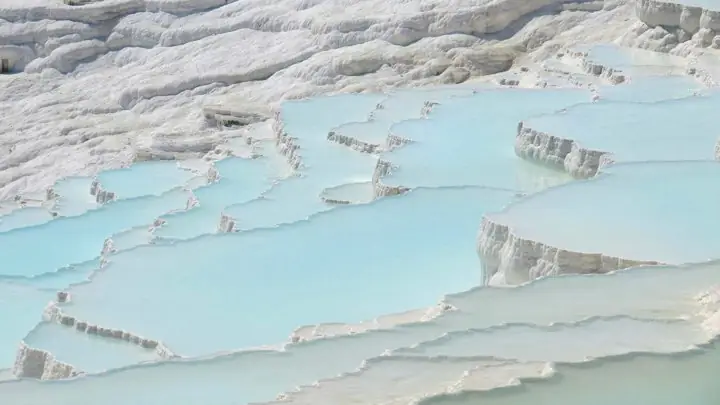
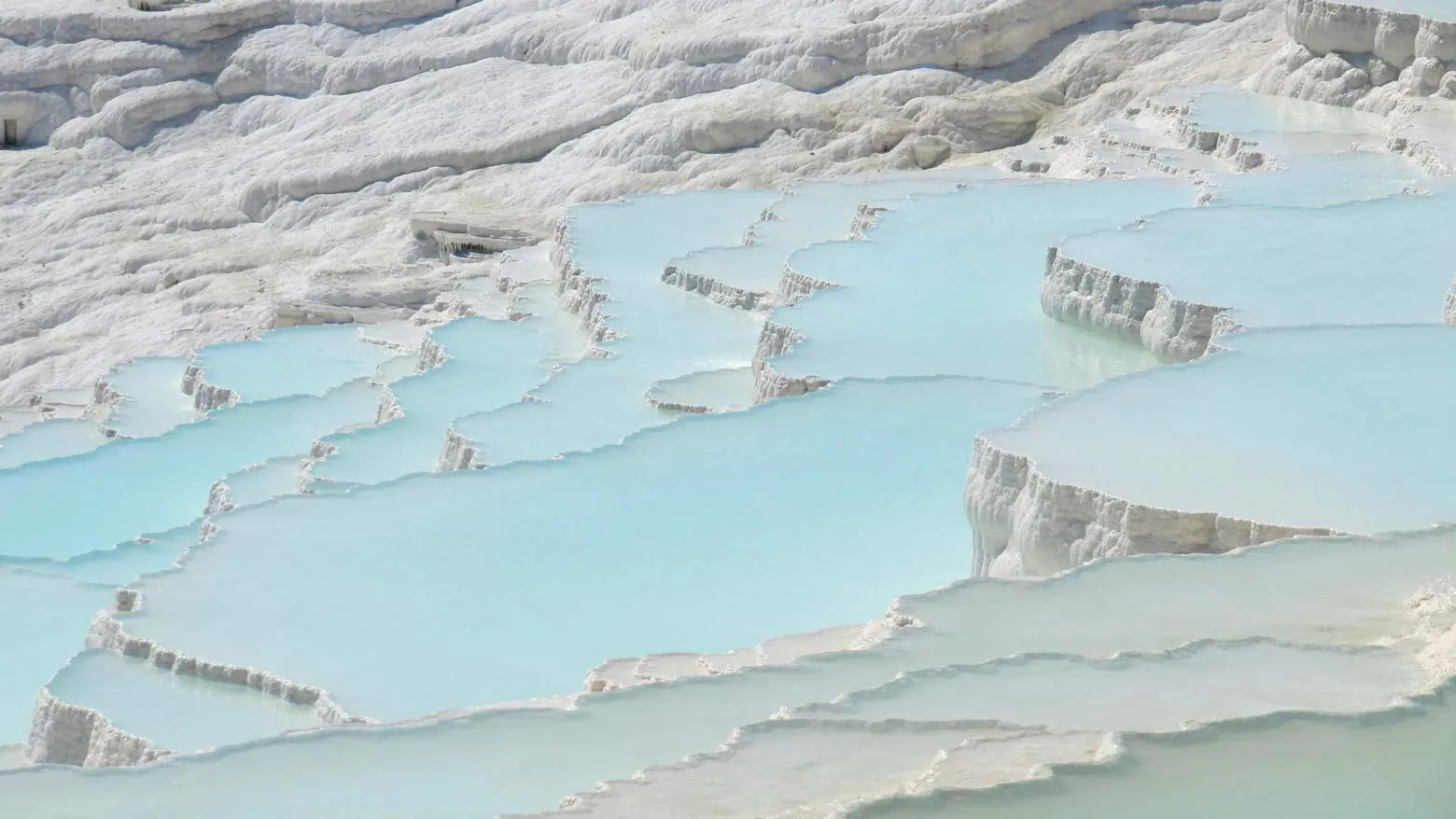
Water gathers.
An enclosed Rift Valley basin holds shallow, alkaline water.
LANDSCAPE KEY Basin
01 / The landscape
Shallow water. Salt. A living spectrum.
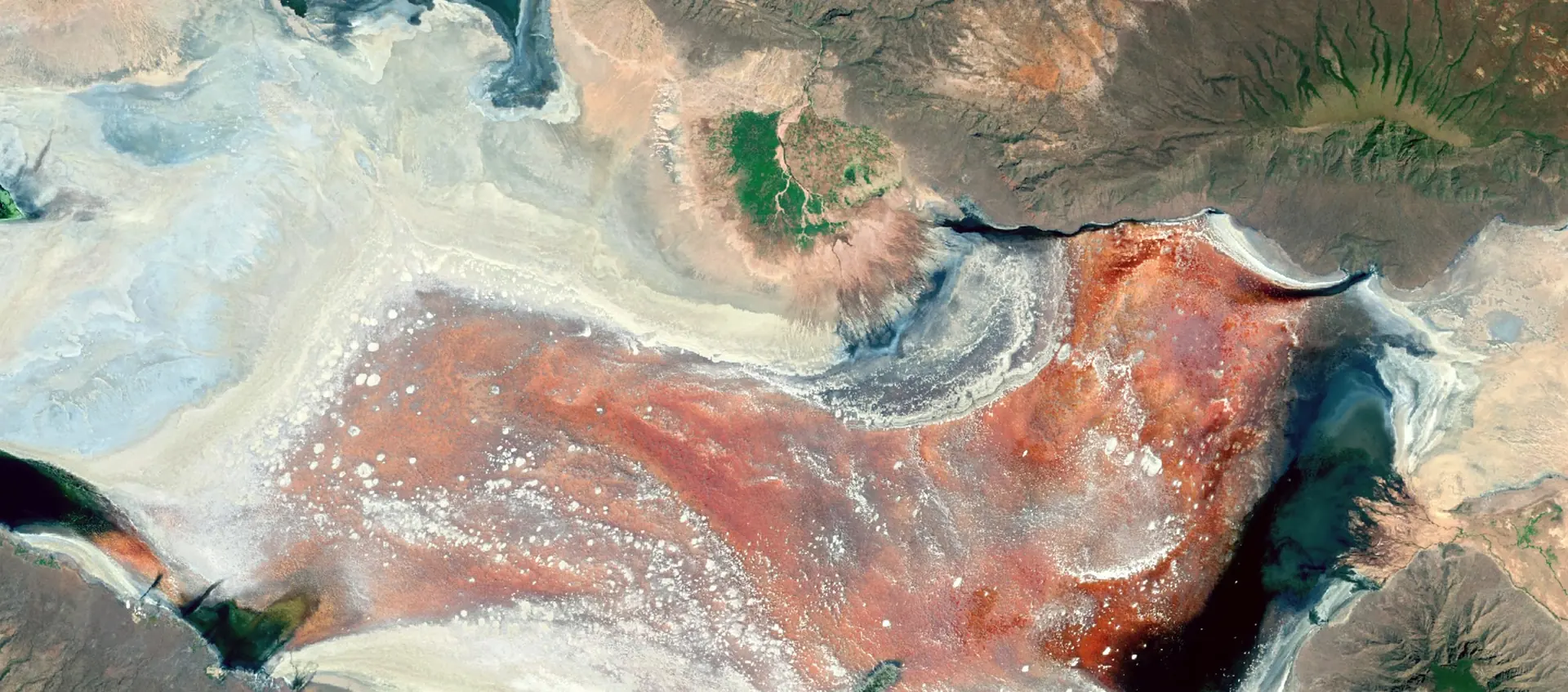
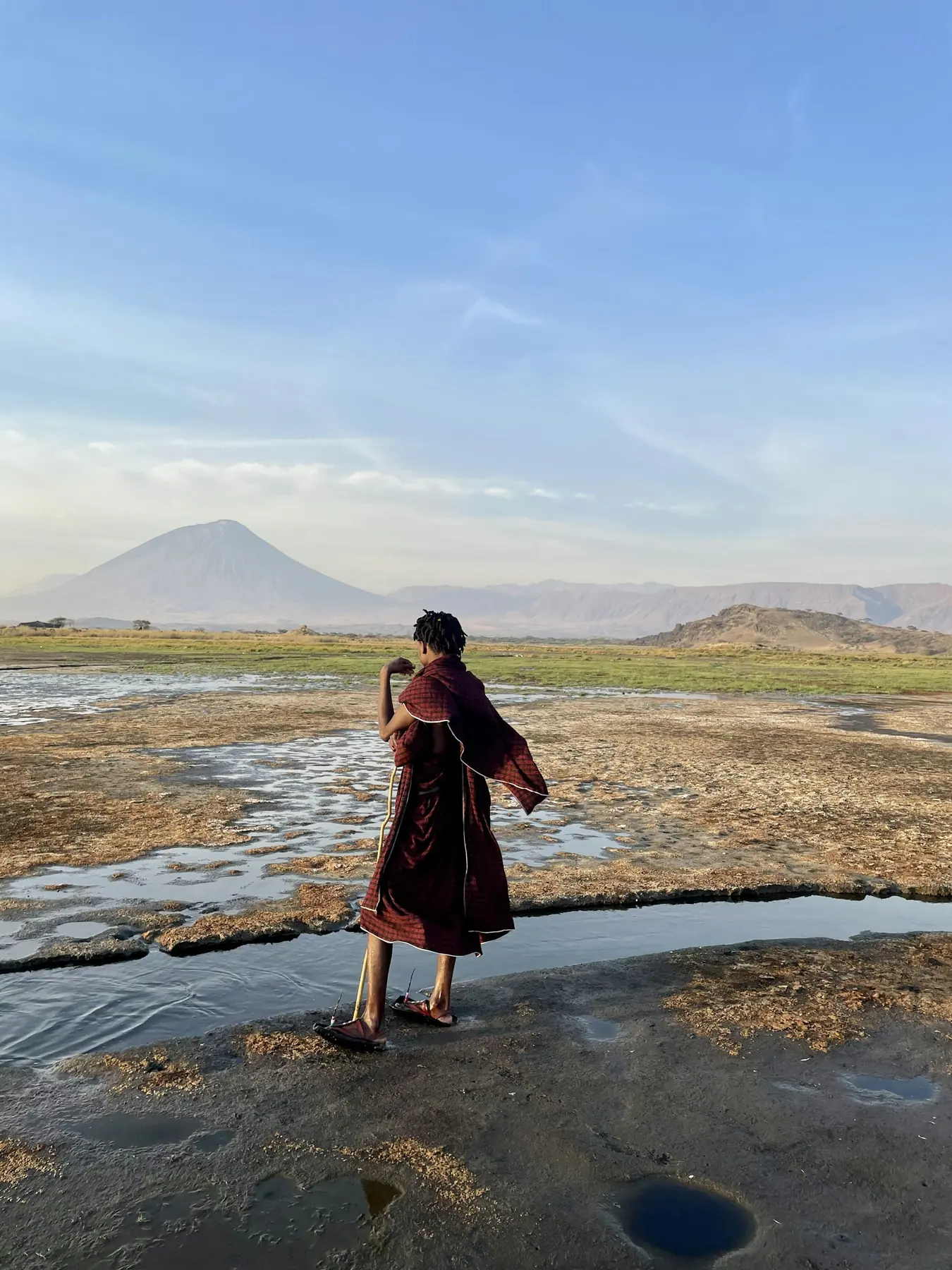
From above, Lake Natron becomes a composition of red water, pale crust and dark channels. On the shore, the scale changes: shallow pools, volcanic mountains and lives rooted in the Rift Valley.
One detail to remember
3
metres · less than
Its shallow water and shifting salt crust make an ever-changing canvas.
Source / NASA Earth Observatory · Lake Natron02 / Landscape anatomy
Three ways to read Lake Natron.
A field guide to what you’re seeing.
An enclosed Rift Valley basin holds shallow, alkaline water.
Evaporation increases salinity and exposes pale crust.
Salt-loving microorganisms contribute red and pink tones.
Beyond the view from orbit.
A landscape lived at ground level.
Behind the view
The red is biological. Salt-loving microorganisms thrive in concentrated water and can colour the lake and its crust pink, orange or deep red. As water evaporates, dissolved salts become more concentrated, changing the conditions in which these organisms live. A photograph catches one expression of that balance. Other parts of the same lake can look dark, pale or blue-green; the colour is a changing property of a living system, rather than a permanent stain.
03 / The human story
Water, grazing and belonging.
A future shaped by local voices.
Maasai communities have lived around Natron for generations, raising livestock within a demanding landscape. The lake is part of their livelihoods as well as a globally important wetland. In community meetings during 2025, residents voiced opposition to renewed proposals for soda-ash extraction, describing their concerns for water, grazing and the future of the basin. Seen from the shore, the apparent abstraction of the satellite image becomes a place of work, belonging and decisions about what should endure.
04 / Across time
Drier periods concentrate salts and expose more of the surface. Rain and river inflow change water coverage. Colour, crust and breeding conditions respond to these shifts without following an identical pattern each year.
Evaporation concentrates salts and reveals new patterns in the crust.
Incoming water changes coverage and the conditions behind the visible palette.
Evaporation and incoming water shift the lake’s extent and the pattern of exposed salt. NASA’s repeated observations show different arrangements of crust and colour from one image to another. The changing basin also matters to lesser flamingos: Ramsar identifies Natron as East Africa’s only regular breeding area for the species. Its importance lies in a set of conditions that supports life, even where the surface looks inhospitable.
Keep looking / Sources & photography
Hero: Copernicus Sentinel-2 / Contains modified Copernicus Sentinel data 2023 · Resized and WebP compressed; cropped for display.
Second photograph: Uzuri Safaris Tanzania / Unsplash License · Resized and WebP compressed; cropped for display.