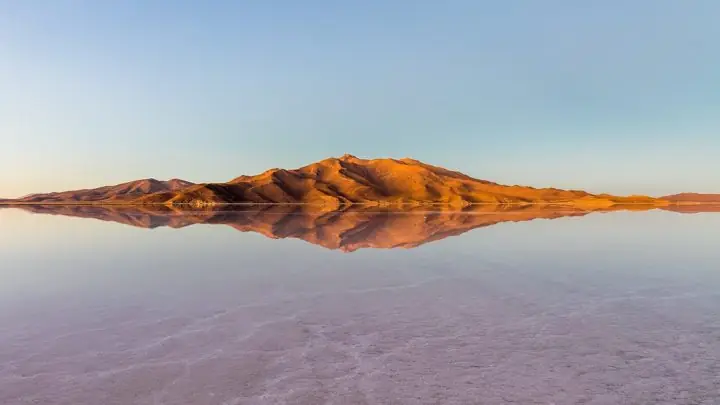
Sand from the coast.
Coastal sand supplies the pale dune field.
LANDSCAPE KEY Coast
01 / The landscape
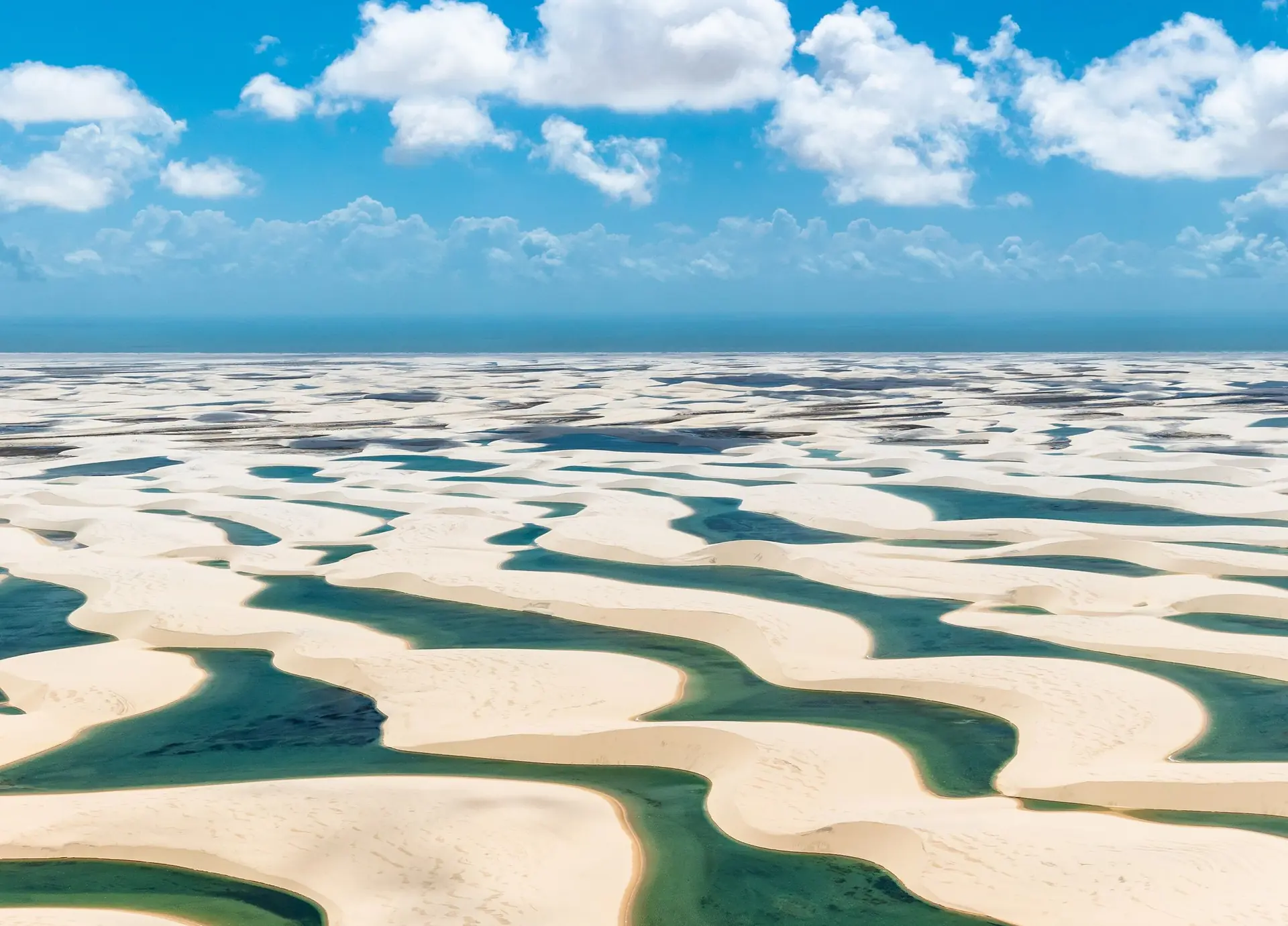
White sand. Water in every fold.
White dunes curl around thousands of freshwater hollows. On Brazil’s northern coast, wind and rain take turns composing a landscape that refuses to hold still.
One detail to remember
25
metres per year · up to
The landscape’s outline moves as well as its water.
Source / UNESCO · Lençóis Maranhenses02 / Landscape anatomy
Three ways to read Lençóis Maranhenses.
A field guide to what you’re seeing.
Coastal sand supplies the pale dune field.
Moving grains build and reshape the dune chains.
Water collects between the dunes, creating temporary and permanent lagoons.
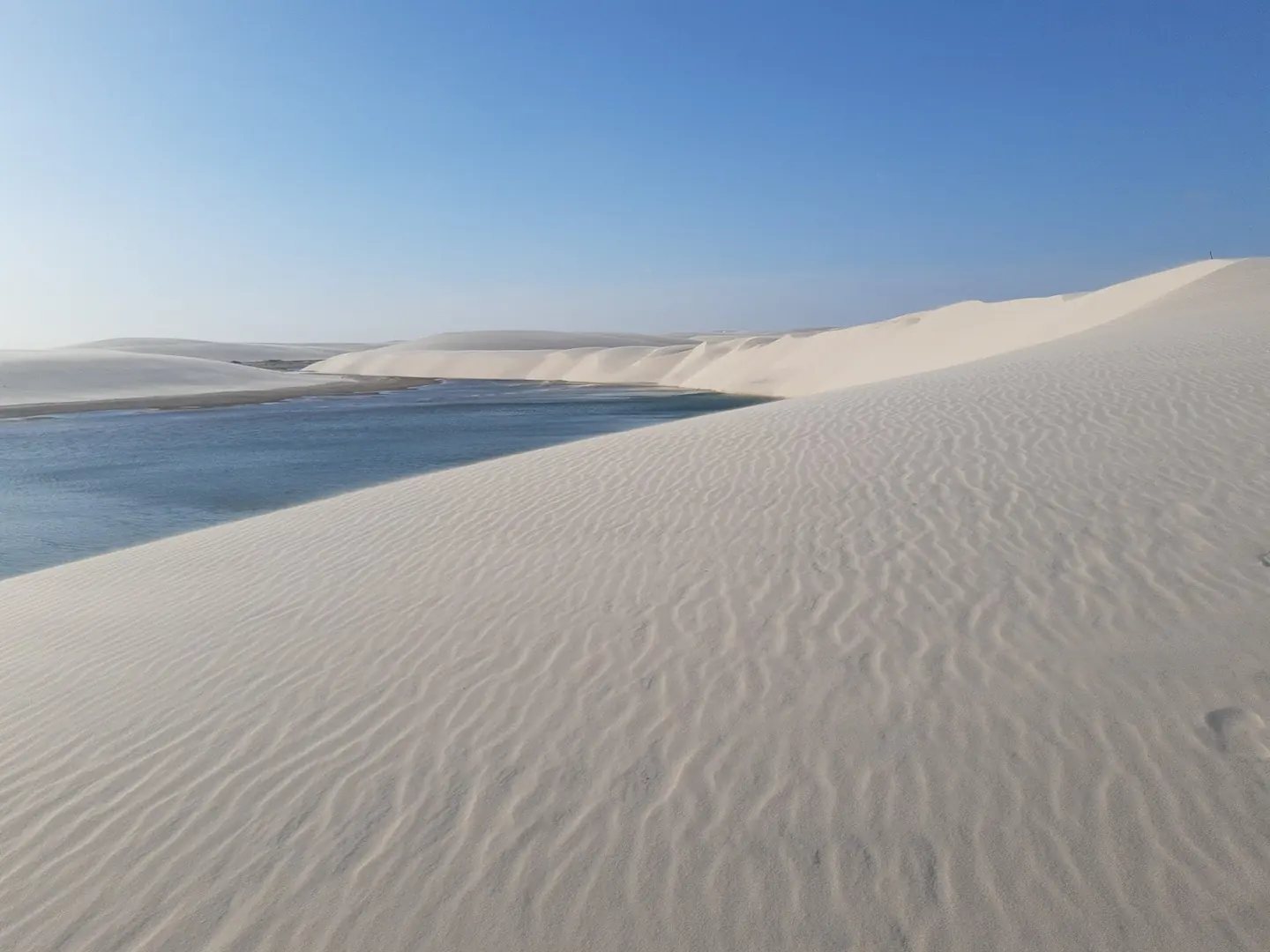
The dunes keep moving.
The map never quite repeats.
Behind the view
The dunes resemble a desert, but this coast has a semi-humid climate. Wind moves sand inland from the shore, shaping crescent-like dunes into long chains. During the rainy season, the water table rises and freshwater lagoons appear between them. Some persist; others disappear as conditions dry. UNESCO describes a coupled system in which dune movement and groundwater continually influence one another. The blue-green intervals are part of the landform’s machinery, not an interruption to it.
03 / The human story
An inhabited landscape.
A rhythm measured in water.
Within the dune field, Queimada dos Britos and Baixa Grande form pockets of green restinga vegetation. Maranhão’s tourism authority describes fishing families living in these oasis communities and receiving travellers in their homes. Seen from above, the dunes can appear uninhabited; at ground level, they connect households, water and routes walked between settlements. The same terrain that produces a spectacular aerial pattern is someone’s familiar neighbourhood.
04 / Across time
Rain expands the freshwater lagoons; drier conditions diminish many of them. Wind continues reshaping the dunes, so both water levels and the outlines around them change.
Rain replenishes the lagoons, changing their extent and colour.
Many temporary lagoons shrink or disappear; wind continues reshaping the dunes.
Brazil’s tourism ministry describes two recurring versions of Lençóis: lagoons emerging with substantial seasonal rain, then a drier landscape increasingly dominated by exposed dunes. Wind keeps modifying the sand through that cycle. Returning to the same area does not guarantee the same arrangement of shorelines. A lagoon photograph captures one balance between water and sand, within a much longer history of coastal change.
Keep looking / Sources & photography
Hero: Julius Dadalti / CC BY-SA 4.0 · Resized and WebP compressed; cropped for display.
Second photograph: Gerda Arendt / CC0 · Resized and WebP compressed; cropped for display.