Rhyolite country.
Silica-rich volcanic rock gives the mountains their distinctive character.
LANDSCAPE KEY Rhyolite
01 / The landscape
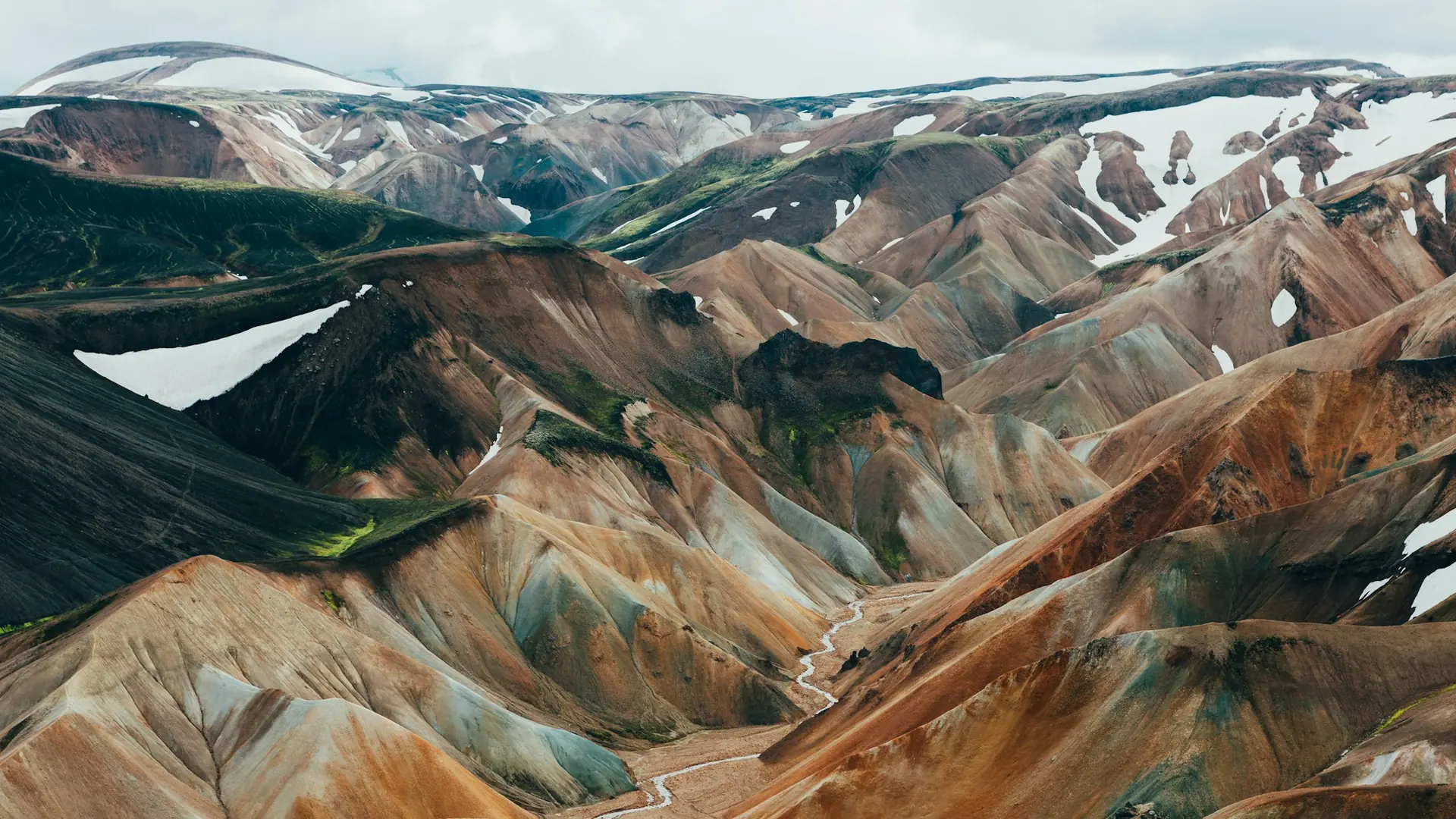
Warm earth colours. Dark lava. Lingering snow.
Pale rhyolite ridges rise above dark lava in Iceland’s interior. Gullies divide the slopes into folds of colour, while geothermal water gathers below.
One detail to remember
54
kilometres of trail
The Iceland Touring Association built its first hut here in 1951.
Source / Iceland Touring Association · Landmannalaugar hut02 / Landscape anatomy
Three ways to read Landmannalaugar.
A field guide to what you’re seeing.
Silica-rich volcanic rock gives the mountains their distinctive character.
Dark lava, pale slopes and vegetation create a varied palette.
Geothermal water connects the surface with volcanic heat below.
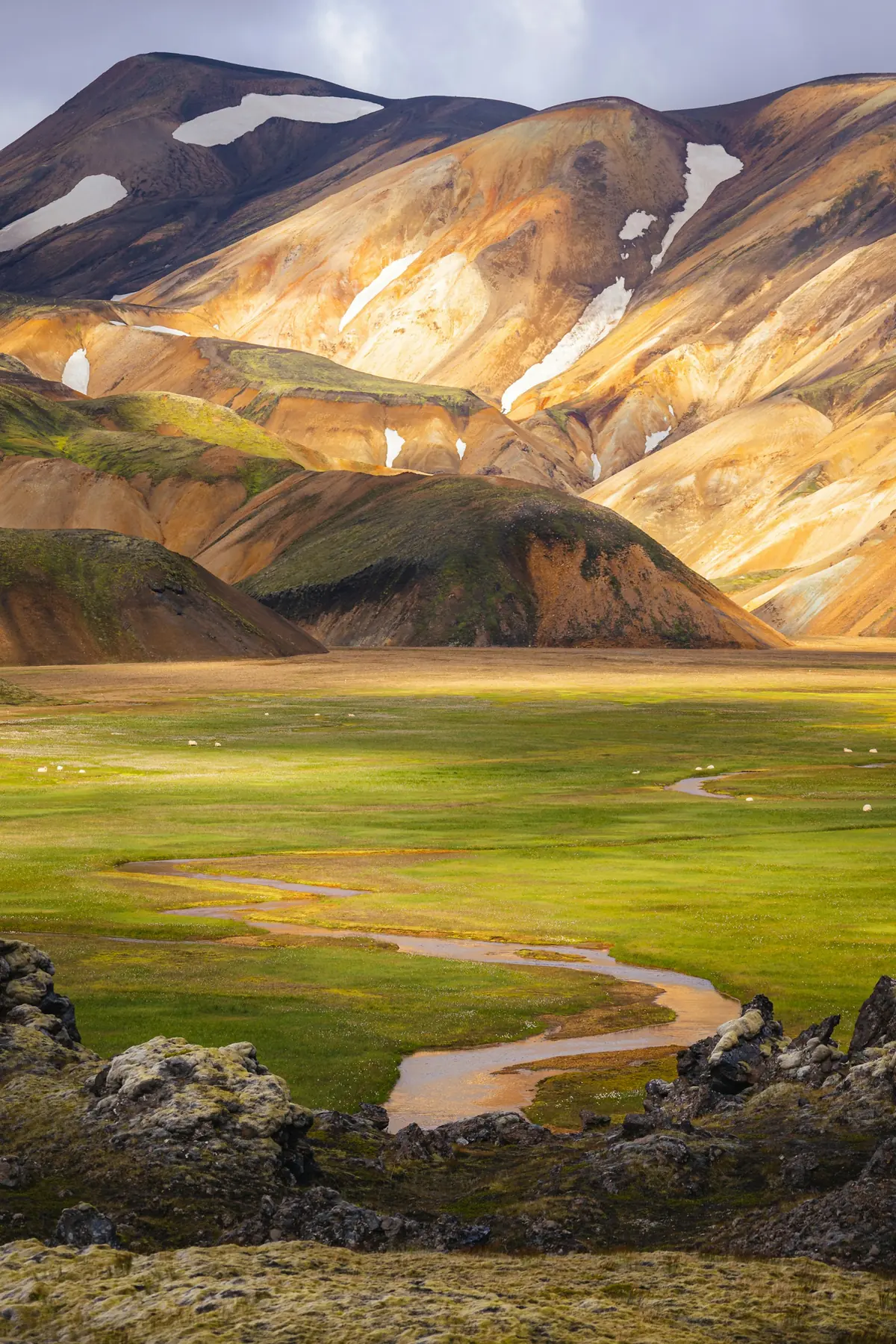
Snow follows the hollows.
Colour follows the rock.
Behind the view
Rhyolite gives these mountains their unusual palette. This volcanic rock can appear grey, yellow, pink or green; when its magma cools abruptly, it can form black obsidian, a volcanic glass. Landmannalaugar lies within the Torfajökull region, which contains Iceland’s largest expanse of rhyolite. Hot springs testify to the heat beneath the landscape. Its colour and its warmth are different expressions of a volcanic interior.
03 / The human story
Huts, walkers and warm water.
A history of passage.
The Iceland Touring Association built its first Landmannalaugar hut in 1951. Today its hut stands beside the dark Laugahraun lava field, near springs that warm a natural brook. From here, the Laugavegur trail links the highlands with Þórsmörk. A small building at the lava’s edge adds a human scale to the panorama: a place where walking routes converge and journeys begin or end.
04 / Across time
Snow determines the rhythm of the highlands. Summer exposes coloured slopes and walking routes; winter cover changes their outlines, while geothermal warmth continues beneath the seasonal surface.
Snow covers parts of the terrain and emphasises the mountain silhouettes.
As snow retreats, coloured slopes and drainage lines become more visible.
Ice and fire both shaped this country. Volcanism during the last glacial period helped form the surrounding mountains; eruptions northeast of Landmannalaugar continued into the fifteenth century. The broad history is visible in the contrasts between lava, loose material and sculpted ridges. Each winter, snow temporarily softens those differences; thaw reveals the folds again.
Keep looking / Sources & photography
Hero: yifei liu / Unsplash License · Resized and WebP compressed; cropped for display.
Second photograph: Tomas Trajan / Unsplash License · Resized and WebP compressed; cropped for display.