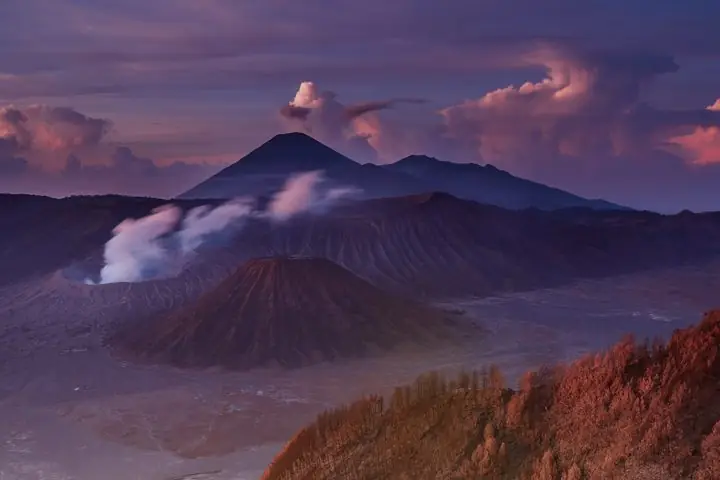
Crater basins.
Three lakes occupy separate basins on the summit.
LANDSCAPE KEY Craters
01 / The landscape
Three craters. A shifting spectrum.
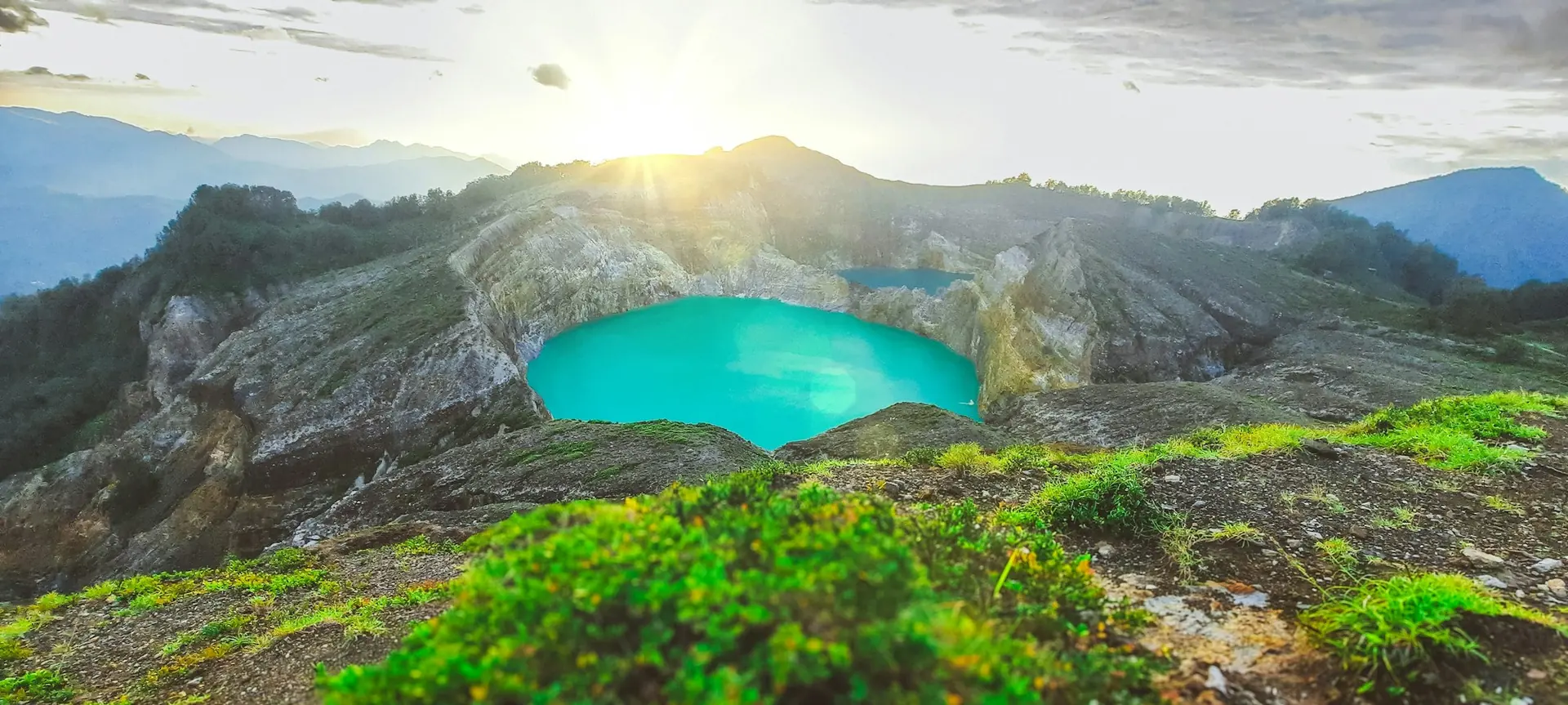
Turquoise water fills a volcanic crater high on Flores. Nearby lakes hold different colours, each a visible expression of a changing system below.
One detail to remember
3
summit crater lakes
The two eastern lakes share a crater wall.
Source / Smithsonian · Kelimutu02 / Landscape anatomy
Three ways to read Kelimutu.
A field guide to what you’re seeing.
Three lakes occupy separate basins on the summit.
Volcanic vents feed gases and drive circulation in the water.
Reactions change the water’s visible palette.
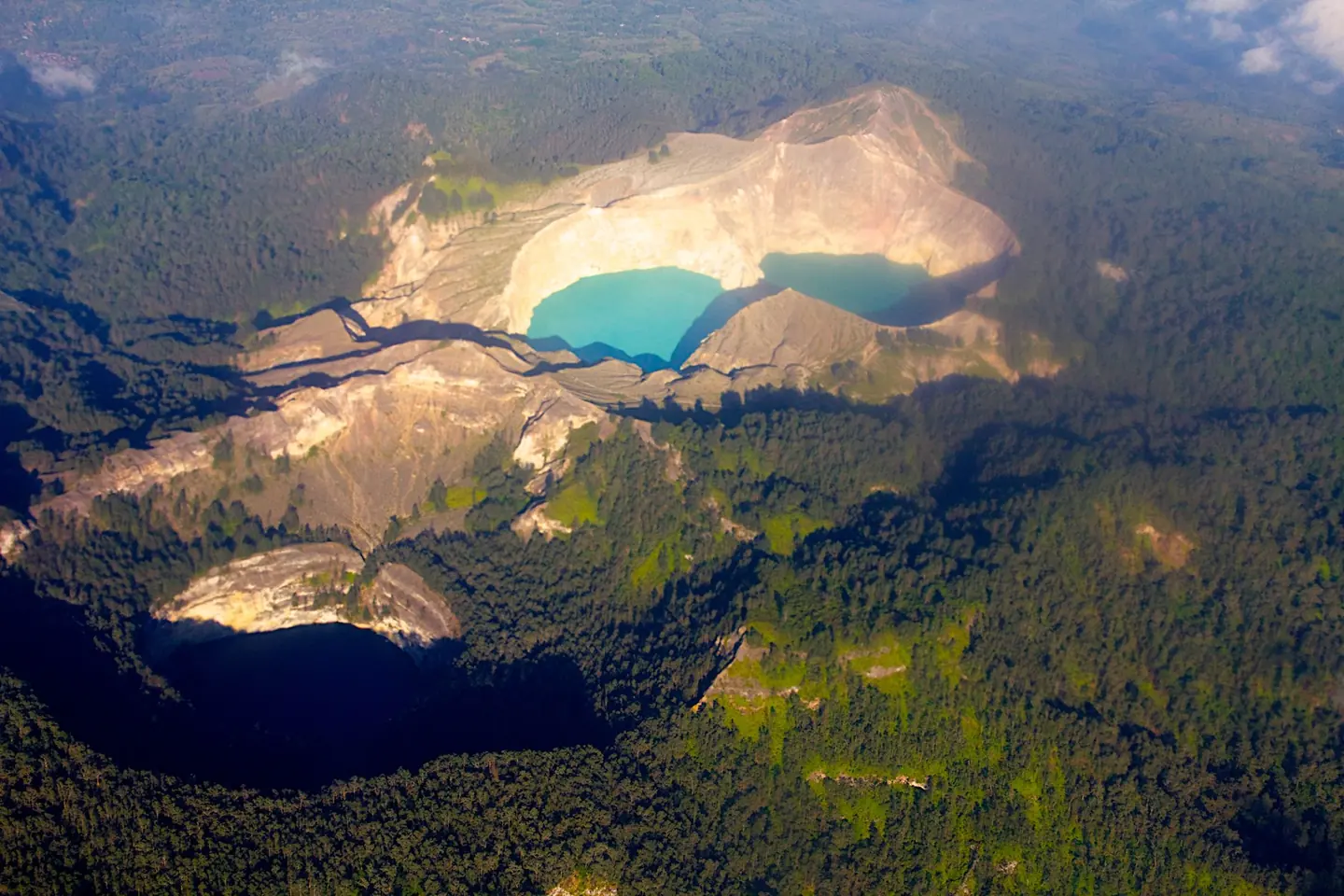
Three lakes share a mountain.
None promises a fixed colour.
Behind the view
Volcanic vents beneath the lakes release gases and help drive upwelling, bringing mineral-rich water towards the surface. Reactions involving those materials and oxygen can change how the water looks. The lakes can appear white, turquoise, green, red, brown or almost black. Their colour is a chemical condition captured in a photograph, rather than a permanent identity.
03 / The human story
A volcanic summit.
A place of continuing meaning.
The lakes also hold meaning beyond their chemistry. NASA’s account describes local beliefs that associate them with the resting places of departed souls, with different lakes linked to different groups. That cultural reading gives the summit another depth: the same water can be understood through the movement of minerals and through stories carried between generations.
04 / Across time
Colour changes do not follow a dependable seasonal schedule. Conditions within the lakes matter, while cloud and light alter how their colours appear from above.
Changes within the lakes can alter their colours; each basin has its own conditions.
Cloud and moving light change the appearance of the water and crater rims.
Smithsonian’s account of observations in June 2013 records one lake changing from blue to light tan alongside changing emissions. Such records connect a visible shift to an active volcanic system. Three lakes close together do not guarantee three contrasting colours on every visit, and a photograph from one year cannot prescribe the palette of the next.
Keep looking / Sources & photography
Hero: Yub 12 / Unsplash License · Resized and WebP compressed; cropped for display.
Second photograph: Michael Day / CC BY 2.0 · Resized and WebP compressed; cropped for display.