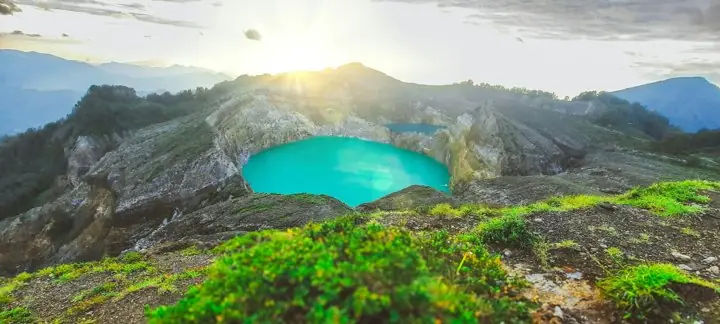
A salt landscape.
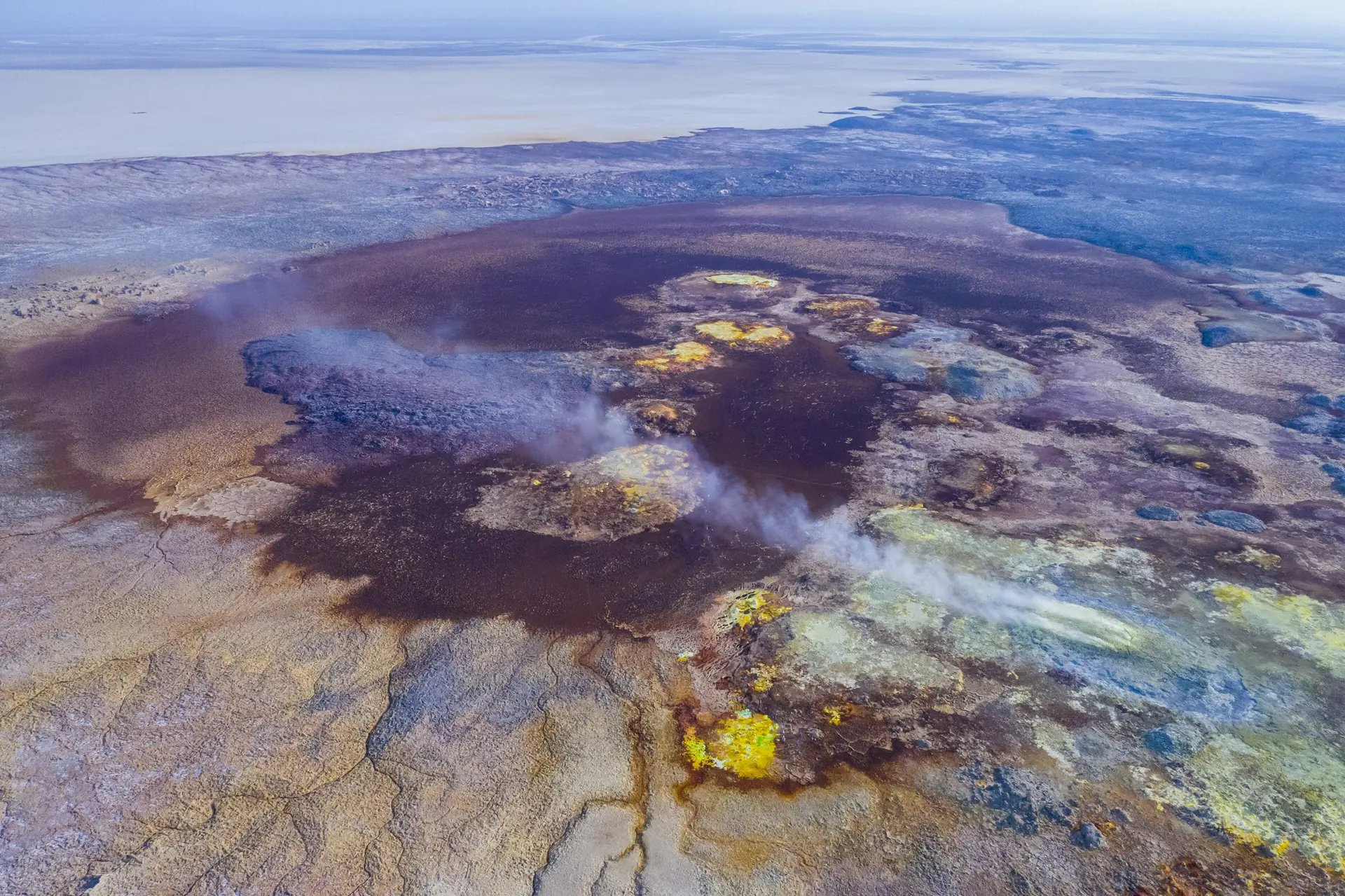
The hydrothermal system emerges within the Danakil Depression.
LANDSCAPE KEY Salt
01 / The landscape
Heat, salt, and an improbable palette.
Green brine, yellow crusts and rust-coloured terraces spread across the Danakil Depression. Here, mineral reactions produce a palette that seems almost too vivid for rock.
One detail to remember
108°
Celsius · measured spring water
A measurement from a scientific study, not a uniform temperature across the pools.
Source / Nature Ecology & Evolution · Dallol field study02 / Landscape anatomy
Three ways to read Dallol.
A field guide to what you’re seeing.
The hydrothermal system emerges within the Danakil Depression.
Hot fluids connect the subsurface with pools and springs.
Deposits create intricate, vividly coloured surfaces.
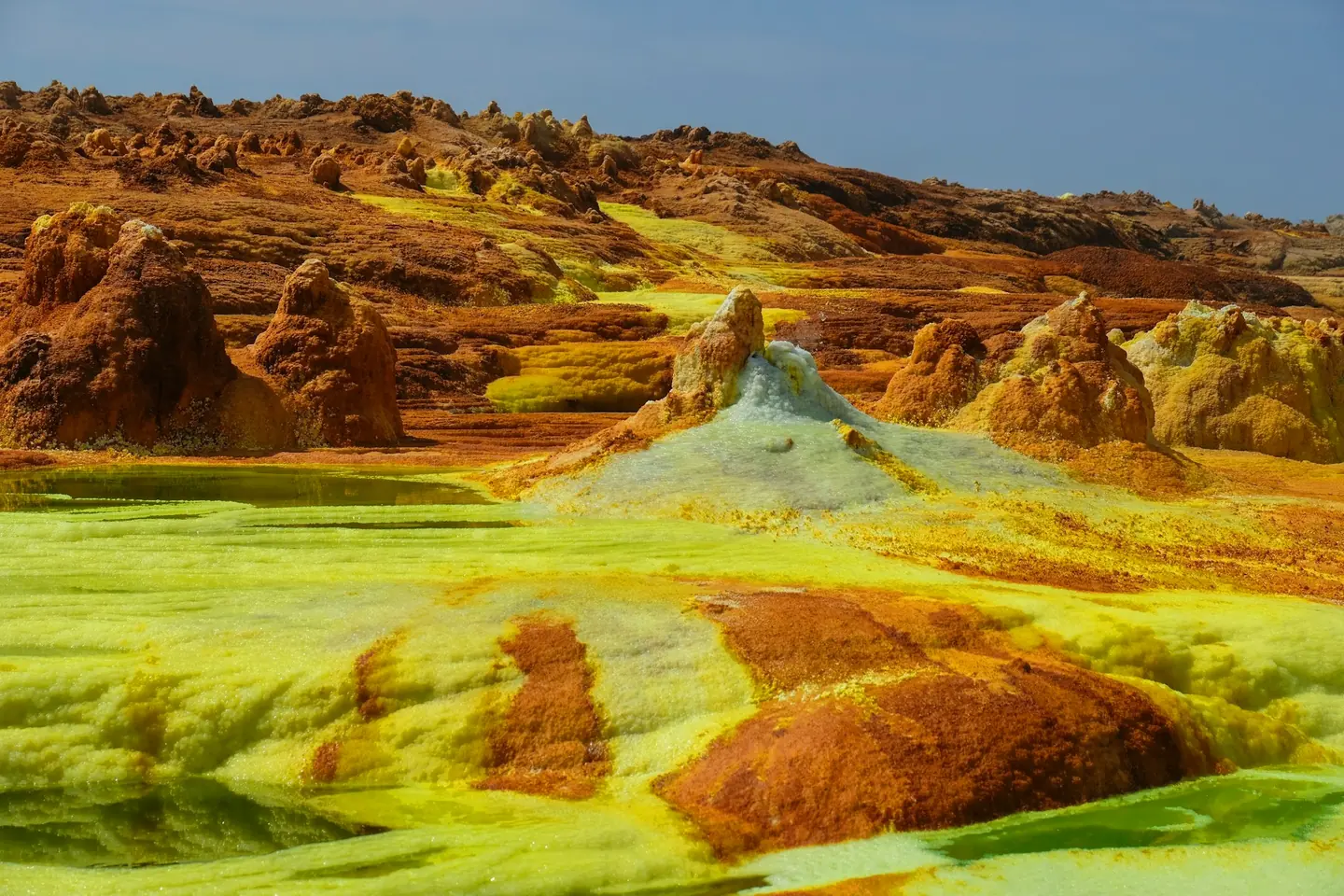
The colour is chemistry.
The surface is still changing.
Behind the view
Dallol’s hot, acidic brines move through a landscape rich in salt. A geochemical study published in ACS Earth and Space Chemistry traced much of the colour to iron: as dissolved iron encounters oxygen, its chemistry changes, and minerals precipitate across the terraces. Evaporation further concentrates the fluids. In the systems studied, inorganic reactions explained the striking colours. This is a landscape where a change in hue can mark a chemical transformation along the course of flowing water.
03 / The human story
Beyond the mineral colours.
A human geography.
The colours have drawn researchers into a difficult question: where does life stop? In a 2019 study, Jodie Belilla and colleagues combined genetic analysis, microscopy and cultivation methods across the Dallol–Danakil area. They found diverse archaea in some settings, alongside chemical barriers to life in others. They also identified non-living structures that resemble biological forms. Their work makes Dallol a place where appearances must be tested, not simply trusted.
04 / Across time
Hydrothermal activity, evaporation and changing flow reshape the view. A dry terrace may preserve the outline of an earlier pool; colourful water is not permanent.
Flowing fluids continue to alter the mineral landscape.
Water, deposits and light change the appearance of the same terrain.
Individual pools can be short-lived. Field researchers described a large active pool seen in October 2013 that was dry on a later visit, leaving vents and the forms of earlier hydrothermal activity exposed. Active springs and abandoned terraces coexist. The scenery therefore contains both ongoing reactions and their remnants, rather than one stable arrangement of water and colour.
Keep looking / Sources & photography
Hero: Thomas Fuhrmann / CC BY-SA 4.0 · Resized and WebP compressed; cropped for display.
Second photograph: Daniele Levis Pelusi / Unsplash License · Resized and WebP compressed; cropped for display.