Once molten.
The basalt began as lava during volcanic activity around 60 million years ago.
LANDSCAPE KEY Basalt
01 / The landscape
The pattern began when the lava cooled.
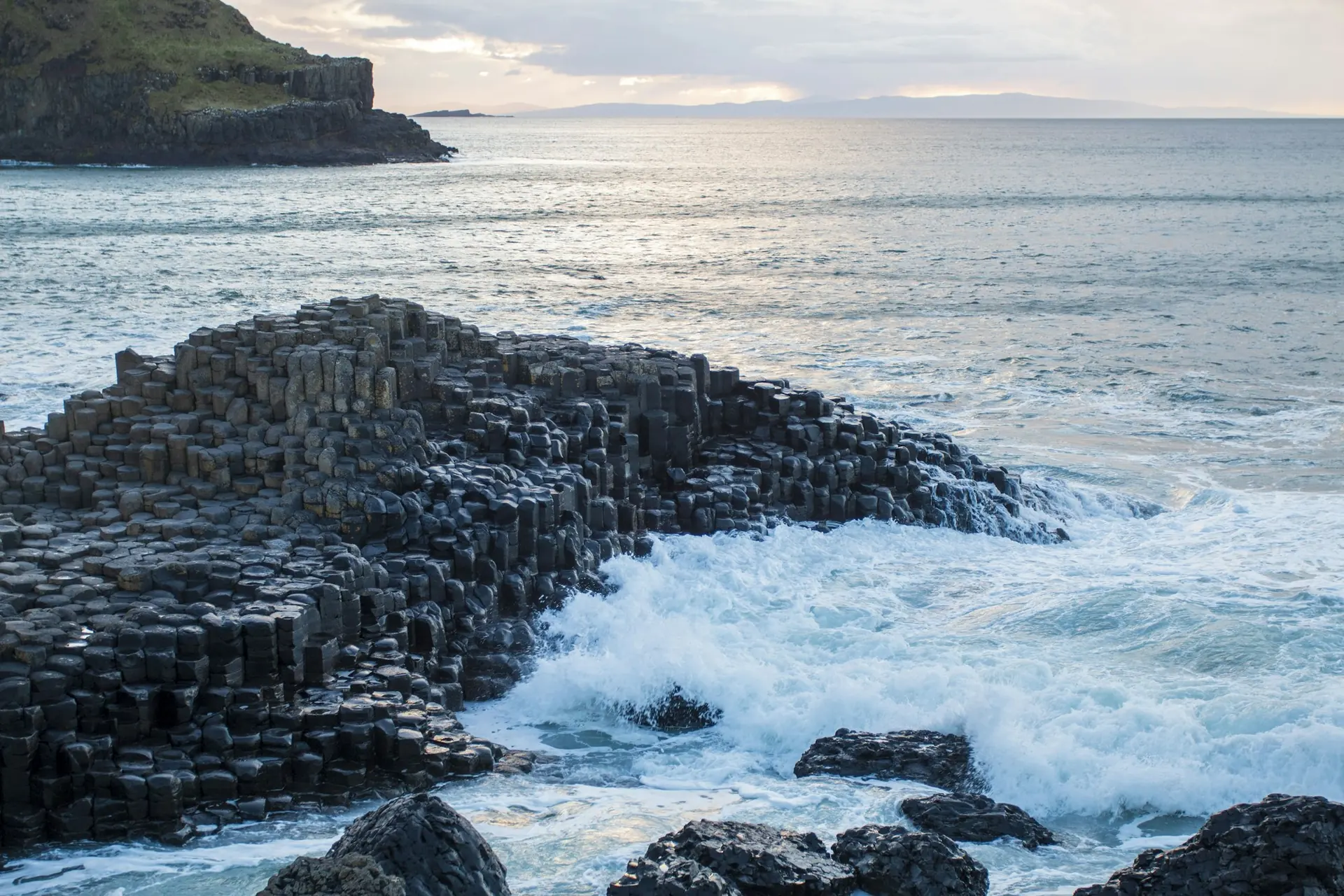
Thousands of basalt columns step into the North Atlantic. Their extraordinary regularity records cooling lava, while stories give the stones another kind of life.
One detail to remember
40,000
basalt columns · approximately
Their striking geometry emerged as lava cooled.
Source / UNESCO · Giant’s Causeway and Causeway Coast02 / Landscape anatomy
Three ways to read Giant’s Causeway.
A field guide to what you’re seeing.
The basalt began as lava during volcanic activity around 60 million years ago.
As thick lava cooled, it cracked into polygonal columns.
Later erosion revealed the pavement and cliffs now meeting the Atlantic.
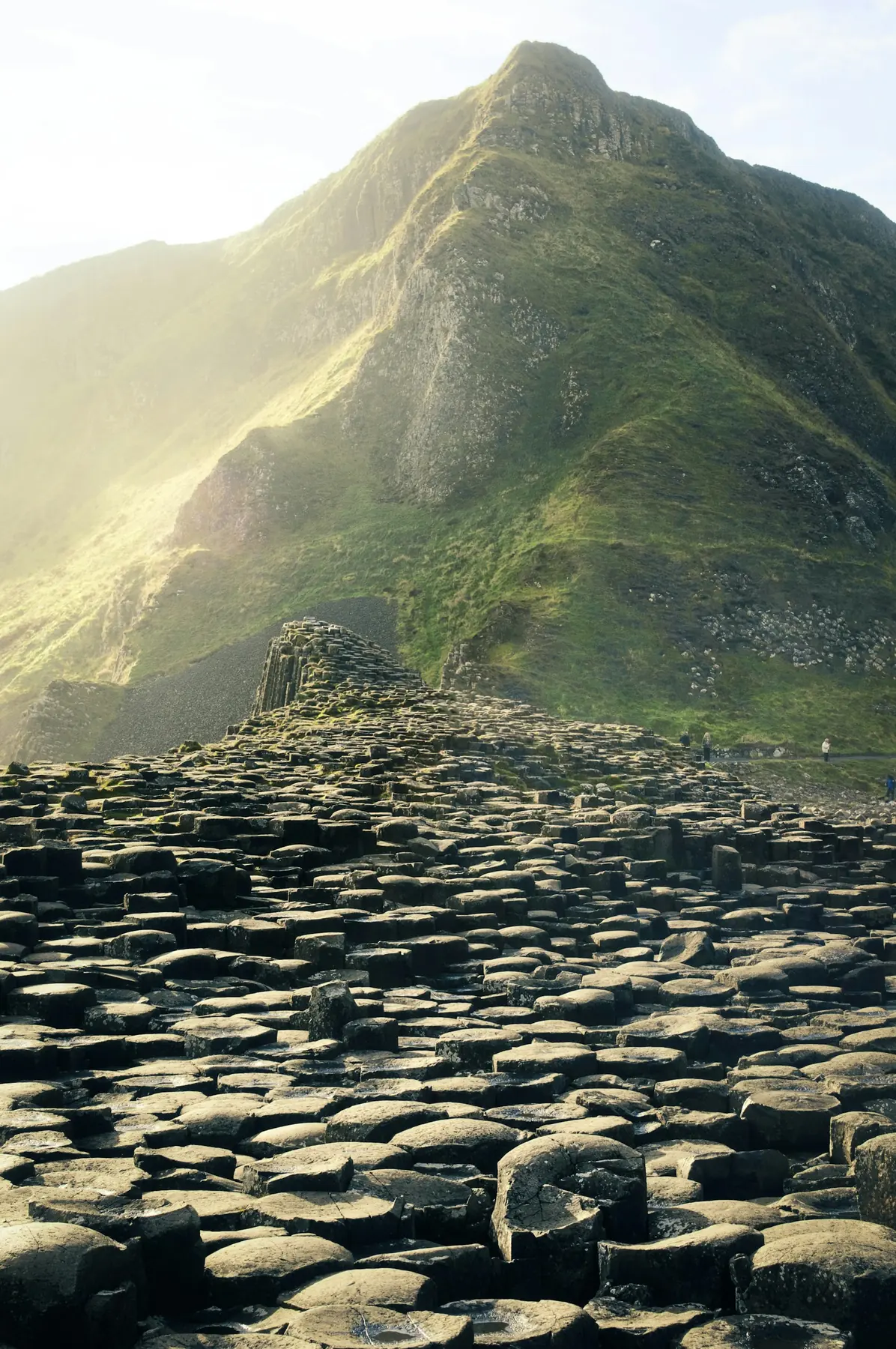
The columns hold their form.
The Atlantic changes the view.
Behind the view
The columns began as molten rock during the volcanic activity associated with the opening of the North Atlantic region, around 60 million years ago. As thick lava cooled, it contracted and cracked into polygonal columns. Many have six sides, but the pattern is not perfectly uniform. Later erosion exposed the pavement and cliffs. The geometry is a physical response to cooling: fracture networks distributing stress through what was once a continuous mass of hot rock.
03 / The human story
Folklore and field science.
Two ways of reading the coast.
The National Trust preserves several versions of the Finn McCool legend, including the familiar story of a giant building a crossing to confront a Scottish rival. These are explicitly folklore, not geological explanations. The stones also drew generations of researchers into debates over the origin of basalt. UNESCO recognises the site’s contribution to earth science alongside its beauty: this coast helped people learn to read volcanic history.
04 / Across time
Tides, spray and passing weather change the appearance of the pavement. Low light emphasises column edges; wet basalt can look almost black against Atlantic foam.
Changing tides reveal different amounts of the lower column surfaces.
Wet basalt darkens as Atlantic water moves across the edges of the pavement.
The lava is ancient, but the exposed coastline keeps changing. Ice and marine erosion removed overlying material and revealed the columns seen today. Tides and waves alter how much of the lower pavement is visible, while wet surfaces darken the stone. A geometric pattern born during cooling now meets the much faster rhythms of the sea.
Keep looking / Sources & photography
Hero: Alexander / Unsplash License · Resized and WebP compressed; cropped for display.
Second photograph: Patrick Metzdorf / Unsplash License · Resized and WebP compressed; cropped for display.