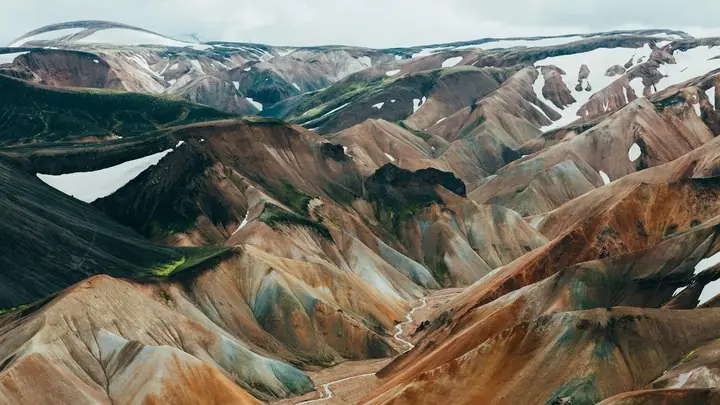
An older caldera.
The Tengger complex contains overlapping volcanoes and successive collapse depressions.
LANDSCAPE KEY Caldera
01 / The landscape
A landscape built, collapsed, and built again.
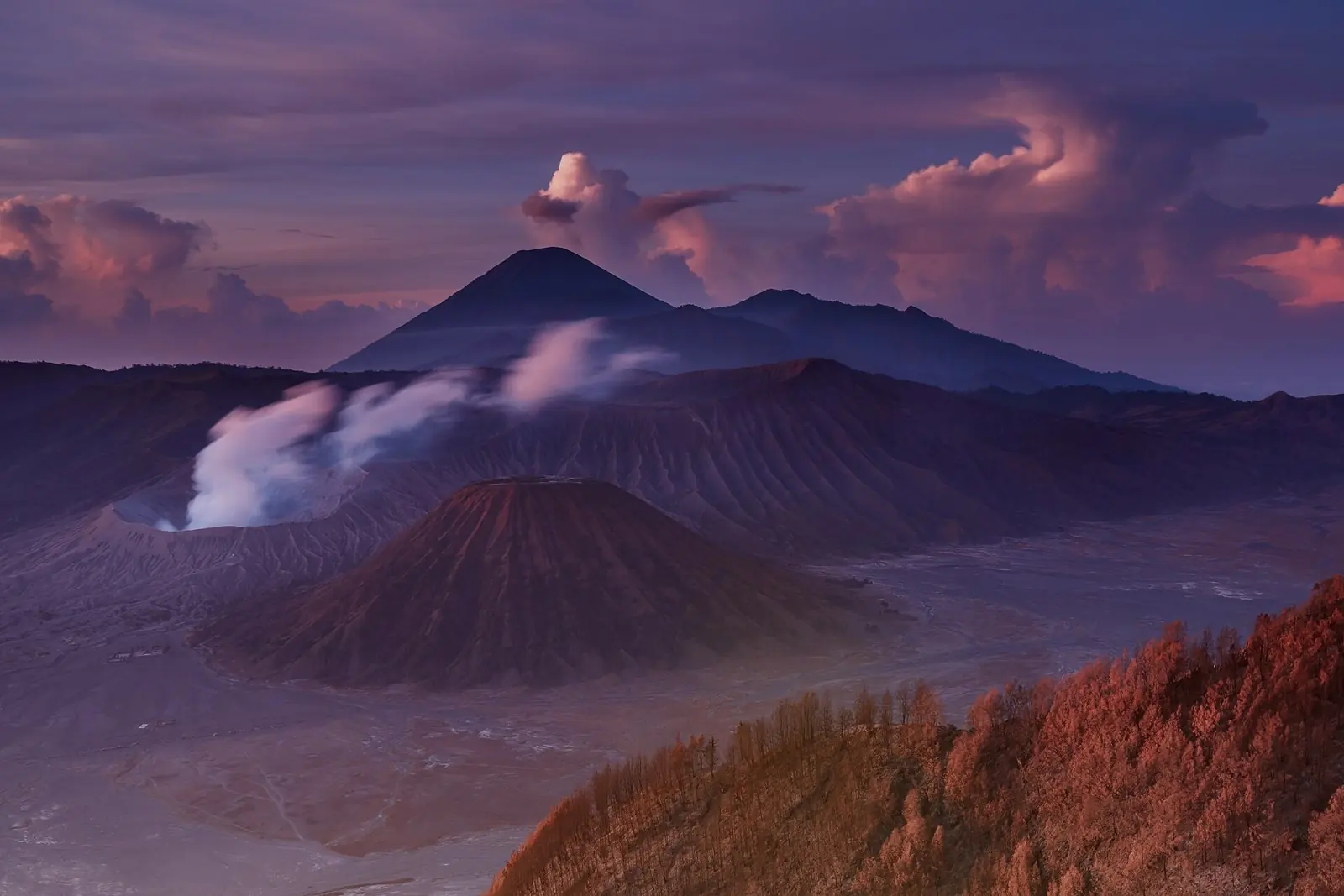
A small active cone occupies an enormous volcanic amphitheatre. Across the surrounding sand plain, Tengger communities maintain a deep relationship with the mountain.
One detail to remember
820,000
years · approximately
Today’s cones occupy a landscape built through repeated volcanic episodes.
Source / Smithsonian Global Volcanism Program · Tengger Caldera02 / Landscape anatomy
Three ways to read Mount Bromo.
A field guide to what you’re seeing.
The Tengger complex contains overlapping volcanoes and successive collapse depressions.
Bromo occupies terrain inherited from earlier volcanic episodes.
Volcanic activity continues within a landscape assembled over hundreds of thousands of years.
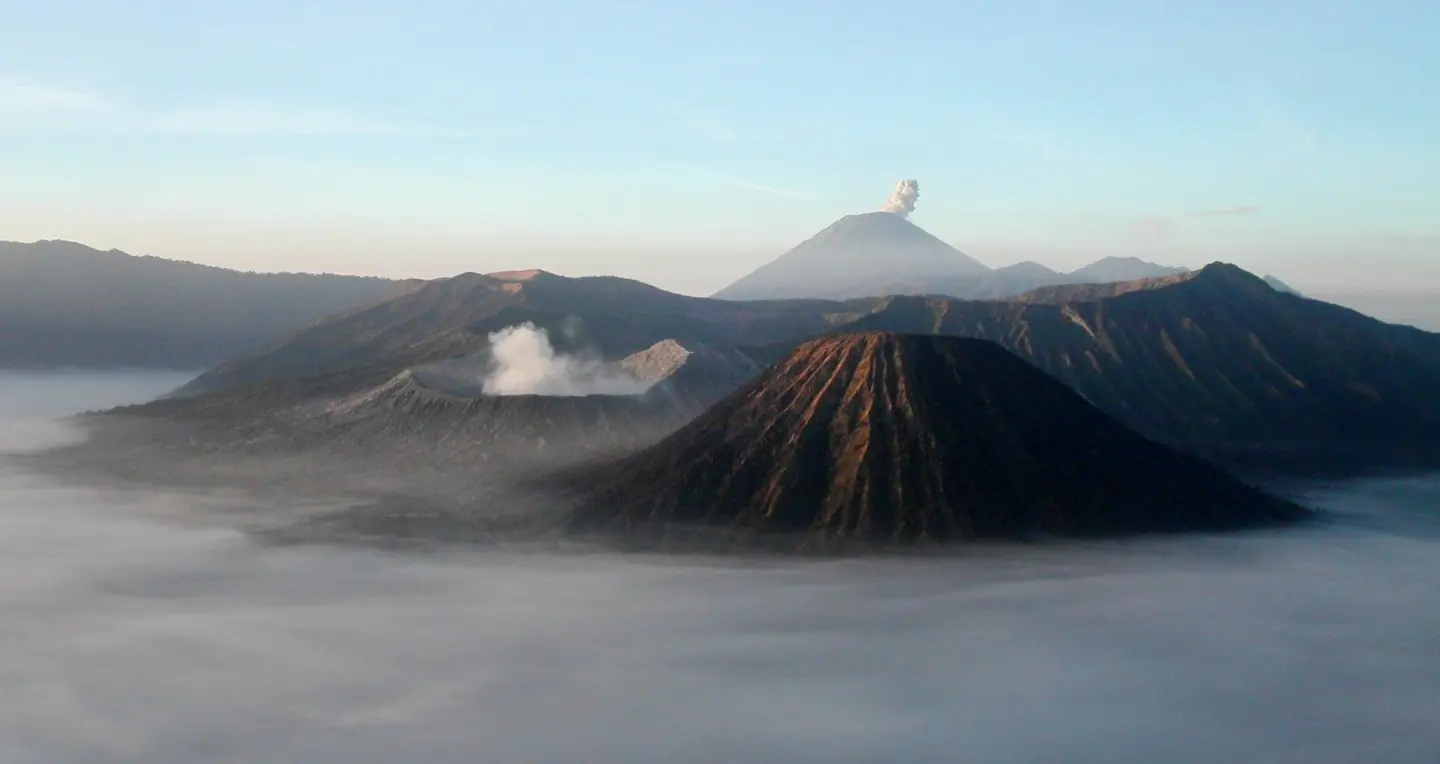
One active cone.
Many generations of mountain.
Behind the view
Bromo is one feature within the much larger Tengger volcanic complex. The Smithsonian describes a massif built from overlapping stratovolcanoes and successive calderas, with activity extending back roughly 820,000 years. A caldera is a large depression associated with the collapse of a volcanic system. Younger cones grow within this inherited terrain. That nesting of forms explains the view: the dramatic outer walls and the active inner crater belong to different episodes of construction and collapse.
03 / The human story
Tengger communities.
An enduring ceremonial connection.
For Tengger communities, the crater is a place of ceremony. Indonesia’s cultural heritage register describes Kasada as an annual expression of gratitude and enduring religious belief, with offerings made at Bromo. The ritual joins village preparations, ancestral connections and the mountain itself. It gives the landscape a calendar measured in communal practice, alongside the longer and less predictable rhythms of volcanic activity.
04 / Across time
Cloud, light and volcanic emissions can reveal or obscure different layers of the caldera. The annual Kasada ceremony follows the Tengger calendar and changes Gregorian date.
Cloud and volcanic emissions can obscure the nested forms of the massif.
Kasada follows the traditional Tengger calendar, connecting communities and mountain.
The massif contains many volcanic generations. Bromo’s eruptions belong to a still-active system, so its appearance cannot be reduced to one definitive photograph. The ceremonial calendar follows another cycle: Kasada is determined by the traditional Tengger calendar rather than a fixed Gregorian date. Geological and cultural time meet here without running at the same pace.
Keep looking / Sources & photography
Hero: Thomas Fuhrmann / CC BY-SA 4.0 · Resized and WebP compressed; cropped for display.
Second photograph: Thomas Hirsch (= user Ravn) / CC BY-SA 3.0 · Resized and WebP compressed; cropped for display.