A rift basin.
Earth’s crust stretches apart beneath this deep lake.
LANDSCAPE KEY Rift
01 / The landscape
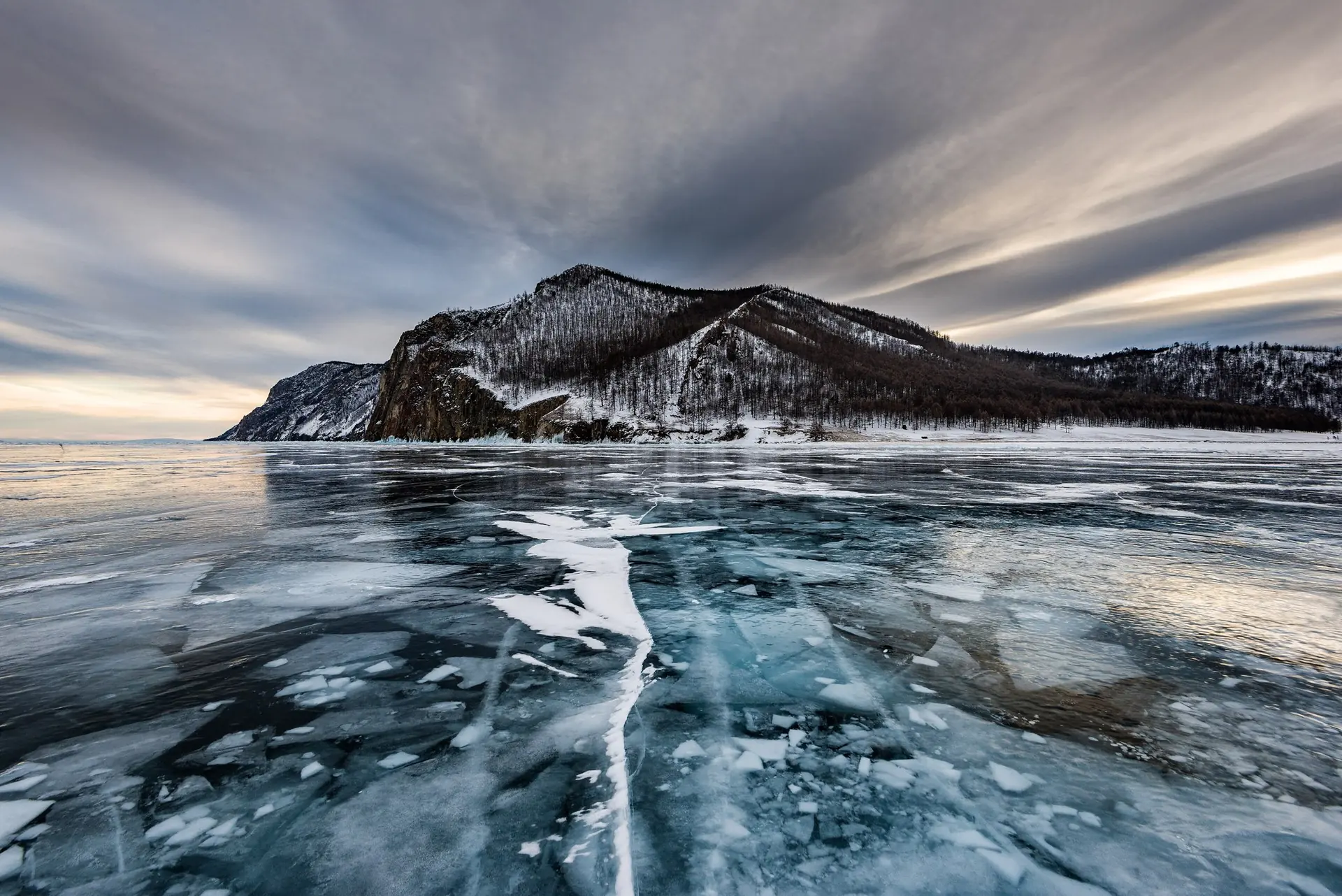
An ancient lake. A fleeting skin of ice.
A seasonal skin of ice covers an ancient freshwater basin. Beneath Siberia’s winter surface lies a record of continental movement, climate and extraordinary biological isolation.
One detail to remember
25
million years · approximately
Its long isolation has helped produce exceptional freshwater biodiversity.
Source / UNESCO · Lake Baikal02 / Landscape anatomy
Three ways to read Lake Baikal.
A field guide to what you’re seeing.
Earth’s crust stretches apart beneath this deep lake.
Winter transforms the lake’s surface into a frozen layer.
Stress breaks the ice into lines and angular plates.
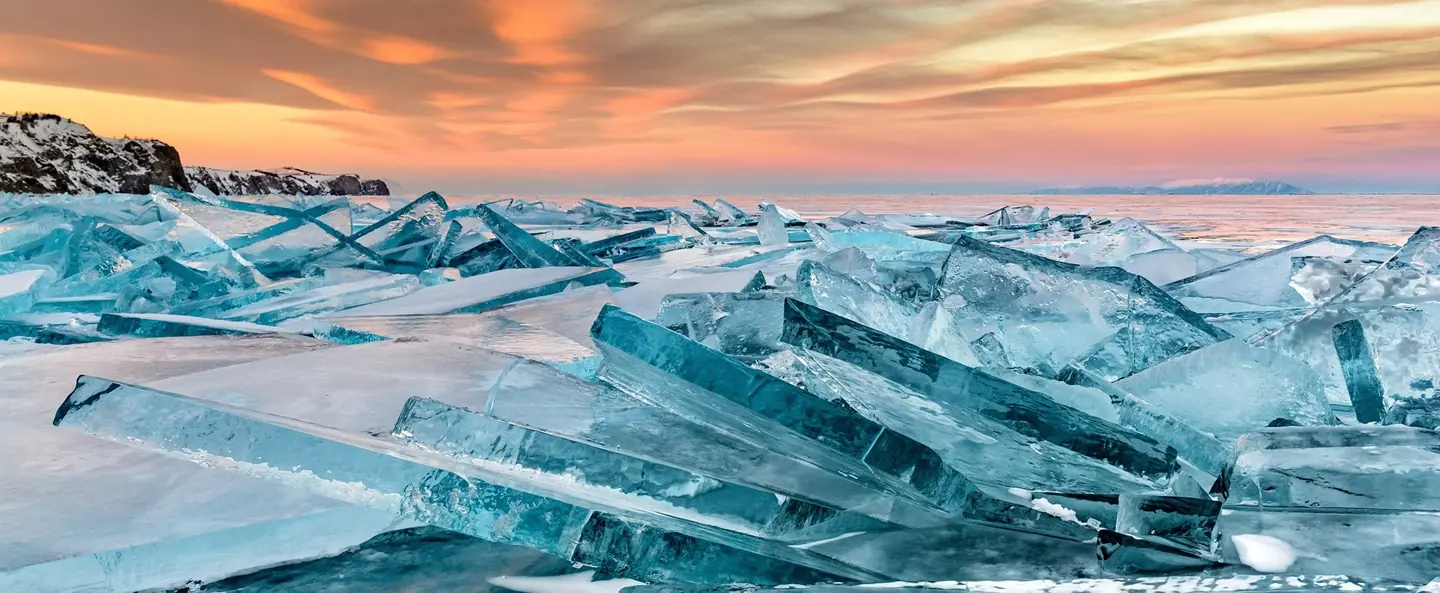
Winter writes in fractures.
Spring erases the page.
Behind the view
Baikal occupies an active continental rift. USGS research uses its fault patterns and thick sediments to investigate how continental crust stretches and basins develop. More than seven kilometres of sediment preserve an immense archive beneath the water. UNESCO identifies the lake as roughly 25 million years old and the world’s deepest; its long isolation has also supported exceptional freshwater biodiversity. The winter surface conceals two different depths: the water column and the much longer geological record below it.
03 / The human story
Along the shore.
Across generations.
At Listvyanka, people turned the seasonal arrival and departure of ice into a lasting scientific record. NASA documents uninterrupted observations of freeze-up and break-up beginning in 1869. That patient series gives individual winters a context a photograph cannot supply. In its 2012 account, NASA compared nineteenth-century observations with more recent thaw dates, finding earlier break-up. A village watching its lake became part of the evidence for environmental change.
04 / Across time
Winter ice gives way unevenly during spring. Shore-attached ice, open water and drifting fragments can coexist; timing varies across the lake and between years.
Cracks, snow and exposed ice give the frozen surface its changing character.
Ice breaks up and open water returns; the deep basin remains.
Freeze and thaw progress across a very large lake rather than occurring all at once. NASA’s satellite observations show spring openings in the south while ice persists farther north. Ice attached to the shoreline can remain after nearby open water appears. The result is a moving mosaic of intact cover, drifting fragments and water: an annual transformation layered over the basin’s immense age.
Keep looking / Sources & photography
Hero: Sergey Pesterev / CC BY-SA 4.0 · Resized and WebP compressed; cropped for display.
Second photograph: Sergey Pesterev / CC BY-SA 4.0 · Resized and WebP compressed; cropped for display.